
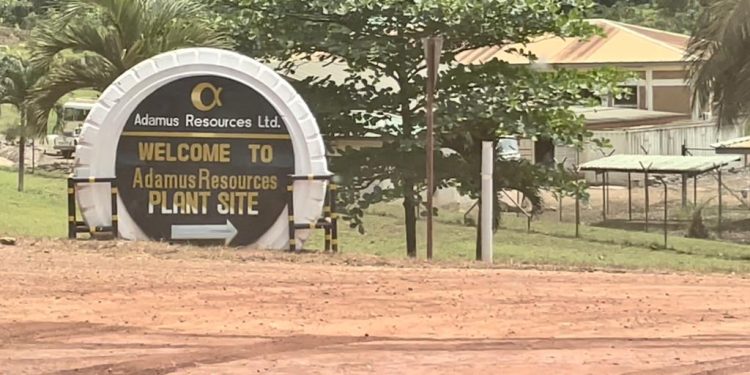
The Ministry of Lands and Natural Resources, the Minerals Commission, and Adamus Resources have been directed to prepare a comprehensive 12-month turnaround roadmap to restore the fortunes of the indigenous large-scale mining company.
The plan will be overseen by a six-member management team comprising three representatives from Adamus and three from government, ensuring joint supervision of the company’s recovery process. Both parties have been given two weeks to submit the roadmap to the Presidency.
The directive follows high-level discussions at the Presidency aimed at resolving the dispute between the government and Adamus while safeguarding the future of one of Ghana’s few operating indigenous large-scale mining companies.
A second chance despite revocation findings
The intervention gives Adamus a fresh opportunity to address the issues that led to the revocation of its Nkroful, Akango and Salman mining leases. The reprieve comes despite a Ministerial Review Committee recommending that the revocation should be upheld after uncovering significant operational and regulatory shortcomings.
Rather than overturning those findings, the government has opted for a structured recovery process that allows the company to remedy its deficiencies under close supervision.
Roadmap to tackle debts and attract investment
A central pillar of the turnaround plan will be the settlement of Adamus’ outstanding financial obligations, including liabilities owed to the Ghana Revenue Authority (GRA), the Minerals Income Investment Fund (MIIF), financial institutions and suppliers.
The roadmap is also expected to outline strategies for raising fresh capital, including the possibility of bringing in new investors to acquire equity and strengthen the company’s financial position.
The government believes the joint management arrangement will promote transparency and accountability while ensuring that key decisions affecting the mine’s future are made collaboratively.
Compliance and accountability remain key
The reprieve comes against the backdrop of serious concerns raised by the Ministerial Review Committee, which cited significant financial irregularities, production-reporting discrepancies and environmental compliance breaches.
The government has made it clear that the latest decision does not erase those findings. Instead, it provides Adamus with a defined window to demonstrate meaningful reforms through measurable actions and verifiable results.
Over the next 12 months, the company will be expected to improve financial discipline, strengthen production reporting, address environmental and community concerns, and rebuild confidence among regulators, investors and host communities.
A test for Ghana’s mining sector
The Adamus case carries broader significance for Ghana’s mining industry. It highlights the state’s responsibility to ensure accurate gold production reporting, effective royalty and tax collection, strict environmental enforcement and the protection of communities affected by mining activities.
The Ministerial Review Committee identified statutory arrears exceeding GH¢205 million, additional regulatory liabilities, substantial related-party transfers, unexplained production discrepancies, environmental permitting concerns and unresolved community development issues.
For government, the challenge will be ensuring that the one-year grace period delivers tangible progress rather than becoming an open-ended extension. For Adamus, it represents a critical opportunity to restore regulatory compliance, financial stability and long-term investor confidence.
The success of the 12-month roadmap will ultimately determine whether the company can emerge as a stronger, more transparent and sustainable player in Ghana’s mining sector while protecting the country’s mineral wealth and the revenues it generates.