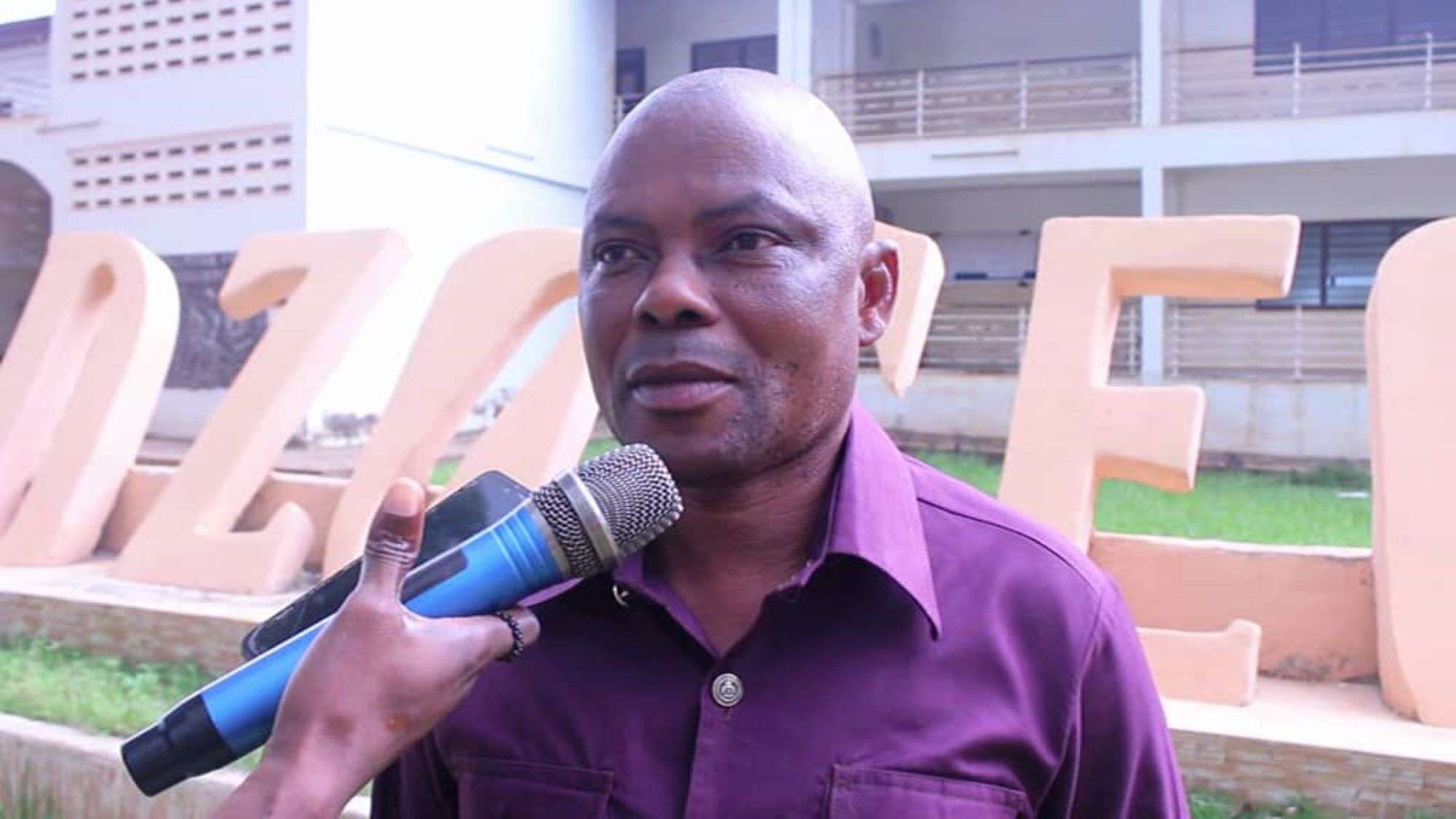


The Defence Team of the former Director-General of the National Signals Bureau (NSB}, Mr. Kwabena Adu-Boahene, has intensified cross-examination, subjecting the lead investigator of the Economic and Organised Crime Office (EOCO) to diligent scrutiny alleged diversion of GH¢49.1 million in public funds.
Mr. Frank Marshall Cromwell, the fourth prosecution witness and lead investigator, had told an Accra High Court that the investigation was triggered by a tip-off alleging the diversion of public funds, and not by a formal complaint.
Adu=Boahene and his wife Angela Adjei Boateng, are standing trial on charges including defrauding by false pretences, wilfully causing financial loss to the state, using public office for profit, collaboration to use public office for profit, obtaining public property by false statements, money laundering and conspiracy to commit money laundering.
Responding to questions from Mr. Samuel Atta Akyea, lead counsel for the accused persons, Mr. Cromwell, who consistently parried numerous questions from the defence team with the answer, “I can’t tell,” said investigations of that nature could be initiated through petitions, anonymous information or tip-offs.
The defence questioned whether any complaint had first been lodged with the National Security establishment before EOCO commenced investigations, but the witness said he could not confirm whether such a complaint existed.
He said EOCO acted on intelligence received and subsequently sought information from the National Signals Bureau.
Investigator’s knowledge tested
Mr. Atta Akyea also questioned the investigator’s understanding of the national security architecture, suggesting that the Bureau of National Communications, now the National Signals Bureau, operated as an internal department of the National Security Council Secretariat.
Mr. Cromwell responded that, based on account-opening documents obtained during investigations, it operated under the National Security Council Secretariat and maintained a separate bank account.
The witness agreed that EOCO was a public institution and that his unit, the Special Investigations Unit, functioned as a department within the organisation.
The defence further questioned the investigator on salary records tendered in evidence, pointing out that the payslips of Mr. Adu-Boahene were obtained from the National Security Council rather than the National Signals Bureau.
Mr. Cromwell confirmed that the salary records were indeed obtained from the National Security Council following requests made during investigations.
Again, Mr Atta Akyea suggested that investigators had initially written to the wrong institution because they did not fully understand the national security structure, but the witness maintained that requests were directed to the National Security Council for information relevant to the investigation.
Operation of NSC Bank account
The Defence Counsel also challenged the investigator on the operation of the National Security Coordinator’s bank account, arguing that Mr. Adu-Boahene acted under the authority of the National Security Coordinator and lacked the power to authorise expenditure independently.
Mr. Cromwell acknowledged that the account mandate required the National Security Coordinator and Mr. Adu-Boahene to co-sign cheques.
He however claimed that investigations established GH¢49.1 million was transferred from the Bureau of National Communications account to a private account linked to the accused persons.
However, the witness further confirmed that all three cheques amounting to GH¢49.1 million bore the signatures of both the National Security Coordinator and Mr. Adu-Boahene.
Contradictions?
Under further questioning, Mr. Cromwell agreed that Fidelity Bank had informed investigators that part of the funds had been moved to UMB Bank to take advantage of foreign exchange trading opportunities.
He, however, told the court that bank statement analysis showed Mr. Adu-Boahene first transferred GH¢7.25 million into his personal account before returning GH¢7.2 million to the National Security Coordinator’s account, retaining GH¢50,000.
According to the witness, investigators found no evidence that the GH¢7.2 million transfer related to any authorised special operation, adding that the transfer back to the National Security account only occurred after the bank contacted the Coordinator to mitigate potential losses.
The defence also referred to evidence previously given by the second prosecution witness, Ms. Edith Adumuah, Head of Finance, that major transactions on the account required authorisation from the National Security Coordinator.
Mr. Cromwell said he could not comment on testimony he did not personally hear in court, although he maintained that the account-opening documents showed the applicable signing mandate.
During proceedings, the defence tendered emails and related attachments into evidence without objection from the prosecution, and the documents were admitted by the court.
Asked where the three disputed cheques were intended to be lodged, Mr. Cromwell said he could not state their intended destination but maintained that investigations established they were ultimately deposited into private accounts belonging to the accused persons.
The case has been adjourned to Wednesday, July 15, 2026, for the continuation of the cross-examination of the fourth prosecution witness.
By Kyei Boateng