
The Minority in Parliament has challenged the Ghana Gold Board (GoldBod) to account for losses linked to its gold trading operations, arguing that the institution cannot claim credit for foreign exchange gains while distancing itself from the costs and losses arising from the same transactions.
The call follows an August report by the International Monetary Fund (IMF), which indicated that the Bank of Ghana’s Domestic Gold Purchase Programme, implemented through GoldBod, recorded losses of more than $1.7 billion in 2025, equivalent to 1.5% of Ghana’s Gross Domestic Product (GDP).
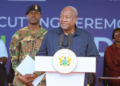
Addressing the press on Tuesday, August 18, Minority Leader Osahen Alexander Afenyo-Markin questioned why GoldBod should take credit for the foreign exchange generated from its operations while disowning the losses associated with those transactions.
According to him, GoldBod must account for the full cost of the activities from which it generates revenue, including the fees it collects and the losses arising from its purchasing, pricing and sales decisions.
“So here is a question GoldBod must answer. If every one of those services, service fees and asset fees were collected and kept, why should the losses that came bundled with earning them belong to someone else?” he asked.
“You do not get to keep the fees and disown the cost. This is not accounting; that is convenience,” he added.
Afenyo-Markin also questioned the identities of the off-takers who benefited from discounted gold sales, demanding greater transparency over the transactions.
He maintained that GoldBod could not claim the benefits of the gold trade while shifting the associated losses onto the Bank of Ghana.
“GoldBod is happy to take credit for the foreign exchange he claims to have generated. But it goes quiet the moment we ask about the very trade that discounted sales, the fee arrangement that produced that forex in the first place,” he said.
“You cannot claim the upside of a trade and disown a downside,” he added.
The Minority Leader stressed that the concerns were not about denying GoldBod credit for its reported profits but about scrutinising the underlying transactions and costs that generated those returns.
“We, the Minority, are not here to relegate the profit of GoldBod. The profit GoldBod has published in its own account. We are here because of what happened off the books, the operations, the fee structures, the discounted sales that made that profit possible in the first place,” he said.
Afenyo-Markin further questioned the arrangement under which the Bank of Ghana provided funds for gold purchases while allegedly carrying the resulting losses.
“GoldBod took Bank of Ghana’s money to assay gold and collect its fees. It cannot claim the credit that comes with the revenue while pushing every loss into Bank of Ghana’s balance sheets,” he said.
He argued that the arrangement effectively separated the benefits of the transactions from the risks, leaving the central bank—and ultimately the taxpayer—to bear the losses.
Afenyo-Markin, therefore, demanded answers from GoldBod on the identities of its off-takers, the rationale behind discounted gold sales and why the country’s gold trading operations were generating significant losses that, in his view, had not been transparently accounted for.