

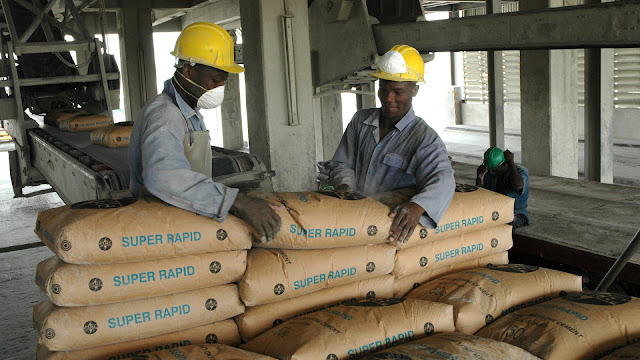
The Ghana Ports and Harbours Authority (GPHA) has rejected claims that congestion at the Port of Tema alone is responsible for the recent increase in cement prices.
In a statement dated September 10, 2026, the Authority said several operational and commercial factors determine the cost of importing clinker and cement through Ghana’s ports and cautioned against attributing price increases solely to port congestion.
The clarification follows a recent statement by the Chamber of Cement Manufacturers, Ghana (COCMAG), which linked the increase in cement prices to congestion at the Port of Tema.
In response, COCMAG introduced a temporary GH¢12-per-bag surcharge on clinker demurrage—GH¢10 before tax and GH¢2 covering taxes and levies.
According to the GPHA, it has a responsibility to ensure that all port users are served while maintaining safe, hygienic and efficient operations.
The Authority explained that food-related cargo, including rice and wheat, must be properly separated from cement and clinker operations because of hygiene and safety requirements. This, it said, is an important consideration when allocating berths.
Dredging creates opportunities for cement companies
The GPHA said it undertook strategic dredging of the bulk cargo section of the Port of Tema in anticipation of larger vessels, increased cargo volumes and deeper vessel drafts.
It noted that cement companies were informed ahead of the project about its duration and the need to plan their vessel arrivals and berthing schedules accordingly.
The Authority said the cement industry is also a direct beneficiary of the completed dredging works.
According to the GPHA, Berth 13 now provides depths of up to 14 metres, while Berth 14 provides depths of up to 12 metres.
These deeper berths, it said, allow cement companies to receive larger vessels and potentially benefit from economies of scale, which could help lower unit logistics costs.
Govt response
In a move to help avert a fresh increase in cement prices, an additional berth has been secured at the Tema Port to help clear a growing backlog of clinker vessels and halt escalating demurrage costs threatening cement manufacturers.
The temporary facility is one of several emergency measures agreed upon after an urgent meeting on Friday, September 11, 2026.
The meeting brought together the Ministers of Transport and Trade, Agribusiness and Industry, officials of the Ghana Ports and Harbours Authority (GPHA), the Ghana Revenue Authority (GRA) and representatives of cement manufacturers.
Waiting times, which averaged seven days in January 2026, ballooned to 30–40 days or more by August. Across the industry, demurrage costs for the first eight months of the year are estimated at between US$45 million and US$50 million.
Manufacturers have indicated that these expenses cannot be absorbed indefinitely without affecting retail prices.
After touring the Tema Port on Friday, Trade, Agribusiness and Industry Minister Elizabeth Ofosu-Adjare told journalists that the government would not stand by while the problem worsened. She also called on manufacturers not to treat the congestion as a ready excuse for additional price increases.
“We are here to see firsthand what we can all do together to ensure that the cement manufacturers are able to clear their clinker timeously to avoid demurrage and then further increases in prices,” she said.
She explained that her priority was to clear the current backlog quickly and put lasting arrangements in place to prevent the same bottlenecks from re-emerging.
The temporary berth is intended to provide immediate additional capacity while other measures take effect.
Transport Minister Joseph Bukari Nikpe highlighted the recent completion of dredging works at the Tema Port. The deeper channel, he said, will allow larger vessels to come alongside, reducing the number of ships waiting offshore and cutting demurrage costs.
“The dredging is finished as we talk now. The only thing is to notify all the shipping lines in the world through the shipping industry that we now have a draft that can take bigger vessels,” he said.
Nikpe also urged cement producers to rethink their import patterns by consolidating shipments into fewer, larger vessels.
He said the government would work with the industry to improve the speed at which clinker is moved from the quayside to factory warehouses, thereby shortening the time ships spend in port.
Despite the current strain caused by higher cargo volumes, Nikpe expressed confidence that the combination of the new temporary berth, completed dredging and closer operational coordination would restore smoother cargo flows.
The government, he said, remains committed to keeping the port efficient and competitive.
The stakes are high, as cement prices influence the cost of housing, public works and private construction across the country.
Prolonged demurrage costs risk feeding into higher retail prices at a time when households and businesses are already sensitive to inflationary pressures.
By intervening now, authorities hope to break the cycle before the temporary surcharge becomes permanent or is followed by further price increases.
The package of measures agreed on September 11 represents a coordinated response to an acute operational problem.
Success will depend on how quickly the additional berth begins to clear the backlog and how effectively longer-term improvements—including deeper drafts, larger vessels and faster inland evacuation—are implemented.
Truck shortages also affect port congestion
The GPHA said efficient cargo evacuation is another critical factor affecting the movement of vessels through the Port of Tema.
It explained that a vessel carrying about 40,000 tonnes of clinker may depend on a limited number of trucks to transport the cargo to factories located outside the port.
Where trucks are inadequate or delayed by traffic, the discharge process can slow significantly, resulting in vessels occupying berths for extended periods—sometimes for seven days or more.
“Such prolonged berth occupancy affects the availability of berths for other vessels and places additional pressure on port operations,” the Authority said.
GPHA moves to modernise cement handling
The Authority also disclosed that it is working to modernise the handling of cement and clinker at the Port of Tema.
Under the planned improvements, the GPHA said traditional reliance on grabs and hoppers will gradually be replaced with more modern and efficient cargo-handling systems.
It urged cement companies to embrace and invest in the new technology as it is introduced.
According to the Authority, improved handling systems will increase discharge rates, reduce vessel turnaround times, optimise berth utilisation and contribute to a more competitive port operation.
GPHA: Port efficiency is a shared responsibility
The GPHA stressed that improving port efficiency requires cooperation among all stakeholders.
It said proper vessel planning, sufficient trucking capacity, efficient cargo discharge, adoption of modern handling technology and timely evacuation of cargo are all necessary to reduce delays.
The Authority therefore urged stakeholders and the public to consider the entire logistics and supply chain when assessing cement prices.
This includes vessel planning, discharge efficiency, trucking arrangements, factory locations, port selection and other commercial costs, rather than attributing cement price increases solely to congestion at the Port of Tema.
The GPHA said it remains committed to working with the cement industry and other stakeholders to improve berth utilisation, cargo evacuation and the overall efficiency of Ghana’s ports.