
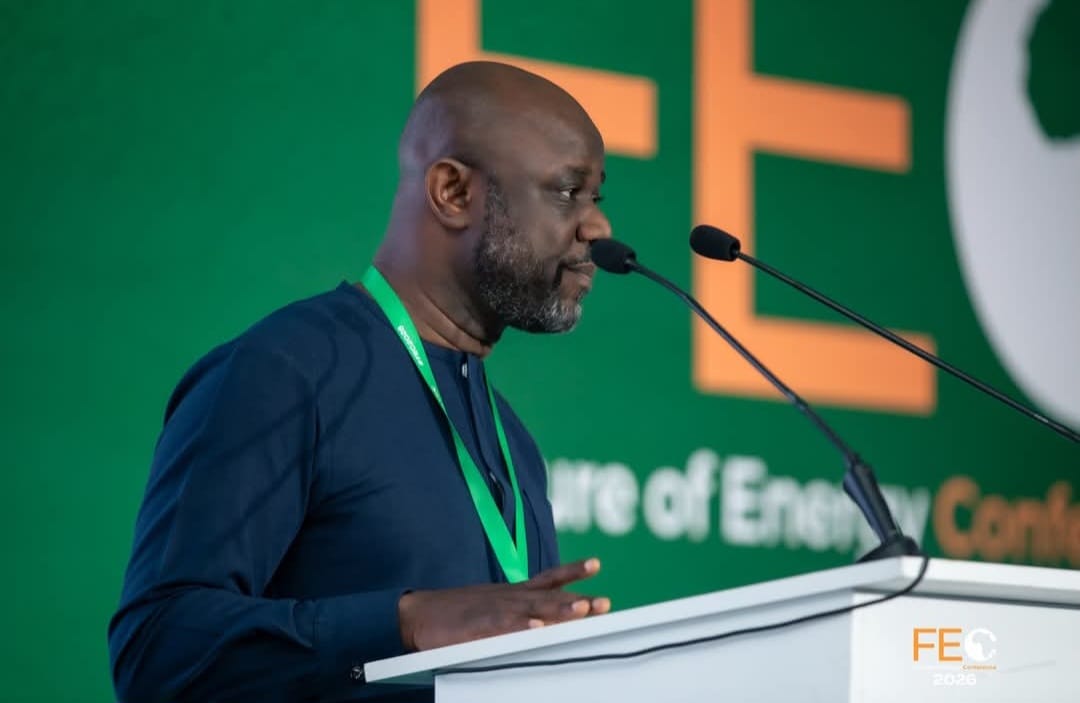
The Executive Director of the Africa Centre for Energy Policy (ACEP), Mr Benjamin Boakye, has entreated Africa to abandon the mindset of competing directly with the world’s major economic blocs and instead develop a clear strategy to attract investment on its own terms.
Mr Boakye made the call during an expert chat at the two-day 2026 Future of Energy Conference (FEC) in Accra, held on the theme “Powering Africa’s Industrial Transformation: Energy Systems for Value Addition and Competitiveness.”
The session, moderated by Dr Juliette Twumasi-Anokye, Chairperson of the ECOWAS Regional Competition Authority, focused on the topic: “Competing in a New Global Industrial Order: What Must Africa Get Right?”
Mr Boakye argued that African countries spend too much energy trying to understand what China, Europe and America want, rather than defining what these blocs should do in Africa.
“Rather than seeing ourselves as competing with those blocs, we must see ourselves as having a strategy to find things that are true. That is the only way we can celebrate development and compete to fight inequality, injustice, and poverty,” he stated.
He said the continent should view global powers as partners rather than competitors, drawing the resources needed for power generation and industrialisation from the international community.
“The strategy should be: what should these blocs do in our country and our affair, and that for me is the missing piece,” Mr Boakye emphasised.
From talk to action
Addressing concerns that African conferences generate more talk than tangible results, the ACEP Executive Director acknowledged that keeping the conversation going was essential, but stressed that the real challenge lay in moving from dialogue to implementation.
“Having leadership that takes all the conversations generated in these forums and practicalising them and bringing them to work has always been that challenge, and we need to push,” he said.
Mr. Boakye called for building a “critical mass” of individuals and organisations committed to supporting states in taking the right decisions and amplifying voices that demand accountability. He noted that in most cases, politics and corruption drive decisions, making it difficult to separate political will from self-interest.
Renegotiating power contracts
Mr Boakye cited Ghana’s experience with Independent Power Producer (IPP) contracts as a case study in what Africa must get right.
He recalled that in 2015 and 2016, Ghana signed power purchase agreements that locked the country into excessive costs.
“You commit that kind of money to impact—that is the highest manifestation of inefficiency, not from the natural resource,” he said, referring to contracts where investors sought to recover $720 million in five years on projects that should have cost not more than $60 million.
He noted that ACEP had supported the government in renegotiating these contracts, establishing a benchmark that IPPs should not charge above three cents per kilowatt-hour. This contrasted sharply with previous charges of seven to eight cents.
“We look at models where in the West, the risks they say are low, investors are getting 1.5 cents for emergency charges, and you come into Africa and you are getting eight or nine cents. What risk are you mitigating? You are milking the states, right?” Mr Boakye questioned.
Energy costs and industrial competitiveness
The energy analyst warned that African economies cannot build globally competitive industries on energy systems that remain expensive, unreliable or inadequate.
He noted that while industries in other jurisdictions pay about six cents per kilowatt-hour for electricity, African industries pay between 14 and 16 cents, making products from the continent uncompetitive.
“For industrialisation and free trade to succeed on the continent, it is not about importing to sell, but manufacturing at scale and at a competitive cost, so that products in Ghana, for instance, can be exported to other African countries at competitive prices,” he said.
Mr Boakye identified corruption, sole-sourced contracts and the high political risk cycle as key causes of high energy costs in Africa.
Country-specific solutions
Mr Boakye cautioned against one-size-fits-all approaches to energy and industrial policy, arguing that what drives the cost of energy in Ghana differs from what drives it in Kenya.
“We need to be able to map out what is driving it, so that we are able to contextualise and have the right solution scaled for that country,” he said.
He also called for regional energy infrastructure to be designed with interoperability in mind, noting that countries continued to develop national electricity systems using incompatible technical standards, making future integration costly.
Advice to African leaders
Asked what single piece of advice he would give an African president, Mr Boakye responded, “They shouldn’t be afraid of ideas. They shouldn’t be afraid of being transparent. You may not even want to do it. You may still want to be corrupt, but just listen to people.”
He added that, “In most cases, we assume they know, and we assume that they should do the right thing because they are elected to know. But when you get close to them and you see the pressures that are coming from power brokers, people we don’t even see, but are taking big decisions… I would insist that do what you want, but listen and be informed and be sure of what you are saying.”
The 2026 Future of Energy Conference, organised by ACEP in partnership with Ford Foundation, the Natural Resource Governance Institute (NRGI) and others brought together ministers, industry players, policymakers and investors to examine the structural factors driving energy costs and the capabilities Africa needs to compete in a changing global industrial order.
By Kingsley Asiedu