

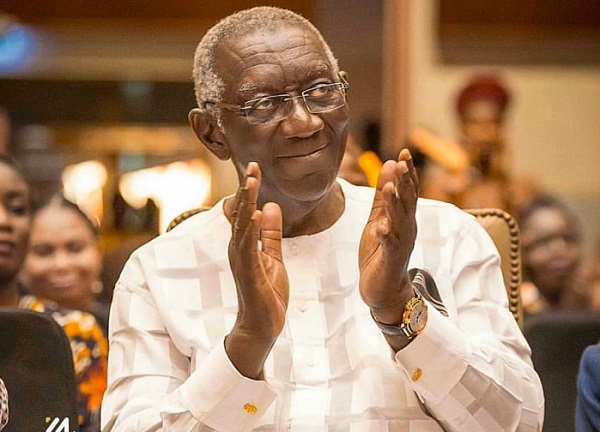
Former President John Agyekum Kufuor has called for renewed efforts to drive Africa’s transformation through improved infrastructure, youth employment, and deeper continental integration.
He said infrastructure development — particularly in energy and transport — is critical to unlocking economic growth and positioning the continent more competitively within the global economy.
Speaking at a high-level meeting of two distinguished members of the Africa Economic Forum (AEF) Advisory Board on Africa’s development on Wednesday, April 15, Mr Kufuor noted that despite decades of discussions on unity, major gaps persist, especially in transportation and connectivity.
“We have talked about African unity for over 60 to 70 years, yet key areas like transportation still lag behind. We need to take a comprehensive look at Africa’s development and chart a clear path forward,” he said.
Ghana’s unemployment rate
Ghana’s unemployment rate edged down marginally to 13.0% in the third quarter of 2025, pointing to modest labour market gains that remain insufficient to absorb a growing workforce, particularly young people.
Data from the Quarterly Labour Force Survey covering the first three quarters of 2025 showed that unemployment declined from 13.1% in the fourth quarter of 2024 to 12.8% in the first quarter of 2025.
This eased further to 12.6% in the second quarter, before rising again to 13.0% in the third quarter, reflecting an average unemployment rate of 12.8% in the first three quarters of 2025.
Across the period, more than 15 million people participated in the labour force, with about 87% employed in each quarter. Employment increased by over 330,000 persons between the first and third quarters, rising from 13.09 million to 13.42 million.
Female employment consistently exceeded male employment throughout the period.
However, Government Statistician Dr Iddrisu Alhassan said the pace of job creation remains too slow to drive a sustained decline in unemployment.
“Jobs are increasing, but the unemployment rate is not falling in a sustained way, he said, adding that new job creation is still not fast enough to absorb new entrants, especially young people and urban job seekers”, he noted.
Another major concern from the report is youth unemployment, which continues to lag behind national trends. In the third quarter of 2025, unemployment among persons aged 15 to 24 years stood at 32.4%, more than double the national average.
The survey shows that about 1.34 million young people in this age group, representing 21.5%, were not in employment, education or training. Among persons aged 15 to 35 years, nearly 2.0 million, or 19.5%, were not in employment, education or training. Regional disparities were pronounced, with the Central Region recording the highest NEET rate at 25.3 per cent and the Oti Region the lowest at 9.5 per cent.
Harnessing Africa’s growing youth
Former President Kufuor underscored the importance of harnessing the continent’s growing youth population, noting projections that Africa will account for a quarter of the world’s population within the next two decades.
“In Ghana alone, about 60 percent of the population is youthful. They are better educated, tech-savvy, and ambitious. What they need are opportunities for meaningful employment,” he added.
Mr Kufuor urged policymakers to prioritise sustainable pathways for youth engagement as a means of driving inclusive growth across the continent.