
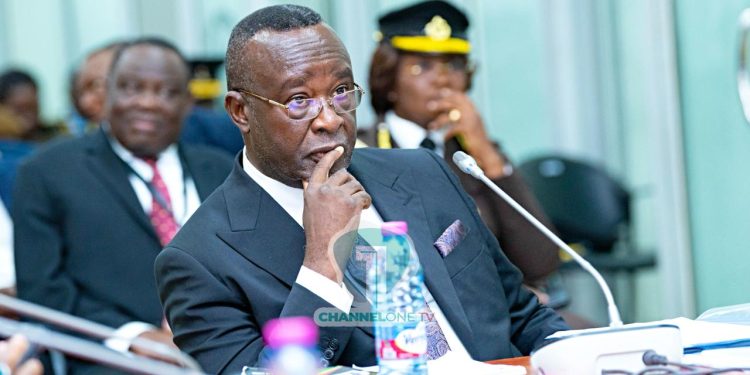
Chief Justice nominee, Justice Paul Baffoe-Bonnie, has urged a reform of Ghana’s electoral calendar, proposing that presidential elections be conducted earlier — on November 7 or 8 — to provide the Supreme Court with adequate time to adjudicate disputes before the presidential swearing-in on January 7.
Appearing before the Appointments Committee of Parliament, Justice Baffoe-Bonnie argued that Ghana’s current election timeline compresses the judicial review period, potentially undermining confidence in the fairness and efficiency of electoral dispute resolution.
“We came to the conclusion that it should be possible to have the election petition concluded before 7 January, the inauguration day,” he said.
“The first suggestion that came, which we think was a masterstroke, was that we should have the elections on 7 or 8 November.”
He explained that a November election would create a 57-day interval between results declaration and inauguration, comfortably exceeding the 42-day limit for petition hearings under CI 99.
Drawing lessons from the 2013 and 2020 petitions, Justice Baffoe-Bonnie reflected on delays caused by procedural complexities, including the decision to admit a political party as a respondent in 2013 — a move he described as “one of the greatest mistakes we made in that particular trial.”
To further improve efficiency, he recommended procedural reforms such as enabling electronic service of court documents and shortening response timelines.
“Instead of waiting one week for the response, we can reduce that number of days to, let’s say, four,” he said. “By the time we get to about the 30th of November, pleadings would have closed, issues would have been settled, and the trial would begin.”
He stressed that Parliament’s role would be vital in updating legislative and constitutional instruments to accommodate these changes.
“We shall need the inputs of Parliament when it comes to LIs and CIs to be prepared,” he told the committee.
Justice Baffoe-Bonnie concluded that such reforms are essential to ensuring justice delivery that is both timely and credible.
“In a trial like that, we can say it should take no more than two weeks. And once two weeks are there, judgment should be given within one week,” he said. “That way, by 7 January, we will have our President who will strike the sword and swear to his people.”