

Minority Leader in Parliament Osahen Alexander Kwamena Afenyo-Markin has mounted a robust defence of centre-right political ideology, arguing that Ghana’s most enduring gains in freedom, stability and socio-economic progress have consistently emerged from the Danquah-Dombo-Busia tradition.
Osahen Afenyo-Markin who is also the Member of Parliament (MP) for Effutu traced the country’s post-independence trajectory through three dominant traditions, the state-driven socialism of Kwame Nkrumah, the populist-pragmatic reformism of Jerry John Rawlings, and the liberal-democratic centre-right tradition founded by J. B. Danquah, Kofi Abrefa Busia and S. D. Dombo.
Speaking at a maiden edition of a lecture series on the topic, ‘The Danquah-Dombo-Busia Centre-Right Ideology and Its Impact on Ghana’s Socio-Economic Development: A Focus On The Kufuor And Akufo-Addo Governments’, the Minority Leader stated emphatically that centre-right ideology has been the most transformative in the country’s history.

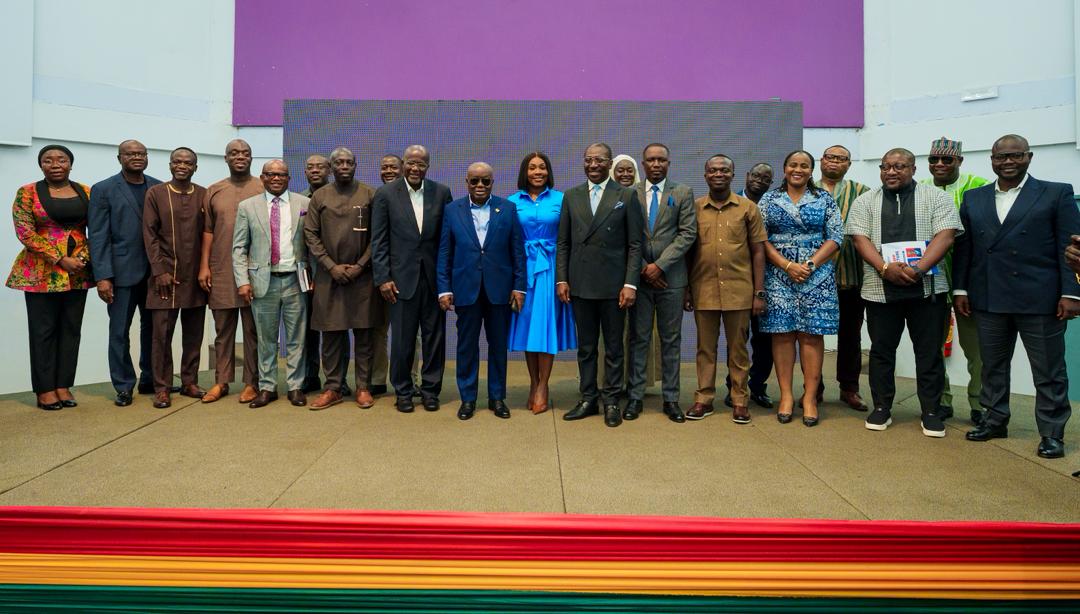
The lecture was organised by the Institute of Economic Research and Public Policy (IERPP) in Accra, on the theme: “The Centre Right Impact on Ghana’s Political Landscape.”
The Danquah-Dombo-Busia tradition, he maintained, was rooted in the fight for farmers’ rights and had promoted health insurance, free education and rural industrialisation, reflecting its commitment to social justice and empowerment.
“If the purpose of political tradition is the liberation of people, not the concentration of power, then Ghana’s best course remains the centre-right path,” Oshen Afenyo-Markin emphasised.

At the philosophical core of the tradition, he explained, is Danquah’s 1947 articulation of a “property-owning democracy”, a system in which every citizen has the opportunity to rise, own, build and prosper.
The Minority Leader stated that the ideology had driven economic liberalisation, boosted entrepreneurship and private sector growth, supporting infrastructure development to enhance overall economic performance.
He noted that unlike statist models that centralise economic power, the centre-right vision places the individual, protected by law and empowered by markets, at the centre of national development.
Historical contrast
Drawing historical contrasts, Osahen Afenyo-Markin acknowledged that Nkrumah delivered landmark infrastructure such as the Akosombo Dam but argued that his government drifted into a one-party state, curtailed dissent and weakened institutional checks.
Similarly, Rawlings’ era, he noted, combined revolutionary rhetoric with IMF-backed structural adjustment after military interventions that suspended constitutional rule.
By contrast, the Minority Leader maintained that the Danquah-Dombo-Busia tradition has consistently embraced multiparty democracy, rule of law and peaceful transfers of power.
According to him, the leading figures of the tradition paid a personal price for those convictions.
“Danquah died in detention; Busia died in exile; Dombo endured imprisonment. Yet their belief in constitutional governance endured and found expression in the Fourth Republic,” he reiterated.

Evidence-based performance
The Minority Leader pointed to the administration of John Agyekum Kufuor (2001–2009) as evidence of centre-right governance in practice. “When Kufuor assumed office, Ghana’s economy was strained and healthcare operated under the ‘cash and carry’ system,” he recounted.
Osahen Afenyo-Markin noted that the introduction of the National Health Insurance Scheme in 2003 by the Kufuor administration removed upfront payment as a condition for treatment, strengthening the productive base of society by treating health as economic infrastructure rather than charity.
He added that education reforms such as the Capitation Grant eliminated basic school fees, driving enrollment upward, particularly among girls in rural areas.
Others are the School Feeding Programme, which addressed hunger and attendance in basic schools simultaneously, translating constitutional promises into measurable social outcomes.
Furthermore, cocoa sector reforms under Kufuor, he pointed out, had earlier boosted rural incomes through improved producer pricing and free inputs, continuing Danquah’s historic advocacy for farmers.
Microeconomic stability
Macroeconomic stabilisation under the HIPC framework, Osahen Afenyo-Markin further pointed out, restored investor confidence and enhanced Ghana’s global standing.
He added that the discovery of oil at Jubilee Field in 2007 further illustrated the centre-right model.
The Minority Leader said rather than assert heavy state dominance, the Kufuor government positioned the Ghana National Petroleum Corporation (GNPC) as a commercial partner and invited private firms such as Kosmos Energy and Tullow Oil to assume risk and provide capital.
Social intervention policies
Osahen Afenyo-Markin said the introduction by the Kufuor government, of Livelihood Empowerment Against Poverty (LEAP) in 2008, provided targeted cash support to the elderly poor, persons with disabilities and vulnerable children, reflecting what he described as the moral core of centre-right philosophy: dignity for the individual, with direct support for the truly vulnerable.
Performance of Akufo-Addo administration
Turning to the administration of President Nana Addo Dankwa Akufo-Addo (2017–2025), Osahen Afenyo-Markin described Free Senior High School as the most transformative empowerment policy of the Fourth Republic.
“Between 2017 and 2024, more than three million students accessed secondary education under the programme.
“By removing financial barriers, Free SHS reduced inequality, lowered child labour and teenage pregnancy in vulnerable communities, and kept young people, particularly girls, in classrooms,” the Minority leader noted.

He stressed that the reform went beyond tuition, with expanded feeding and infrastructure support easing the economic burden on families, stating that, “Education is not charity, it is capital formation.”
The Minority Leader added that Technical and vocational reforms reinforced this vision.
“Thirty-four new TVET institutions were established and 62 upgraded, alongside new STEM centres, model STEM schools and modern laboratories.
“These investments aligned education with market needs and prepared Ghanaian youth for participation in the digital and industrial economy,” he added.
Industrial policy
The Minority Leader indicated that the Akufo-Addo administration had an industrial policy that reflected the centre-right ideology and philosophy. “The One District, One Factory (1D1F) initiative decentralised production, with over 300 projects at various stages by 2023 and 169 operational factories generating nearly 170,000 direct and indirect jobs.
“The state provided incentives and infrastructure; private actors owned and managed production.
“Agricultural transformation under Planting for Food and Jobs subsidised inputs, strengthened extension services and guaranteed markets, shifting farming from subsistence to productivity.
“Healthcare infrastructure expanded under Agenda 111, which aimed to construct district hospitals nationwide,” he added.
A secured legal identity through the Ghana Card, Osahen Afenyo-Markin noted, integrated citizens into banking, telecommunications and public services, enabling credit access, business registration and property acquisition.
“In a property-owning democracy, identity itself is infrastructure,” he further asserted.
“The institutions that safeguard liberty are the same institutions that safeguard prosperity,” he said, stressing that enforceable contracts, secure property rights and constitutional governance form the bedrock of sustainable investment.
He concluded that Ghana’s most reliable asset is not a mineral deposit but the creativity of its people.
“As Ghana looks to the future, the centre-right legacy will depend on investments in education, health, skills development and strong institutions that foster sustainable growth and broad-based ownership of opportunity,” he reiterated.
IERPP commended
The Chairman of the Council of Elders of the NPP and Chairman of the event, Dr Hackman Owusu-Agyemang, commended the IERPP for initiating the lecture series and emphasised the need to understand and learn from the past to advance Ghana’s development.