
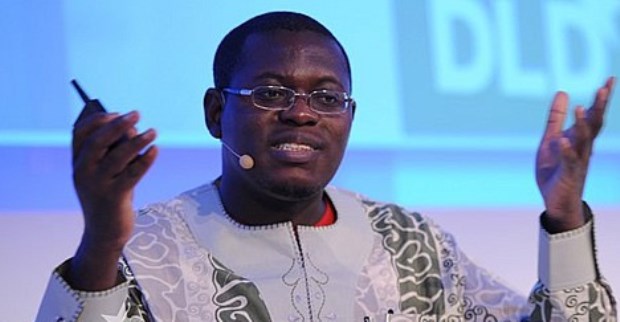
Policy analyst and Vice President of IMANI Africa, Bright Simons, has strongly disputed claims by the State Interests and Governance Authority (SIGA) that Ghana’s state-owned and controlled enterprises recorded a dramatic turnaround into profitability in 2025.
He questioned the accuracy of SIGA’s reported GH¢19.8 billion combined net profit recorded by Ghana’s state-owned enterprises (SOEs) in 2025.
SIGA’s 2025 State Ownership Report described the results as a major improvement in the financial performance of the state-owned enterprise sector.
According to the report, total revenue increased by 28.12%, rising from GH¢137.64 billion in 2024 to GH¢176.43 billion in 2025. It said the SOEs also moved from a combined net loss of GH¢2.26 billion in 2024 to a reported net profit of GH¢19.8 billion in 2025.
However, Mr Simons argued that the figures presented do not withstand scrutiny and are undermined by inconsistencies, errors, and flawed comparisons across successive SIGA reports.
SIGA had reported that state-controlled businesses shifted from significant losses to substantial profits in 2025, framing the results as a major recovery after years of underperformance.
Mr. Simons, who examined the data with analytical tools including Tabula and Excel Power Query, contended that the picture collapses under closer examination, especially when currency effects are isolated and previous reports are compared.
A central problem, according to him, is the repeated revision of historical figures without explanation.
He noted that the net loss for 2023 has appeared as GH¢2,573.2 million in the 2023 report, GH¢7,143.5 million in the 2024 report, and GH¢6,823.55 million in the 2025 report.
The 2022 net loss, Mr. Simons further observed, has been published in four different ways, while 2021 revenue has appeared in five different versions.
Consequently, total liabilities for 2021 have swung between GH¢135,883 million, GH¢172,043 million and GH¢135,914 million across reports—a variation of roughly GH¢36 billion that appears and then disappears. These shifting baselines, he again argued, make reliable year-on-year comparisons extremely difficult.
“When currency revaluation effects are removed, the underlying performance looks markedly weaker”, he noted.
Net profit declined
Mr. Simons stated that net profit fell 17.1 per cent, operating profit declined 22.7 per cent, and the operating margin narrowed by 3.5 percentage points between 2024 and 2025.
According to him, the headline swing to profitability was driven overwhelmingly by exchange-rate movements at the Electricity Company of Ghana (ECG). ECG moved from exchange-rate losses of GH¢8,837.71 million in 2024 to gains of GH¢12,157.79 million in 2025—a turnaround of nearly GH¢21 billion that accounted for 95.2 per cent of the entire profit swing celebrated by SIGA.
He said excluding those revaluations, ECG’s operating result shifted from a profit of GH¢1.84 billion to a loss of GH¢14.25 billion.
Furthermore, ECG’s operating cash flow deteriorated from an inflow of GH¢6.51 billion to an outflow of GH¢12.54 billion, a negative swing of GH¢19.05 billion, even as the company took in GH¢20.44 billion in new financing.
Dividend performance
Mr. Simons opined that dividend performance further undermined the success narrative.
He pointed out that only US$1.4 million in dividends were realised from the 53 fully state-owned enterprises in 2025, a 45.5 per cent drop from the previous year.
Mr. Simons questioned the value of celebrating accounting profits when actual cash returns to the state are falling.
He also highlighted methodological problems.
The celebrated turnaround was measured against a 2024 baseline that had been reduced by three-quarters between report editions, using a ratio whose definition changed at the same time—neither adjustment was disclosed.
Mr. Simons said the widely cited 976 per cent improvement figure is meaningless because it involves a swing from negative to positive territory.
Other errors compound the concerns
Mr. Simons said SIGA’s published cost figure for 2021 is overstated by GH¢50.9 billion (using GH¢104.97 billion instead of GH¢54.04 billion), an error that artificially inflates apparent efficiency gains in later years.
He noted a pattern in which the earliest year’s cost figure in multiple reports is an exact copy of a figure from two years later, with similar cell duplications appearing in mining and joint-venture sections.
Equity movements raise further questions
According to Mr. Bright Simons, equity dropped by GH¢12.69 billion in 2025, creating a GH¢32.49 billion gap relative to the reported profit line, even though net worth had risen during previous years of losses.
“Separately, GH¢4,128.08 million booked as profits from GETFund represented unspent levy collections rather than operational earnings.
“Profits from companies in which the state holds only tiny stakes (such as 0.04 per cent in AngloGold) were also presented in ways that overstated Ghana’s attributable share,” he pointed out.
Mr. Simons concluded that the 2025 report, and earlier editions, fail to provide an accurate picture of the financial health of Ghana’s state-controlled enterprises. He has therefore called on SIGA to withdraw the current reports, correct the errors, and issue a more reliable and consistent data series.