

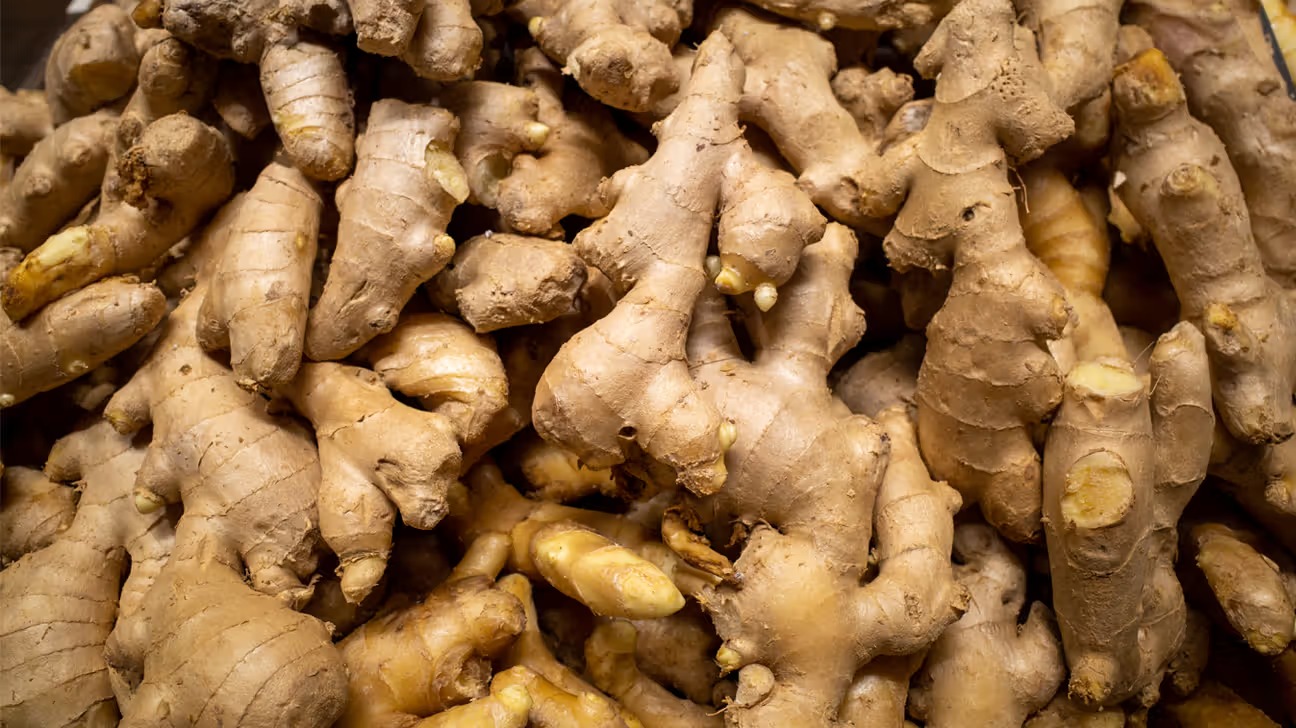
Consumers are expressing concern over the increasing cost of ginger on the market and are calling on stakeholders, particularly farmers, to expand cultivation to ensure affordability and steady supply.
Speaking to the Ghana News Agency (GNA) in Accra on Friday, some consumers questioned why ginger prices continued to rise despite the crop being widely cultivable in Ghana.
At the Tema Station, Awula Naa, a spice trader, said she could no longer sell ginger in small quantities such as GHC5.00 because a bucketful now costed her GHC1,500.
According to her, ginger is now sold at GHC10.00, GHC20.00 and GHC50.00 portions.
She said many buyers complained about both the quantity and prices, forcing some consumers to opt for the already packaged ginger products on the market.
Ms Josy Larbi, a journalist, said she was unable to buy enough ginger to add to her stew ingredients last week because of the high prices.
She explained that three small pieces of ginger were being sold for GHC10.00, prompting her to ask her younger sister to purchase GHC5.00 worth from a nearby shop instead.
“When it was brought, the quantity was too small. If I had known it would be that little, I would have bought the one already packaged on the market,” she said.
Ama Darkoa, a beautician, also lamented the situation, saying she bought GHC20.00 worth of ginger to prepare pepper sauce, popularly known as shito, but received only a small quantity.
According to her, when she questioned the seller, she was told that ginger prices continued to increase.
Aisha Mohammed, a waakye seller at the Tema Station, told the GNA that it had become difficult to buy the quantity of ginger needed to prepare shito for her customers.
She said she now had to manage with whatever quantity she could afford.
Ginger, scientifically known as Zingiber officinale, is a rhizome that has been used for thousands of years to treat nausea, indigestion and inflammation.
It is also known for its antioxidant properties and pain-relieving benefits.
In Ghana, both fresh and dried ginger are widely used in the preparation of soups, stews, tea, beverages and baked products.
Credit-GNA