
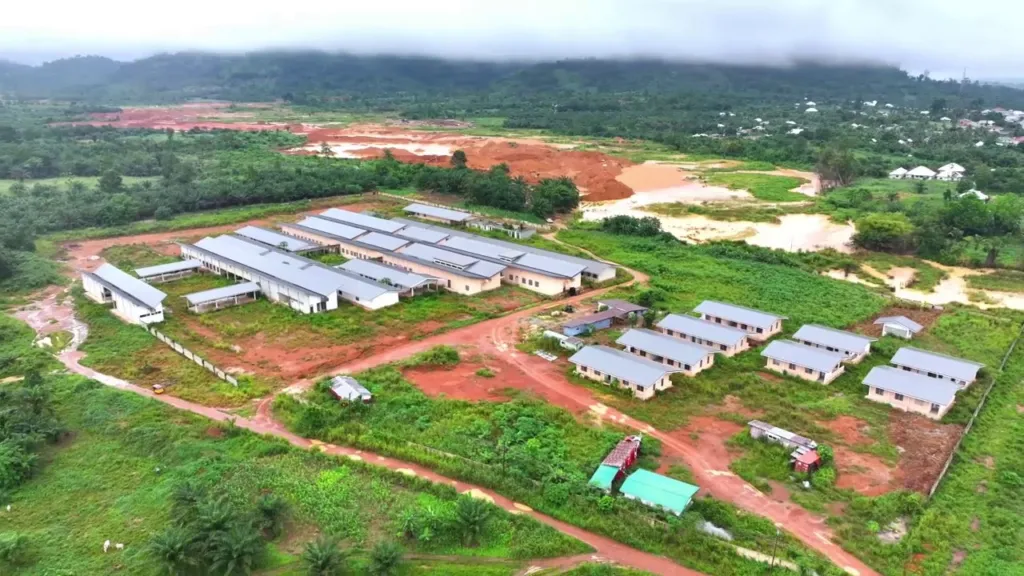
Illegal mining activities popularly known as galamsey, have been taken to highly catastrophic levels under the governing National Democratic Congress (NDC) as illegal miners have invaded Agenda 111 hospital in Adansi Asokwa, water bodies, forests and arable lands across the country with reckless abandon.
Communities like Atronie in the Sunyani Municipality of the Bono Region, which hitherto had not experienced the devastating menace, have been brazenly taken over by marauding illegal miners, polluting rivers, farms; and destroying livelihoods.
President John Dramani Mahama, who in the lead-up to the 2024 general election promised to end galamsey with Artificial intelligence (AI), appeared to have abandoned this solemn pledge to the Ghanaian people after winning the election and has virtually become helpless, encouraging more members of the governing party to defile the lands that have been strictly protected like supine virgins.
Municipal and District Chief Executives (MDCEs) and Members of Parliament (MPs) belonging to the governing NDC have either been accused by Chiefs of being active participants in galamsey or facilitators for huge financial rewards.
Unfortunately, even Civil Society Organisations (CSOs), Churches, Mosques and some self-acclaimed men of God who lectured on the negative effect of galamsey with loud microphones ahead of the last elections, have apparently been afflicted by amnesia, not remembering anything on illegal mining.
The situation has become so devastating that the Chiefs and people of Atronie recently threatened to invoke deities to fight the illegal mining activities.
“We are going to invoke the assistance and anger of our local deity to stop the galamseyers, and that will be disastrous,” Nana Yaw Ampofo, Secretary to the Atronie Traditional Authority warned.
Illegal miners takeover Agenda 111 hospital
The rampaging illegal miners have taken over the abandoned Agenda 111 hospital project site at Adansi Asokwa in the Ashanti Region, raising fresh concerns over the security of stalled government infrastructure projects and the growing environmental impact of unauthorised mining.
The multi-million-cedi district hospital was initiated in 2021 under the previous administration’s Agenda 111 programme to deliver modern healthcare to Adansi Asokwa and nearby communities that have long relied on facilities in places such as Obuasi, New Edubiase and Fomena.
The Agenda 111 initiative aimed at expanding healthcare infrastructure across the country, has become the latest victim of illegal mining.
Heavy equipment moved to site
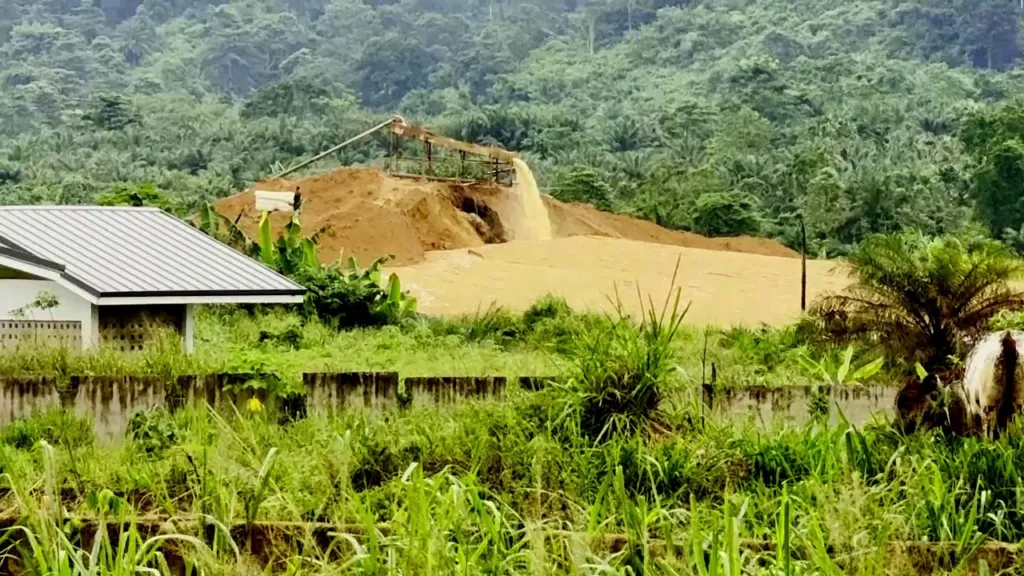
By early July 2026, illegal miners had moved in with heavy equipment, laying pipes connected to mechanised boreholes, pumped water for washing, and operated at least three excavators.
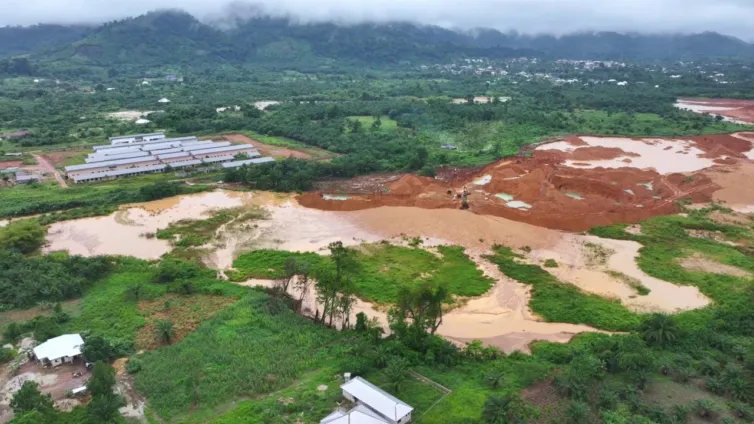
Deep open pits dotted the field, and muddy wastewater from the operations flowed toward the hospital premises and nearby homes.
The activity occurred in open areas around unfinished wards and staff bungalow foundations, within about 100–500 metres of the Adansi Asokwa District Police Headquarters, District Assembly and District Court.
Residents and reports estimate the project reached roughly 90 percent completion before construction stalled following the change of government after the 2024 elections. The abandoned site became overgrown with weeds and a habitat for reptiles.
Residents indicated that excavators and other heavy mining equipment have moved onto portions of the project land, digging large pits in search of gold while construction materials and the partially completed structure remain unattended.
Widespread controversy
The invasion of the hospital has sparked widespread concern among community members, who fear the illegal activities could permanently damage the site and make it more expensive to complete the hospital when construction eventually resumes.
Assembly Member for Bawdwesango electoral area, Premier Agyekum, described the destruction of arable land as heartbreaking and questioned how operations continued so close to the police headquarters, suggesting authorities appeared to have turned a blind eye.
“It is heartbreaking to see illegal mining destroying our arable lands. What worries me most is that the District Police Headquarters is located right beside this galamsey site, yet the destruction continues unabated. It appears as though those responsible for enforcing the law have turned a blind eye to what is happening,” he bemoaned.
Residents, including Kate Adu Nyaanta, warned that excavation near the River Jimi could heighten flooding risks once the hospital becomes operational, endangering patients, pregnant women, nursing mothers and staff.
Residents alarmed
Some residents have also expressed disappointment that land earmarked for a critical healthcare facility has been left vulnerable to illegal miners.
According to them, the hospital project was expected to improve access to healthcare services for thousands of people in Adansi Asokwa and surrounding communities. However, prolonged delays in construction have created an opportunity for galamsey operators to invade the site.
Community members say the mining activities have altered the landscape, leaving behind deep excavations that could pose serious safety risks, especially during the rainy season.
Residents are calling on government authorities, local security agencies and traditional leaders to intervene immediately to halt the illegal operations and secure the project site.
Threat to public investment
The occupation of the site by illegal miners highlights the broader challenge of protecting public investments that have stalled due to funding or administrative delays.
Analysts warn that allowing unauthorized mining to continue on government project sites not only destroys infrastructure but also increases future rehabilitation costs.
The Agenda 111 programme was launched to bridge healthcare infrastructure gaps by constructing district and regional hospitals across Ghana. While some facilities have been completed or are nearing completion, others remain at various stages of construction.
The situation at Adansi Asokwa illustrates how prolonged project delays can expose valuable public assets to encroachment and vandalism.
Environmental concerns
Beyond the threat to the hospital project itself, environmental observers say illegal mining activities could have lasting consequences for the surrounding ecosystem.
Galamsey operations often involve extensive land excavation and, in some cases, the pollution of nearby water bodies with hazardous chemicals.
Although it remains unclear whether chemicals are being used at the Adansi Asokwa site, experts caution that uncontrolled mining can lead to soil degradation, erosion and destruction of vegetation.
The large pits created by excavators could also become dangerous death traps if they are left uncovered after mining activities cease.
Calls for urgent action
Residents and civil society groups are urging the government to deploy security personnel to remove the illegal miners and prevent further destruction.
They are also appealing for construction work on the hospital to resume as soon as possible to ensure the facility serves its intended purpose.
Many believe completing the hospital would not only improve healthcare delivery but also eliminate the opportunity for illegal miners to occupy the land.
Observers say the incident underscores the need for stronger protection of state-funded infrastructure projects, particularly those that remain inactive for extended periods.
Broader fight against galamsey
Successive governments have launched various operations to clamp down on galamsey due to its devastating impact on forests, rivers and farmlands.
Despite these efforts, illegal mining remains a persistent challenge, driven largely by rising gold prices and weak enforcement in some areas.
Environmental advocates have repeatedly called for stricter enforcement of mining regulations, tougher penalties for offenders and stronger collaboration between security agencies, local authorities and traditional leaders.
As authorities assess the situation at the Adansi Asokwa Agenda 111 hospital site, residents hope swift intervention will preserve the project and allow construction to continue.
For many in the community, the hospital represents more than just a building—it is a long-awaited investment in healthcare and development.
They fear that unless urgent action is taken, illegal mining could further derail a project intended to improve the lives of thousands of Ghanaians.