

The strength and success of a political party are largely dependent on such factors as the unity and cohesion among its members, adherence to its principles, policies and decisions, as well as, stability and consistency in the party. These critical factors are all directly linked to the level of discipline in the party.
It is therefore, important for any serious, credible political party to appreciate the merits of an effective and efficient disciplinary system and procedure which promotes respect, accountability, team work and cooperation internally, while enhancing public trust and credibility.
The Constitution of a political party is the fundamental document which provides the Party’s principles, objectives and operational rules.
There are specific provisions for maintaining internal discipline and cohesion including disciplinary bodies, defined offences arising out of specific actions that constitute a breach of discipline, sanctioning mechanisms and an appeal process.
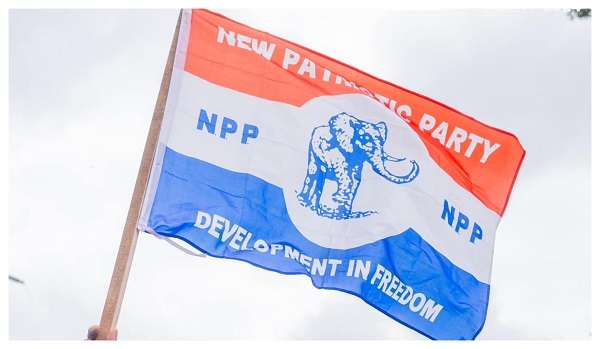
The New Patriotic Party (NPP) is a major political party in Ghana formed and registered with the Electoral Commission of Ghana on 24th June, 1992. At the beginning of 2025, it had been in government for sixteen out of its thirty-three years of existence (2001 – 2009, 2017 – 2025). The party has had strong representation in the Parliament of Ghana since 1997, either as the minority or majority side of Parliament. The Party stayed away from the first Parliamentary elections of the Fourth Republic in 1992 due to strong reservations about the conduct of the 1992 Presidential elections.
In compliance with the Constitution of Ghana 1992, every political party is required to register with the Electoral Commission, furnish the Commission with a copy of its Constitution [article 55(7)] and ensure that its internal organisation conforms to democratic principles. Ultimately, a political party must ensure that “its actions and purposes shall not contravene or be inconsistent” with the Constitution or any other law. [Article 55(5)].
The NPP’s Constitution has gone through various amendments over the years with the latest amendments approved by the highest decision-making body, the National Delegates Conference on 19th July, 2025. The Constitution of the NPP was first registered with the Electoral Commission on the 24th of June, 1992, amended on 29th August, 1998; 22nd August, 2009; 17th December, 2017 and 19th July, 2025, respectively.
ESSENCE OF PARTY DISCIPLINE
Party Discipline, sometimes identified as Party cohesion, is the broad acceptance by members of a political party to comply with and uphold rules, policies, and principles, and decisions of the party.
Apart from adherence to party principles and policies, party members are expected to uphold and defend the party’s decisions while being held accountable for their actions.
It is expected that strong party leadership will lead to the sustenance of party discipline, thereby maintaining unity and cohesion among members who work towards a common goal.
While a disciplined party presents a positive public image to enhance its credibility among voters, it also helps to ensure stability and consistency in the party’s policies and actions.
In this age of the rise of instant communication due to the prevalence of digital media, parties are required to maintain strict party discipline as well as strict message discipline towards maintaining control over the entire party including those in Parliament to ensure that the party’s agenda reigns supreme.
Given the state of affairs in the party currently, it is imperative for the NPP to assess its dispute resolution and grievance procedures towards minimising the consequences of the breakdown of discipline and weak dispute resolution measures. Obviously, a weak system of managing discipline leads to ineffective governance, a divided and conflict-ridden party with a damaged reputation and loss of public confidence.
The purpose of this paper is to identify the strengths and challenges associated with the implementation of the party’s disciplinary procedures and to recommend areas of improvement to strengthen its governance and democratic structures.
THE NPP CONSTITUTION
The NPP Constitution contains provisions on the rights and duties of members and sanctions for misconduct including, backing and campaigning for an independent candidate or declaration to stand as an independent candidate. Any conduct or activity which occasions a breach of the party’s Constitution or undermines the Constitution shall be the subject of a complaint to the appropriate Disciplinary Committee.
The appointment of members of the Disciplinary Committee at the Constituency, Regional and National levels, with the respective quorum for meetings and time limits for adjudication and recommendations are provided in the Constitution [Article 4(1)].
The Constitution provides that “the National Disciplinary Committee shall have jurisdiction in all matters affecting discipline at the National level, with respect to National Executive Officers and key members of the Party, including Ministers and Deputy Ministers, former Ministers and former Deputy Ministers, Members of Parliament, former Members of Parliament, Patrons, Founding Members, Members of Standing Committees and National Council Members, as well as other Members who may be referred to the National Disciplinary Committee by the National Executive Committee”. Article 4(3)(4)
The functions, powers and proceedings of the Constituency, Regional and National Disciplinary Committees, as well as appeals against their decisions by aggrieved members of the party, are all provided under Article 4(4)(5) and (6) of the Constitution.
Regarding Misconduct, the Constitution provides that
“(1) A complaint shall involve an allegation that any of the following acts of misconduct relates to a Member or Office Holder as the case may be:
(a) violation of the duties of a Member or Office Holder;
(b) violent, dangerous or intimidating conduct against another Member or Office Holder;
(c) falsification of reports, accounts or expense claims or other fraudulent conduct;
(d) wilful damage to Party property;
(e) breach of the duty to publicly uphold Party decisions and policies;
(f) creation of discord or factionalism within the Party;
(g) bringing the name of the Party into disrepute, public ridicule, contempt or disrespect;
(h) defection to another Party.
(2) Any conduct, which has the effect of any of the above, shall attract sanctions, including fines, suspension, expulsion from the Party, or disqualification from holding any office or position in the Party for a stated period to be recommended by the relevant Disciplinary Committee, subject to such modification as the Executive Committee may make.” [Article 4(7)]
STRENGTHS OF THE PROCESS
Having operated the Party Constitution with modifications since 1992, it is appropriate to assess the effectiveness of the dispute and grievance resolution process in theory and in practice over the years. There have been amendments to the Constitution in order to address the shortcomings and challenges especially, regarding implementation.
For instance, in the July 2025 amendments, the Constitution now vests the power to recommend the suspension of a Member or an office holder in the appropriate Disciplinary Committee instead of the Executive Committee.
An amendment has also been made to specifically provide for the removal of Electoral Area Coordinators upon receipt of a petition from a member.
The Constitution has provided a fair and equal treatment for elected and appointed executive members regarding complaints against such officers where the Regional Executive Committee will adjudicate complaints against Constituency officers and the National Executive Committee adjudicates complaints against Regional Officers, without making any distinction between appointed and elected officers.
A comprehensive appeal process within a reasonable period is provided to offer aggrieved members the platform to exhaust the grievance process.
Specific instances of positive aspects of the disciplinary process include:
- A comprehensive list of acts constituting misconduct is provided, including violence, fraudulent conduct, bringing the party into disrepute, creating factionalism, and defection. Sanctions can include fines, suspension, or expulsion.
- Members have a right to petition the appropriate Executive Committee (Constituency, Regional, or National) for redress for alleged unjust or unfair treatment.
- The process has been reformed with safeguards and certainty in the complaints and adjudication process.
- If diligently implemented, the provisions on adjudication of complaints and enforcement of disciplinary actions in the Party’s Constitution shall
- Offer protection of the rights of members.
- Hold members and officers accountable for their actions.
- Deter members from acts of misconduct and abuse of the process.
- Promote adherence to the Party’s code of conduct and values.
- Promote fairness and equity among members.
- Provide opportunities for reconciliation, unity, trust, respect, as well as, positive organisational culture and standards.
CHALLENGES
The party has over the years, been expected to ensure adherence to the disciplinary process and effectively deal with acts of misconduct and complaints against members and officers of the Party.
A study of the process, feedback from members and reports from all levels of the party confirm that there are weaknesses in the application and execution of the procedures.
Despite the well-defined constitutional framework, the practical application and execution of the procedures are fraught with challenges, some of which are due to conflict of interest, lack of strong leadership, patronage and a lack of appreciation of the procedures in the Constitution.
Most prominent among the challenges are:
- The failure to appoint credible and knowledgeable disciplinary committee members with integrity.
- Absence of timely response to complaints or petitions, including acknowledgement of receipt of complaints and timelines for the adjudicating process.
- A weak process which tends to compromise fair hearing and sometimes, fails to offer the complainant the opportunity to adduce evidence and to call witnesses.
- The absence of impartial and thorough investigations, as well as, confidentiality and privacy safeguards to protect all parties.
- The failure to provide a clear resolution or outcome of grievances, including decisions made or actions to be taken.
- Lack of assurance and guarantee of protection of complainants from retribution and retaliation.
- Lack of publication and communication of the outcome of proceedings to the affected persons and the entire membership of the party.
- The use of the disciplinary process to silence members due to abuse of the suspension and sanctions powers.
- The absence of guidelines on media engagement and protocols.
As a result of the challenges in the implementation process, the principal aims and goals of the party to reduce conflicts, promote fairness, build trust and confidence, and enhance the reputation and image of the party, appear to be unattained.
There is therefore, an urgent need for more diligent and concerted effort to deepen the party’s internal democratic governance and attract more members and sympathizers.
AREAS OF IMPROVEMENT
It is clear that the party can only overcome the foregoing weaknesses if the basic elements of dispute and grievance resolution are complied with and diligently pursued.
The party is required to pay particular attention to this aspect of the constitutional process and good governance by:
- Enhancing transparency in the disciplinary process.
- Consistently complying with the provisions and procedures for grievance resolution to avoid the perception of bias and unfairness.
- Providing training and capacity building programmes for party officials and members on conflict resolution at all levels.
- Promoting an environment where all members will appreciate the tenets and value of discipline and amicable resolution of disputes, without fear of retaliation and vindictiveness, through education and information.
- Creating the platform for resolving disputes through mediation, negotiation and arbitration to foster unity, discipline and reconciliation at all levels and regularly
- Engaging professionals and experienced members to assist in addressing this fundamental component of the Party’s constitutional and political mandate.
- Ensuring effective supervision and regular reviews of the process at all levels and to provide regular internal reports.
- Establishing clear media engagement guidelines including social media policy to hold members accountable for their media statements and actions.
CONCLUSION
The New Patriotic Party (NPP) has established a robust constitutional framework for dispute resolution and grievance procedures, featuring tiered Disciplinary Committees (Constituency, Regional, National), a comprehensive list of acts of misconduct, and a structured appeal process, all theoretically aligned with democratic principles.
However, a significant gap exists between this sound theory and its practical execution. The system is severely compromised by weaknesses in its implementation, including the failure to appoint credible committee members, an absence of timely response and fair hearing procedures, and the abuse of the sanctions regime.
These operational failures – rooted in issues like conflict of interest and lack of strong leadership – prevent the party from achieving its core goals of promoting fairness, building trust, and reducing conflict.
Ultimately, the conclusion is that the party’s future success depends less on its written rules and more on the political will to enforce them impartially and urgently, warranting the enhancement of transparency and consistency in compliance.
By O. B. Amoah