

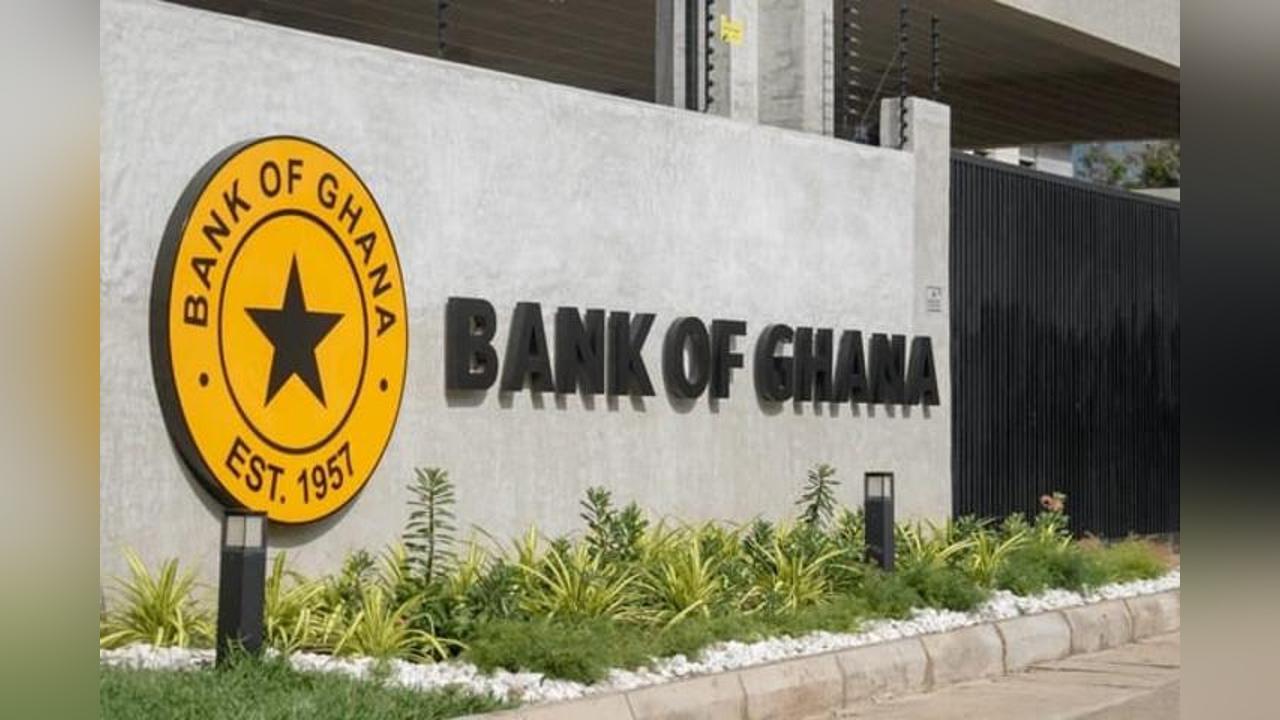
All 23 banks operating in Ghana have now met the regulatory capital requirements, the Governor of the Bank of Ghana, Dr Johnson Pandit Asiama, has disclosed, marking the completion of a recovery process that began after the Domestic Debt Exchange Programme.
The announcement represents a major milestone for the country’s banking industry, signalling that the sector has successfully navigated the severe pressures that followed the economic crisis and the associated impairments of financial assets.
Speaking at the 43rd Annual General Meeting of the Ghana Association of Banks and the launch of the sixth edition of the GH Bankers’ Voice Magazine in Accra on Thursday, October 8, 2026, the Governor provided a comprehensive assessment of the sector’s progress and the challenges that still lie ahead.
He recalled that the 2022 audited financial statements had shown thirteen banks in breach of regulatory capital requirements as a direct consequence of the economic crisis and the resulting impairments on financial assets. That period tested the resilience of the industry and required coordinated action from multiple stakeholders.
“Through the collective efforts of banks, shareholders, investors, the Association, Government and the Bank of Ghana, all 23 banks have now met the regulatory capital requirements. This is a significant achievement,” he said. The restoration of capital adequacy across the entire industry closes a difficult chapter and creates a stronger foundation on which future growth and stability can be built.
Dr Asiama was careful, however, to frame the achievement as a beginning rather than an end. He stressed that restoring regulatory capital was only the first step. The priority must now shift to ensuring that banks maintain capital levels that are commensurate with their individual risk profiles and that they continue to build sufficient buffers to absorb future shocks.
This emphasis is particularly relevant, he noted, because the risks confronting banks are becoming increasingly complex. Boards and senior management are therefore expected to demonstrate a clear and thorough understanding of the risks embedded in their institutions’ business models.
In pursuit of that objective, the Bank of Ghana undertook a comprehensive thematic review of the viability and long-term sustainability of banks’ business models in 2025. The vulnerabilities identified during the exercise have already been shared with the respective institutions, and formal engagements with boards and senior management have commenced.
The central bank intends to conduct a second round of Business Model Analysis next year, underscoring its determination to keep supervisory attention focused on the underlying sustainability of banking strategies rather than solely on headline capital ratios.
Sector performance has improved markedly since 2025, reflecting both improved macroeconomic conditions and the continued impact of regulatory and supervisory reforms. As at the end of August 2026, total banking sector assets had risen by 20.47 per cent to GH¢500.20 billion, compared with GH¢415.20 billion a year earlier.
The expansion in the balance-sheet size of the industry points to renewed confidence and an expanding capacity to intermediate funds within the economy.
Capitalisation metrics have also strengthened. The sector’s Capital Adequacy Ratio improved from 18.28 per cent to 19.10 per cent over the same period, remaining comfortably above the regulatory minimum of 13 per cent. Asset quality has shown parallel progress, with the Non-Performing Loans ratio declining from 20.77 per cent in August 2025 to 15.66 per cent in August 2026.
These figures indicate that the industry has moved into a healthier position, yet the Governor cautioned against interpreting the improvement as the conclusion of the reform journey.
The critical task now, he said, is to ensure that stronger balance sheets translate into sustainable business models, more robust risk management practices, and greater support for productive economic activity.
On the specific issue of credit risk and asset quality, Dr Asiama reminded banks of the requirement to reduce their NPL ratios to the prudential limit of 10 per cent by the end of December 2026.
He described asset quality as one of the most important remaining vulnerabilities within the banking sector. In August 2025 the Bank of Ghana issued the Notice on Non-Performing Loans, a measure designed to strengthen governance arrangements for credit risk management, establish clear prudential limits on NPLs, and provide remedial measures in respect of wilful defaulters.
Beyond compliance with numerical targets, the Governor called on banks to strengthen underwriting standards, credit administration, loan monitoring, restructuring practices, collateral management, write-offs and recovery processes.
The increasing regulatory attention to NPLs, he explained, represents a deliberate shift from a narrower focus on provisioning for problem loans toward a more comprehensive approach in which banks actively prevent, manage, recover and resolve problem assets. To reinforce this orientation, the Bank is in the process of issuing a Directive on Credit Risk Management that will complement the earlier NPL Notice and provide a more detailed supervisory framework.
Liquidity management and stress testing also featured prominently in the Governor’s address. He announced that the Bank of Ghana is in the process of publishing the Liquidity Coverage Ratio Directive, which will establish the prudential liquidity requirement for banks and mark an important milestone in the strengthening of liquidity regulation.
Dr Asiama emphasised that the ratio should not be viewed merely as another regulatory figure. Instead, it should form part of a broader liquidity risk-management culture supported by appropriate contingency funding arrangements, diversified funding sources and effective asset-liability management.
In parallel, the Bank has strengthened its macroprudential stress-testing framework and has been engaging banks on the results of stress tests conducted under severe but plausible economic and financial scenarios.
These exercises serve to identify vulnerabilities and to assess the overall resilience of the banking system to shocks. Institutions are expected to incorporate the findings into their capital planning, liquidity management, risk-appetite frameworks and strategic decision-making processes.
Turning to digitalisation, cybersecurity and artificial intelligence, the Governor observed that cybersecurity, digital fraud, data protection, third-party dependencies, cloud computing and operational resilience are receiving increasing supervisory attention.
Following the publication of the revised Cyber and Information Security Directive, the Bank has continued to work closely with the Ghana Association of Banks and the wider industry to facilitate implementation.
Thematic reviews focusing on the practical application of the directive will be undertaken. Boards and senior management, he stressed, should treat cybersecurity and operational resilience as core business risks rather than as purely technological issues.
On artificial intelligence, Dr Asiama revealed that the Bank is developing a Directive on the Use of Artificial Intelligence in the Financial Sector. The forthcoming directive aims to promote responsible experimentation and innovation while ensuring appropriate governance throughout the AI lifecycle.
He acknowledged that AI holds significant potential to improve credit assessment, fraud detection, customer service, risk management and operational efficiency. At the same time, it introduces new risks related to data quality, model risk, cybersecurity and consumer protection that must be carefully managed.
In his concluding reflections, the Governor framed the central question facing the industry not as whether the banking sector has recovered from the crisis that led to the Domestic Debt Exchange Programme and emerged more resilient, but whether sufficient effort is being made to preserve the gains and to build a sector better equipped to withstand future shocks.
He made clear that regulation alone cannot create a resilient banking sector.
The ultimate responsibility rests with boards, management and the institutions themselves to cultivate strong risk cultures, sustainable business models and organisations capable of serving customers through both favourable conditions and periods of stress.
The ambition, he said, should be to build a banking sector that is strong enough to absorb shocks, innovative enough to adapt to change, and capable of financing Ghana’s long-term economic transformation.
The restoration of regulatory capital across all 23 banks provides a solid platform, yet the real measure of success will be the industry’s ability to convert that recovery into enduring resilience, disciplined risk management and meaningful support for the productive sectors of the economy.