
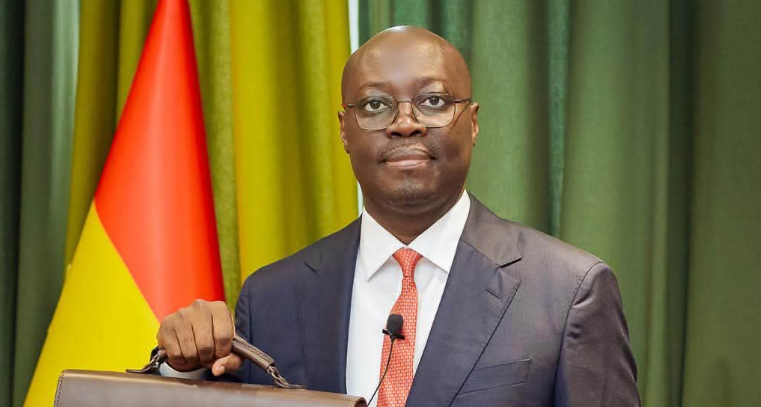
The Mahama administration significantly undershot its expenditure target in the first half of 2026, cutting public spending by GH¢35.6 billion as part of an aggressive fiscal consolidation drive that Finance Minister Dr. Cassiel Ato Forson described as delivering one of Ghana’s strongest fiscal performances in recent years.
Presenting the 2026 Mid-Year Fiscal Policy Review in Parliament on Thursday, Dr. Forson announced that total expenditure on a cash basis reached GH¢136.9 billion by end-June, well below the programmed half-year target of GH¢172.5 billion.
This disciplined approach occurred alongside a marginal revenue shortfall. Total revenue and grants stood at GH¢124.8 billion, just shy of the GH¢126.1 billion target. Despite the slight revenue dip, the substantial reduction in spending has strengthened the overall fiscal position and lowered the government’s borrowing requirements.
Dr. Forson emphasised that the lower expenditure was driven by deliberate policy choices aimed at restoring fiscal prudence rather than any distress.
Expenditure Discipline Yields Major Savings
On a commitment basis, total expenditure reached only 8.0% of GDP against a half-year target of 9.9%. Primary expenditure (excluding interest) was even more restrained at 6.6% of GDP compared to the targeted 8.1%.
Interest payments also declined sharply to 1.3% of GDP against a target of 1.8%, generating significant savings. Overall interest costs totalled GH¢21.5 billion — GH¢6.9 billion below the projected GH¢28.4 billion. Domestic interest payments saved GH¢4.2 billion, while external interest payments came in GH¢2.8 billion under target.
The Minister attributed these gains to improved debt management, successful restructuring efforts, and falling interest rates.
Revenue Performance Mixed but Resilient
Revenue collections remained broadly on track despite some weaknesses. Total revenue and grants stood at 7.8% of GDP against a target of 7.9%, while domestic revenue hit 7.7% of GDP.
Taxes on income and property performed strongly, collecting GH¢57.5 billion — exceeding the target by GH¢4.3 billion. Dr. Forson credited this to improved corporate profitability supported by lower interest rates and cedi stability.
However, oil revenue underperformed significantly, recording GH¢6.3 billion against a target of GH¢9.1 billion. Non-oil non-tax revenue also fell slightly short at GH¢9.8 billion versus GH¢11.0 billion expected.
The Energy Sector Levy emerged as a standout performer, raking in GH¢7.7 billion — well above the GH¢4.2 billion target — largely driven by robust collections from the Energy Debt Recovery Levy, which is generating at least GH¢1 billion monthly.
Payroll and Investment Highlights
Compensation of employees was contained at GH¢42.9 billion, below the GH¢45.4 billion target, thanks to tighter payroll controls, including the removal of ghost names and unauthorised allowances.
Capital expenditure was maintained at a healthy GH¢22.2 billion (GH¢19.8 billion domestically financed), signalling the government’s commitment to preserving growth-enhancing investments even amid overall spending restraint.
No New Arrears Accumulated
In a notable achievement, the government reported zero new arrears during the period and even cleared GH¢5.3 billion of outstanding payables. Dr. Forson hailed the success of the Commitment Authorisation system, stating: “Government did not incur expenditure it could not pay for. This is unprecedented.”
Fiscal Balances Beat Targets
The strong expenditure control enabled the government to outperform all major fiscal targets. By end-June:
- Primary surplus on commitment basis reached 0.9% of GDP (on track for the full-year 1.5% target).
- Overall deficit on commitment basis narrowed to just 0.4% of GDP, far better than the 2.2% target.
- Cash-based balances also recorded better-than-expected surpluses.
Growth Concerns vs Long-Term Stability
While economists acknowledge that the GH¢35.6 billion spending compression has bolstered debt sustainability and investor confidence, some warn that the sharp reduction in government consumption and investment could temporarily dampen economic activity in sectors reliant on public spending.
Dr. Forson, however, maintained that these measures represent the right policy direction. He highlighted that revenue remained largely on track, expenditure was controlled for the right reasons, fiscal balances exceeded targets, no new arrears were created, and interest costs continued to fall — clear signs that Ghana’s fiscal recovery is firmly on course.