
Ghana Water Limited (GWCL) has been ordered to pay US$235 million to the operator of the Teshie desalination plant following an international arbitration over the termination of a water purchase agreement.
The International Chamber of Commerce (ICC) arbitration tribunal delivered two final decisions on September 17, according to Spanish infrastructure company Cox, which owns a 95% stake in Befesa Desalination Developments Ghana Limited, the company behind the Teshie project.
Cox announced the outcome on Monday, September 21, saying the award, net of taxes, covers payments arising from the termination of the agreement under which Ghana Water purchased treated seawater from the plant.
Interest on the award will accrue from April 1, 2026, until the amount is fully paid.
The tribunal also substantially dismissed counterclaims filed by Ghana Water against Befesa, including a US$144.5 million claim. Ghana Water was further ordered to contribute to Befesa’s legal costs.
Under a state guarantee linked to the project, the financial liability extends to the Republic of Ghana. Cox, however, said Befesa cannot recover the same amounts twice.
Shutdown of the plant
The dispute follows the shutdown of the Teshie desalination plant in October 2025 by Ghana Water amid unresolved contractual issues and maintenance concerns. The facility has remained idle since then.
The shutdown has affected water supply to several communities, including Teshie, Nungua, Spintex, parts of Sakumono and La.
Residents in these areas have consequently relied on alternative sources, including water tankers and boreholes.
In February 2026, President John Dramani Mahama directed the Finance Minister, the Attorney-General and Ghana Water to engage the plant’s shareholders to resolve the dispute and facilitate the resumption of operations.
Ghana Water Managing Director Adam Mutawakilu later said the utility was pursuing a settlement that would allow the plant to resume supplying water to affected communities.
Cost of desalinated water
At the heart of the dispute is the price Ghana Water paid for desalinated water.
Reports indicate that Ghana Water was purchasing the water at GH¢6.75 per unit while the approved tariff allowed it to sell the water at GH¢1.47.
The difference created a substantial gap between the cost of purchasing the water and the revenue generated from its sale, placing additional financial pressure on the utility.
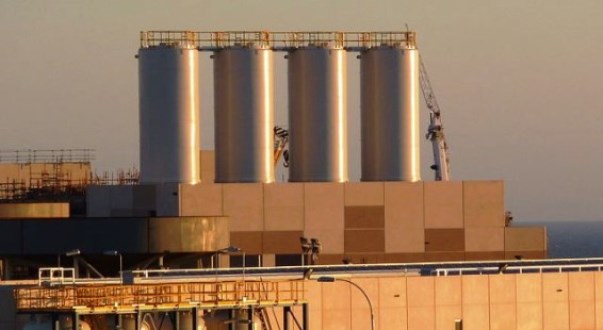
The US$126 million desalination facility was commissioned in 2015 under a 25-year Build, Own, Operate, and Transfer (BOOT) arrangement.
It was designed to produce 60,000 cubic metres of potable water daily and serve up to 500,000 people in the Teshie-Nungua catchment.
Cox acquired the assets of the former Spanish engineering company Abengoa in 2023 and subsequently became the majority owner of the Ghanaian project company.
History of the Teshie desalination plant
The Teshie-Nungua desalination project was conceived as a solution to persistent water shortages in parts of Accra.
Construction of the US$126 million plant began in November 2012 under a 25-year public-private partnership (PPP) structured as a Build, Own, Operate and Transfer arrangement.
President John Dramani Mahama officially commissioned the plant in April 2015.
Befesa Desalination Development Ghana Limited, a subsidiary of Spanish company Abengoa, developed the project in collaboration with Japan’s Sojitz Corporation.
The facility was designed to produce 60,000 cubic metres of potable water every day, providing water to about 500,000 residents in Teshie, Nungua and surrounding communities that had experienced persistent supply challenges.
However, the project soon attracted criticism over its cost and contractual terms.
In 2017, the Public Utility Workers’ Union (PUWU) criticised the agreement, arguing that it was placing a financial burden on Ghana Water.
Under the contract, GWCL was required to pay a fixed monthly capacity charge of about US$1.4 million, regardless of whether the plant was operating.
Critics also raised concerns about the cost of the water and the overall structure of the agreement, with some describing it as a deal that could “milk the country.”
Residents also raised complaints about the quality of the water, with some saying it was too salty for certain household uses.
The plant subsequently experienced technical problems, including corrosion, which contributed to costly maintenance requirements and repeated shutdowns.
In January 2018, Ghana Water shut down the plant, citing high operational costs and continuing contractual challenges. The closure contributed to water shortages in affected communities.
In 2020, the Government of Ghana terminated the contract with Befesa, citing the financial burden the project placed on Ghana Water.
The latest arbitration award has now added a new chapter to the long-running dispute, increasing Ghana’s financial exposure while efforts continue to resolve the matter and restore the plant to operation.