
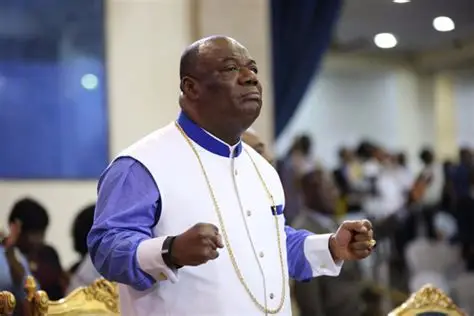
The Founder and General Overseer of Action Chapel International, Archbishop Nicholas Duncan-Williams, has raised concerns about the illegal gold trade in Ghana, warning that powerful interests may be seeking new channels to access gold through the Ghana Gold Board (GoldBod).
According to the renowned preacher, information he received from a sheikh suggested that some individuals who previously obtained gold through illegal means were now looking for ways to purchase the commodity through GoldBod.
He said the development pointed to the influence of well-established individuals with extensive knowledge of Ghana’s gold sector who may be opposed to efforts to enforce regulations.
“It’s clear to me that the GoldBod is dealing with a very powerful movement. People very, very established who knows and understand the field and how to do this and don’t want the right thing to be done,” Archbishop Duncan-Williams said.
Concern over illegal gold trade
The Archbishop said the information he had received about the illegal gold trade was particularly troubling because some gold transactions allegedly took place without corresponding records in Ghana.
He explained that the sheikh had reportedly kept records of the volume of gold purchased illegally, while Ghana did not have records of those transactions.
He claimed the amount of gold allegedly purchased through channels that were not recorded by Ghana exceeded the quantity officially sold by the government.
“The amount of illegal gold that they bought and they had records of it but Ghana didn’t have a record of it. The one Ghana have record of was what the government sold but the one Ghana didn’t have record of was more than what Ghana sold to them and they have all the record and we don’t,” he stated.
Archbishop Duncan-Williams said the situation raised questions about the effectiveness of Ghana’s laws and their enforcement, particularly in relation to illegal mining and the gold trade.
Politics and law enforcement
The Archbishop also criticised the tendency to politicise law enforcement, arguing that political considerations can make it difficult for authorities to enforce laws effectively.
He suggested that some politicians may be reluctant to take firm action against illegal activities because they fear losing electoral support.
“For whatever reason, it looks like the rules and the laws are not working because if anybody tries to make it work and enforce the law, we turn everything to politics,” he said.
According to him, threats from voters and concerns about losing parliamentary seats or political power can influence decisions that should instead be guided by the law.
“And if you don’t do what I want, next time I won’t vote for you. And so because people don’t want to lose their seat in parliament or they don’t want their party to lose, they give in and allow lawlessness to continue,” he added.
Warning over Ghana’s future
Beyond the gold trade, Archbishop Duncan-Williams expressed concern about the broader consequences of illegal mining and environmental degradation in Ghana.
He said the destruction of water bodies and agricultural land was putting the future of the country’s children and grandchildren at risk.
“In the name of politics, we are destroying the future of our children and our grandchildren,” he cautioned.
He lamented the damage being done to water bodies and lands that are used to produce food, warning that continued environmental destruction could have serious consequences for future generations.
“We are poisoning the land. There are so many things we are doing,” he said.
The Archbishop argued that Ghana’s current approach to managing its natural resources could leave future generations facing serious challenges.
“If you look at the way we are running our society as a country and nation, we, the future is in trouble,” he stated.
Calls for prayers for Ghana
Archbishop Duncan-Williams said the concerns had prompted him to dedicate significant time to praying and interceding for the country.
He clarified that his comments were not being made in his capacity as a prophet, but rather from his perspective as someone who studies prophecy and history.
“I am not speaking as a prophet, as much as some may be prophetic, I am speaking as a student of prophecy and a student of history,” he said.
The Archbishop said his study of history had made him particularly concerned about the direction Ghana was taking and the implications for future generations.
He therefore appealed to his congregation to allow time for prayer and intercession for the nation.
“I will indulge you to allow me, speak to you for some few minutes and let’s spend quality time interceding, I don’t normally do this, interceding for country,” he said.
He stressed that the issues surrounding illegal mining, the gold trade, environmental destruction and weak law enforcement required urgent attention.
For Archbishop Duncan-Williams, protecting Ghana’s water bodies, farmland and natural resources must go beyond political interests, with the country’s long-term future placed at the centre of national decision-making.