

The government has served notice that the era of policy pronouncements without implementation in Ghana’s oil palm sector is over.
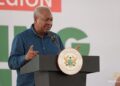
Accordingly, the Minister for Food and Agriculture, Mr Eric Opoku, challenged stakeholders to move decisively “from policy to practice” in growing the country’s oil palm industry.
Mr Opoku made the call on Wednesday, August 12, 2026, in Accra at the maiden edition of the National Oil Palm Multi-stakeholder Forum, organised by the Tree Crops Development Authority (TCDA) on the theme: “From Policy To Practice, The Role of TCDA in Resetting Ghana’s Oil Palm Industry.”
The forum brought together policymakers, financiers, traditional authorities, development partners, smallholder farmers, processors, researchers, security agencies and other value chain actors to chart a common path for the sector.
Policy must change lives
Addressing the gathering, Mr Opoku said Ghana was not lacking in policies or good intentions but in the discipline to implement, coordinate and measure results.
“A policy that remains on paper does not create a single job, raise customers’ income, supply a processor with raw material, or sell the nation $1 in imports. Policy acquires value only when it changes lives,” he said.
He described the roundtable as more than another conversation, insisting it must become “a platform for alignment, accountability, and action,” with participants leaving with a clear understanding of “who will do what, by when, with what resources, and against which measurable targets.”
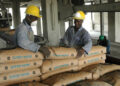
The Minister said oil palm was a strategic link between agriculture and industry, supporting farmers, nursery operators, transporters, processors, traders and manufacturers, with women playing a particularly important role in processing and marketing. Beyond edible oil, he noted, the crop provides raw materials for cosmetics, pharmaceuticals, confectionery, animal feed and bioenergy.
He observed that although Ghana had favourable agroecological conditions, experienced farmers, research capacity and a growing processing base, national demand for palm oil substantially exceeded domestic supply, with the deficit met largely through imports — a gap he said represented “jobs not created, factories operating below capacity, farmers denied reliable markets” and room for smuggling that deprives the state of revenue.
100,000 hectares planned under 2026 Budget.
Mr Opoku disclosed that under the leadership of President John Dramani Mahama, the government had, in the 2026 Budget, set out its ambition to support the establishment of 100,000 hectares of new oil palm plantations, describing it as “a national programme for building an integrated, sustainable, and competitive industry,” not merely a target for expanding acreage.
He said the success of the initiative would be judged not just by hectares planted, but by the quality of planting materials, farm productivity, inclusion of smallholders, women and young people, transparency in land arrangements, protection of forests and biodiversity, access to finance, processing efficiency, market linkages and farmer incomes.
The Minister outlined government’s immediate priorities as raising productivity through quality planting materials, placing smallholders at the centre of the industry, resolving land and financing constraints, building processing capacity and competitive markets, and ensuring a traceable, inclusive and sustainable value chain.
He charged the TCDA, established under the Tree Crops Development Authority Act, 2019 (Act 1010), to serve as the institutional anchor coordinating registration, licensing, production planning, industry data and traceability, stressing that compliance by nursery operators, farmers, processors, traders and exporters was “the foundation of credibility, investor confidence, traceability, and access to premium markets.”
He said no single institution could deliver the transformation alone, and called for coordinated effort among the Ministry of Food and Agriculture, TCDA, research and financial institutions, traditional authorities, farmer organisations and the private sector.
“Together, let us reset Ghana’s oil palm industry, and together let us build an industry that is productive, inclusive, sustainable, and globally competitive. After today’s event, we are not going to converge to listen to reports again. We are going to see the actions of our collective result,” Mr Opoku said.
“TCDA to enforce standards, drive self-sufficiency by 2032′
In his welcome address, the Chief Executive Officer of TCDA, Dr Andy Osei Okrah, described the forum as a decisive turning point for Ghana’s oil palm sector, bringing together the full spectrum of value chain actors, including the Ghana Armed Forces and the Ghana Police Service.
He said TCDA’s ambition was to expand plantations, create sustainable jobs, reduce reliance on imported edible oils and position Ghana as a competitive and respected player in the global palm oil market.
Providing industry context, Dr Osei Okrah said palm oil remained the world’s leading vegetable oil, accounting for roughly 37 per cent of total oil seed output and yielding more oil per hectare than any other major vegetable crop. He, however, described as sobering the fact that West Africa, the natural origin of the oil palm tree, contributed less than 3.5 per cent of global output, against a combined 82 per cent for Indonesia and Malaysia.
He said it was against this background that President Mahama had set a clear, time-bound vision for Ghana to achieve total self-sufficiency in oil palm, described as “red gold”, production by 2032, formalised through the new National Policy on Integrated Oil Palm Development unveiled in the 2026 Budget.
Dr Osei Okrah explained that TCDA’s mandate, as set out in its establishing Act, was to regulate and develop the oil palm value chain in two main roles as a firm regulator enforcing licensing, quality standards, data compliance and fair trading, and as an active enabler coordinating planting programmes and facilitating access to certified seeds, seedlings, investment and market access.
He said the forum was structured around three strategic groups, regulation and compliance; investment, value addition and finance; and land, seeds and seedlings, to build consensus and establish a clear execution plan for the sector.
By Kingsley Asiedu