
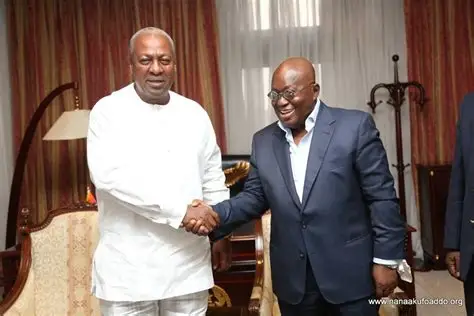
President John Dramani Mahama has credited the previous administration of Nana Addo Dankwa Akufo-Addo with initiating Ghana’s efforts to secure partnership status with the BRICS bloc.
The President said the move was in line with Ghana’s established foreign policy of non-alignment, stressing that pursuing the partnership does not mean the country is abandoning its diplomatic principles.
Addressing journalists at a meet-the-press session at the Jubilee House on Thursday, November 5, 2026, Mahama revealed that the proposal originated from a ministerial committee set up under the Akufo-Addo administration.
He explained that the committee had recommended Ghana’s accession to the BRICS partnership and submitted its proposal to Cabinet before the change of government.
“Let me also tell you, the ministerial committee that sat and recommended that Ghana should accede to BRICS partnership was under Nana Akufo-Addo,” he said.
“We came and met their recommendation. And so, we didn’t set up the ministerial committee. It was set up under the former NPP administration.”
Mahama said his administration subsequently examined the recommendation and agreed that Ghana stood to benefit from the partnership.
“And so, the recommendation was submitted to Cabinet. And so, when we came, we met it. And so, Cabinet sat on it and said, it’s a good idea to be a BRICS partner. And so, we approved it,” he said.
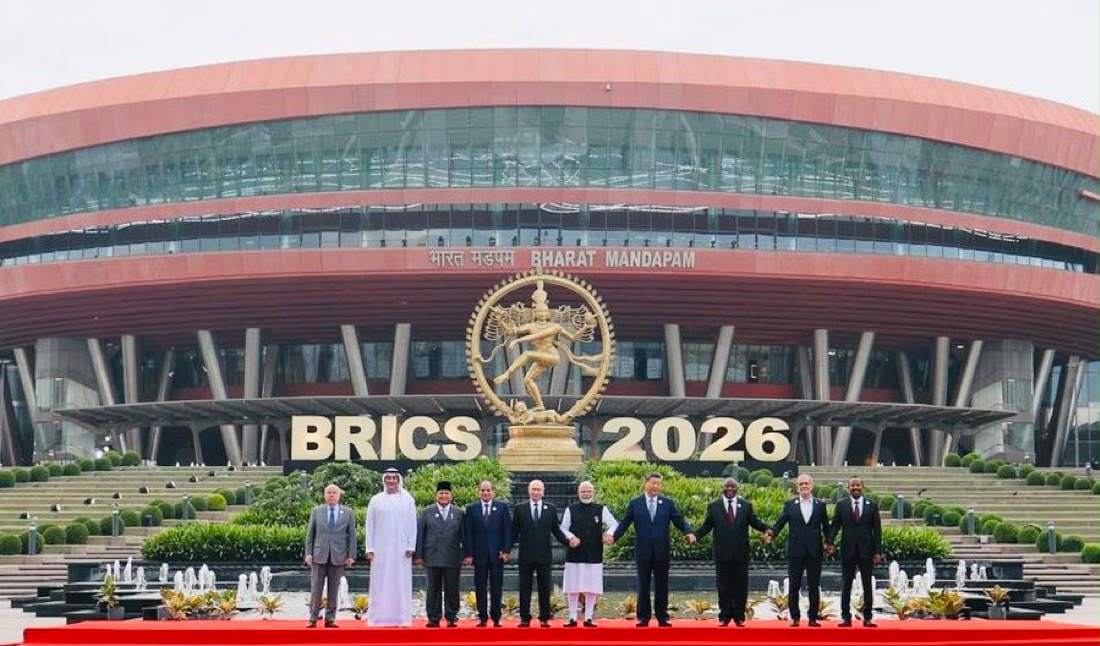
The President’s comments highlight the continuity in Ghana’s foreign policy approach, with the current administration building on an initiative undertaken by its predecessor.
BRICS has emerged as an influential platform for economic cooperation and diplomatic engagement among some of the world’s major emerging economies.
With an expanding membership, growing calls for reform of global institutions, and deeper cooperation in trade, finance, and development, the bloc has become an important player in international affairs.
Originally formed around Brazil, Russia, India, and China, BRICS has expanded to include countries from Africa, the Middle East, and Southeast Asia. Its growth reflects the ambitions of emerging economies to strengthen their collective influence in global decision-making and diversify their economic partnerships.