
The programme aims to improve the accountability, transparency and effectiveness of domestic tax systems in target countries. Therefore, the one day workshop was aimed at building the capacity of the media practitioners to report on issues of illicit financial flows to inform policy decisions and hold office holders accountable.
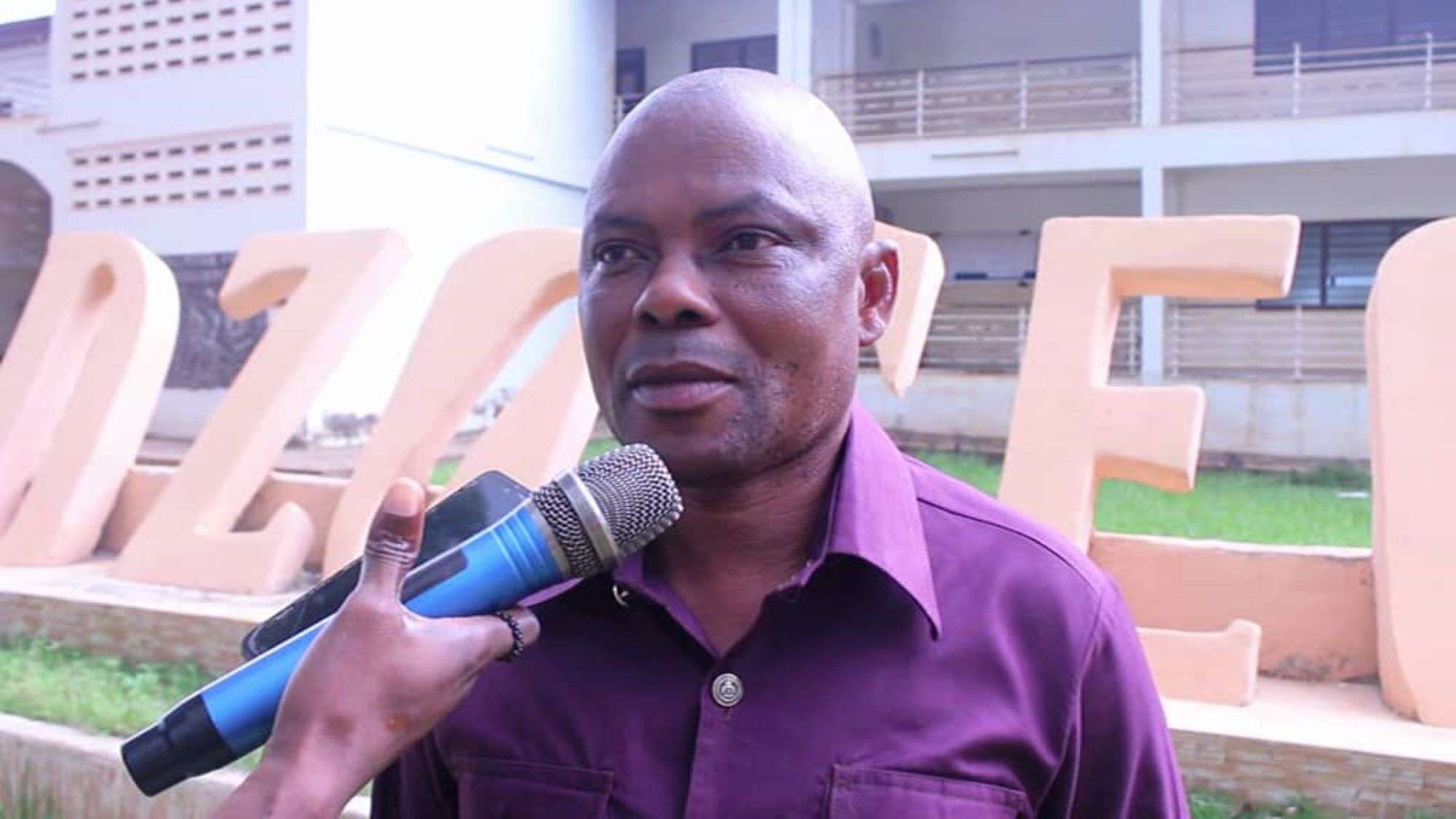
The Administrative Officer at Media Foundation for West Africa, Madam Daisy Prempeh, in a post training interview said selected Journalists in the Ashanti, Western, Upper East, Volta and Eastern Regions have also been trained some weeks ago.
She noted the foundation has been implementing several other activities under its Tax for Development project in collaboration with the Norwegian Agency for Development Corporation and Oxfam in Ghana to strengthen Civil Society Organizations and the media to ensure fiscal justice in the country.
“So under this project, we have several activities that we have been implementing. One of such activities was multi stakeholders’ forum on anti-corruption and we had a seasoned tax expert who made a presentation at the forum.
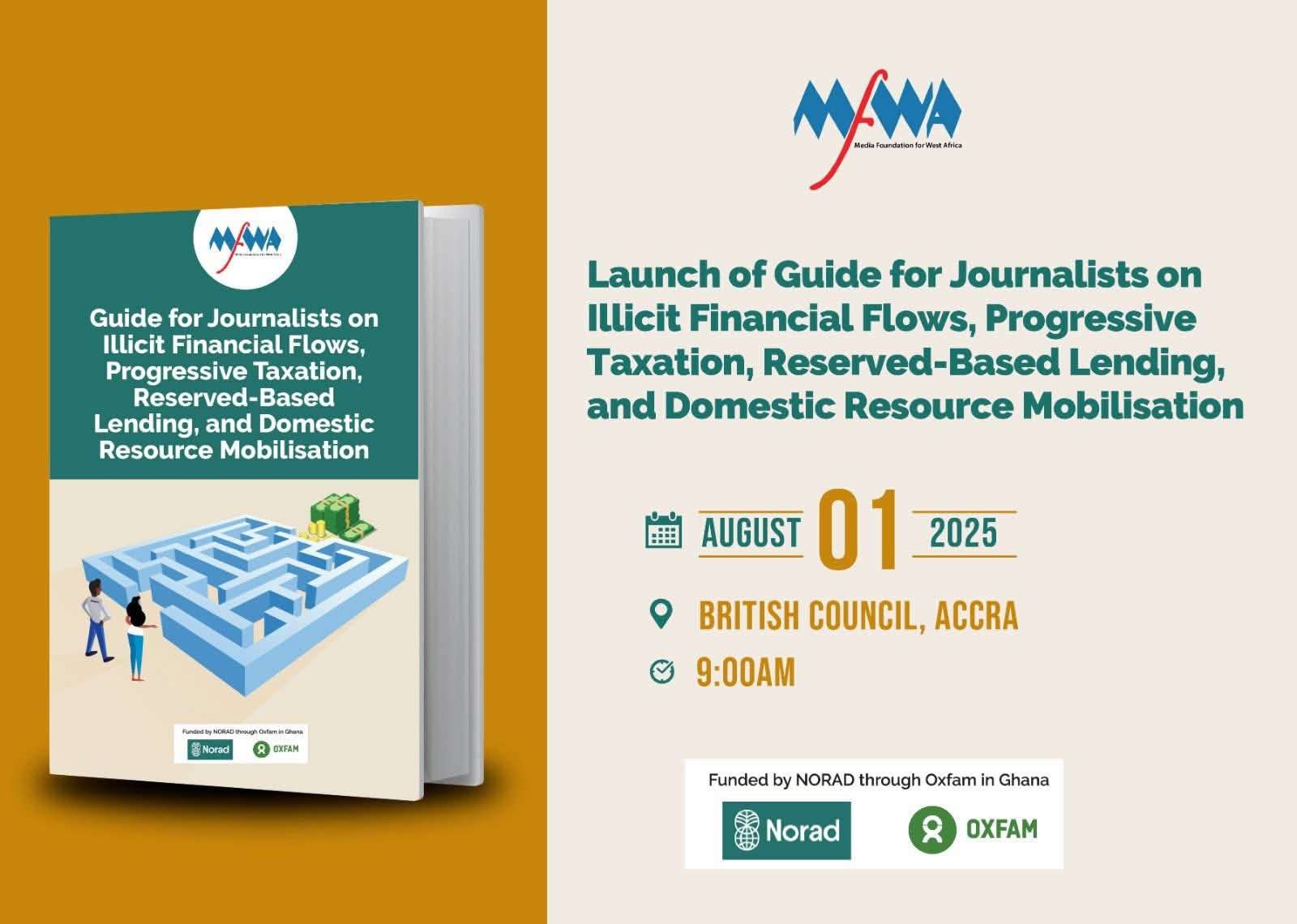
“Another activity that has been implemented is the validation and launch of the media guide for Journalists; so it is as a result of this guide that we’re here to sensitized the media on it. There are other activities we are yet to implement and learning seasons” she stated.
Dr Bishop Akolg, Principal Consultant at Technology Integration Point Ventures (TIPV), in his remarks said illicit financial flows is all over the Ghanaian economy particularly in the Import and Export, Real Estate, Natural Resources extraction and Government Procurement.
“But our Government is not doing enough to combat. There is no inter-agency collaboration to tackle the issue and so the companies are going away with a lot of trade invoicing, transfer mispricing; and we have issue around base erosion and profit shifting to low tax jurisdiction, so we pay less taxes and this is eroding the revenue base of the government” he asserted.
The former Executive Director of ISODEC said the Government must therefore sit up and take concrete steps to address the issues.