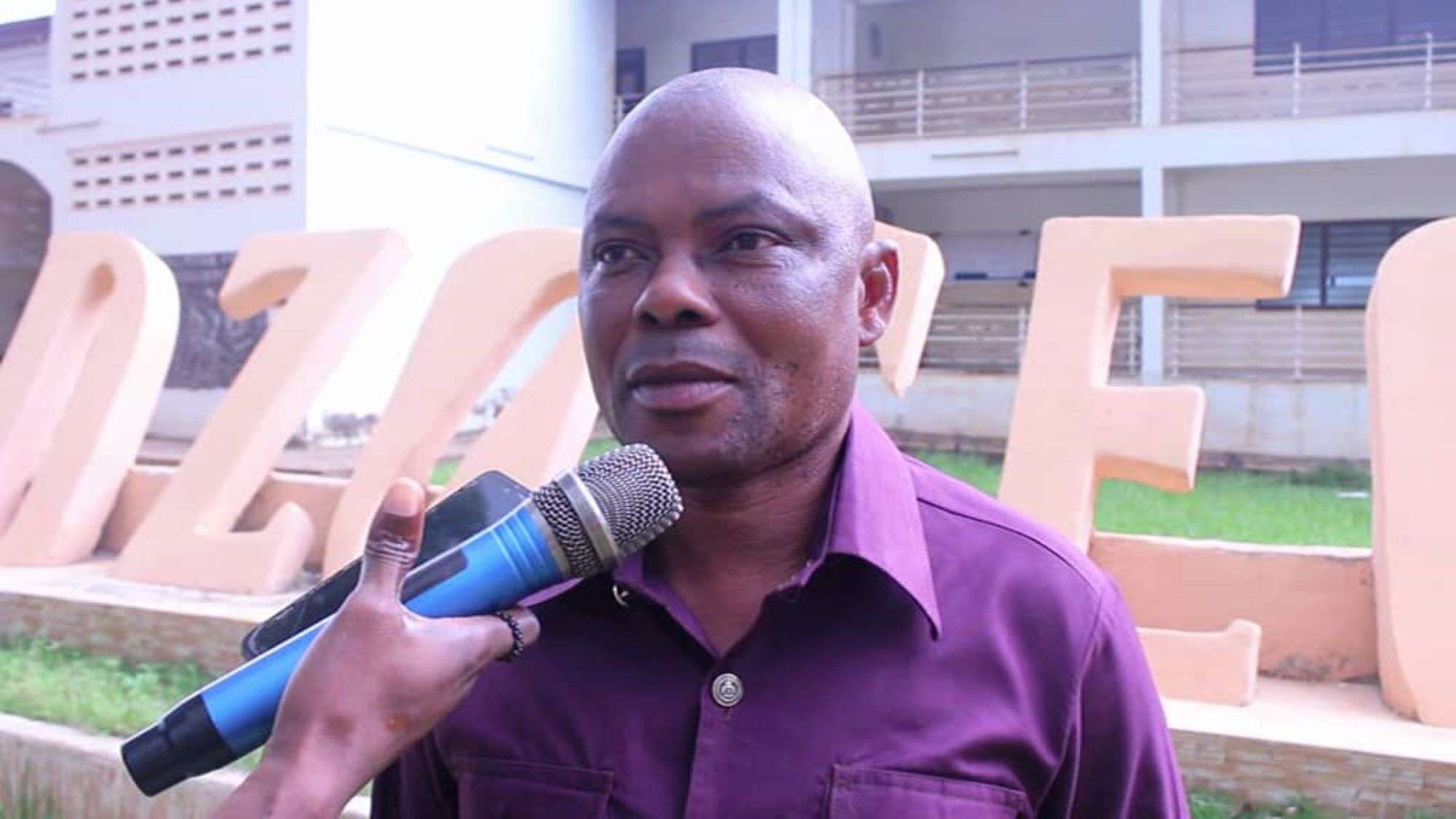

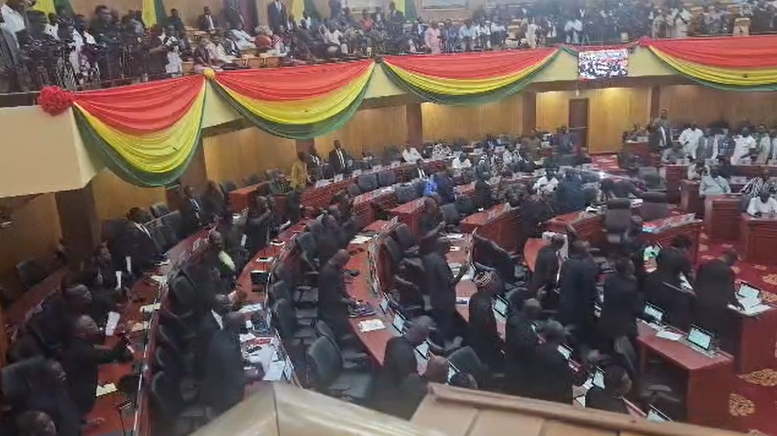
Minority Leader Osahen Alexander Afenyo-Markin has described the recall of Parliament as a response to pressing national challenges, insisting that Ghana was facing crises that “simply cannot wait.”
Afenyo-Markin began by congratulating James Agalga on his elevation to Majority Leader and Mahama Ayariga on his nomination as Minister for Local Government, Chieftaincy and Religious Affairs.
He pledged the Minority’s commitment to constructive but firm engagement with the new Majority Leader, particularly on issues affecting the livelihoods of Ghanaians.
He also signalled that the Minority would closely scrutinise Ayariga’s ministerial nomination, especially his record and proposed approach to sanitation.
The Minority Leader also highlighted the New Patriotic Party’s recent regional executive elections, which he said were peacefully conducted across all 16 regions. He described the exercise as evidence of the party’s internal democratic strength and a foundation for returning Dr Mahamudu Bawumia to the presidential ballot.
However, the main focus of his statement was on three issues the Minority believes should dominate Parliament’s deliberations this week: alleged losses linked to GoldBod and the Bank of Ghana, recurring power outages, and what he described as the “weaponisation of justice.”
Minority raises concerns over power outages
The second major issue was the stability of Ghana’s electricity supply.
Afenyo-Markin noted that the country had experienced two nationwide power interruptions within one month, on July 29 and August 20, with GRIDCo describing both incidents as “power system disturbances.”
The August 20 outage, which was reportedly linked to a fault on the Akosombo-Volta transmission line, disrupted electricity supply to homes, hospitals, businesses and other critical facilities for several hours.
The Minority Leader rejected what he described as brief explanations from government agencies, arguing that such incidents should be treated as a national-security concern because electricity infrastructure is critical to the functioning of the economy and essential services.
Citing Order 216(2)(d), he gave notice that the Minority intended to demand that the Minister for Energy appear before Parliament to account for the outages.
He further indicated that the Minority could push for a full parliamentary inquiry into the causes of the disturbances and measures being taken to prevent their recurrence.
Afenyo-Markin accuses government of ‘weaponising justice’
The third major concern was what Afenyo-Markin described as the “weaponisation of justice.”
He accused the government of selectively using prosecutorial and judicial processes against opposition figures and former appointees of the Akufo-Addo administration while cases involving government allies were discontinued through successive nolle prosequi applications.
He cited the case involving Ashanti Regional NPP Chairman Bernard Antwi Boasiako, popularly known as Wontumi, as one of the matters raising questions about the application of justice.
Afenyo-Markin also referred to a controversial warrant issued during the judicial vacation, a matter he said was now before the Supreme Court.
Addressing allegations of extortion made against him personally, the Minority Leader said he had taken legal action by filing defamation suits at the Accra High Court and Achimota Circuit Court.
He maintained that he had served the country with integrity and a clear conscience and insisted that allegations against public officials should be tested through due process rather than political rhetoric.
Minority questions new cocoa regulations
Afenyo-Markin also touched on reforms within the cocoa sector.
While acknowledging some of the reform initiatives being pursued by the Ghana Cocoa Board (COCOBOD), he criticised what he considered inadequate consultation with Licensed Buying Companies and haulage operators.
He particularly objected to new requirements that, according to him, could restrict farmers from repurposing their land without government approval and require registration before cocoa can be sold.
The Minority Leader argued that such requirements represented a significant departure from established practices in Ghana’s cocoa industry.
He therefore called for a motion of rescission to allow Parliament additional time to scrutinise the measures before presidential assent.
‘We will not bend the knee’
Drawing inspiration from former United States President Theodore Roosevelt’s famous “man in the arena” speech, Afenyo-Markin ended his address with a pledge that the Minority would continue to demand accountability.
He said the Minority would not be intimidated by threats, what he called “bogus prosecution,” or attempts to silence opposition voices.
He challenged Parliament to determine how history would judge the House if it failed to investigate the reported GH¢22 billion in losses, accepted inadequate explanations for nationwide power disruptions, or allowed the justice system to be used as an instrument of political intimidation.
The Minority Leader stressed that the formal notices issued over the GoldBod losses and power outages were only the beginning of the Minority’s accountability efforts.
“We do not intend to let a single matter of accountability rest,” he declared, adding: “For it is said that he who comes to equity must do equity.”