
New Patriotic Party (NPP) Policy Committee on Finance and Economy has raised serious concerns about the state of Ghana’s economy ahead of the 2026 mid-year budget review, accusing the government of relying on unsustainable “props” to achieve its headline fiscal numbers.
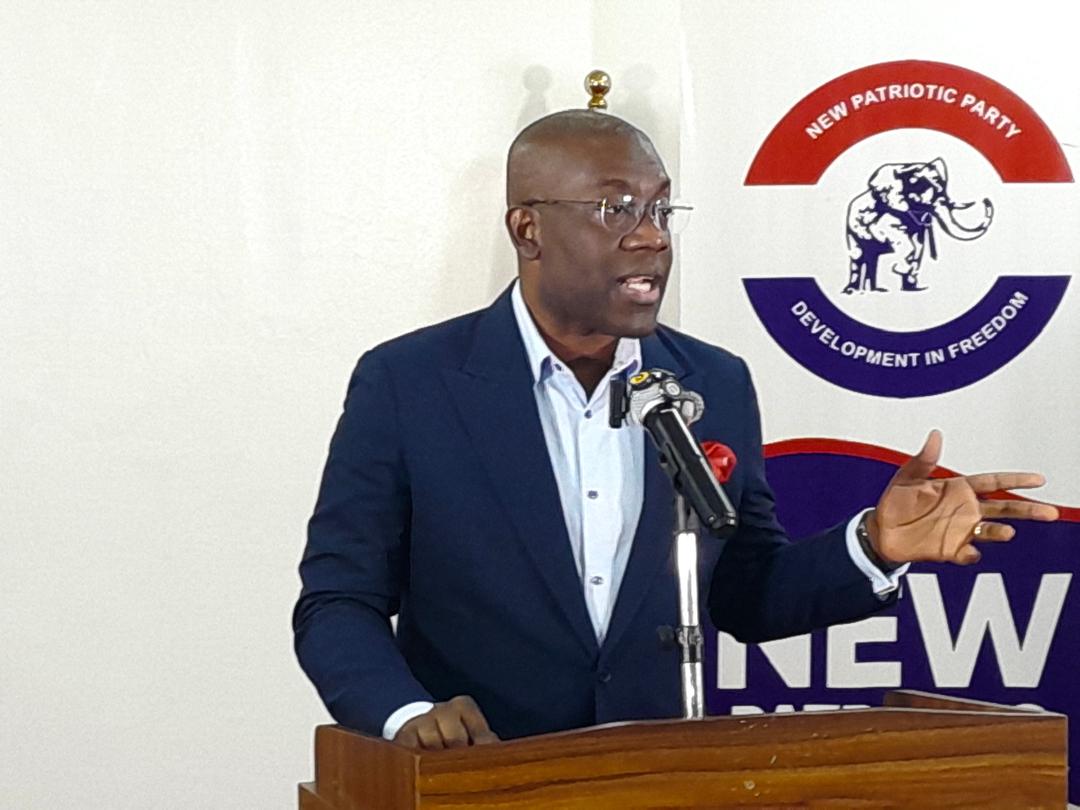
In a strongly worded statement delivered by Kojo Oppong Nkrumah, the party said it had scrutinised the latest official data and found worrying signals that paint a different picture from the government’s narrative of moving from stabilisation to growth.
The NPP outlined its assessment in three parts: the quality of the reported 2025 surplus, the durability of current fiscal measures, and the government’s failure to address critical development challenges.
The Quality of the 2025 Surplus
Oppong Nkrumah noted that while the government is expected to highlight a primary surplus of 2.6% of GDP (against a target of 1.5%), this was achieved mainly through severe expenditure compression rather than strong revenue performance.
“Revenue missed the revised target by 4.7 percent. The surplus was delivered because expenditure was compressed by 13.8 percent,” he said.
He described the first quarter of 2026 spending as particularly weak, with overall expenditure 21.2% below target and capital expenditure 41.9% below target. Foreign-financed projects were only 11.3% executed, while grants to health, education, and districts lagged significantly.
Durability and Hidden Risks
The NPP questioned the sustainability of the current economic gains, pointing to several red flags:
- Gold-driven growth: The strong 6.4% first-quarter growth was largely powered by the gold mining sector amid historically high gold prices, not broad-based policy success.
- Cedi depreciation and inflation: The cedi has weakened between 8.4% and 10.3% this year, while inflation has begun rising again, reaching 5.3% in June.
- Debt concerns: Conflicting debt-to-GDP figures between the Bank of Ghana and the IMF, with the latter projecting 53% by year-end.
- Bank of Ghana losses: Significant losses on the balance sheet, partly linked to the Domestic Gold Purchase Programme, with negative equity estimated at around GH¢96 billion.
Oppong Nkrumah welcomed the Bank of Ghana’s recent decision to stop pre-financing GoldBod’s gold purchases but criticised the timing, saying the losses had already been incurred.
Unresolved Development Issues
The statement also highlighted several areas the government has failed to address effectively:
- Persistent arrears, with questions about the true stock and clearance pace.
- Slow revenue performance, especially from oil.
- Unfulfilled promises on jobs under the 24-Hour Economy initiative.
- Delayed capital projects in roads, schools, and hospitals.
- Outstanding debt restructuring items still unresolved nearly two years on.
“The question hanging over Thursday is simple. Is this surplus a policy achievement, or reporting artefact of budgets that were simply not executed?” Oppong Nkrumah asked.
He urged the Finance Minister to provide clear, reconciled data during the mid-year review, including:
- Detailed half-year expenditure execution by line item
- Decomposition of the primary surplus
- Sensitivity analysis on gold prices, fuel costs, and exchange rates
- Verified job numbers and project-level disclosures
- A credible plan for clearing arrears and resolving Bank of Ghana losses
“A country cannot build growth on unspent budgets, unpaid contractors, disputed debt numbers and jobs that exist on paper,” he concluded.
The Minority vowed to scrutinise the Minister’s mid-year review statement line by line against the government’s own published data.