
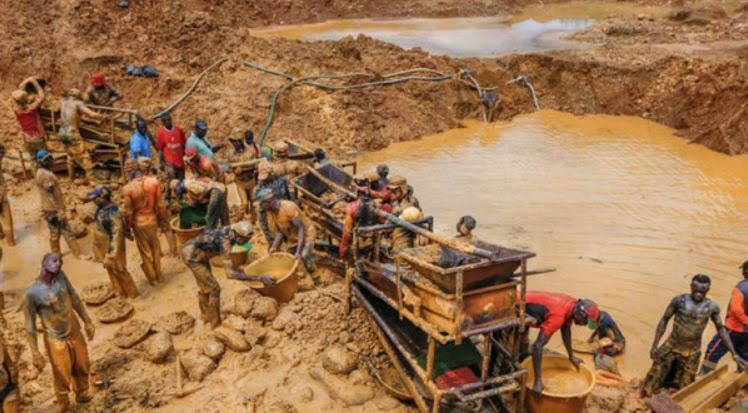
The Ghana Association of Radiologists (GAR) has called on the government to intensify efforts to curb illegal mining, popularly known as galamsey, warning that pollution from the activity is contributing significantly to the rising incidence of kidney disease in the country.
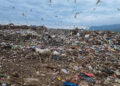
According to the Association, the indiscriminate use of mercury and cyanide in illegal artisanal mining operations is contaminating major water bodies and exposing communities to toxic substances that can severely damage the kidneys and other vital organs.
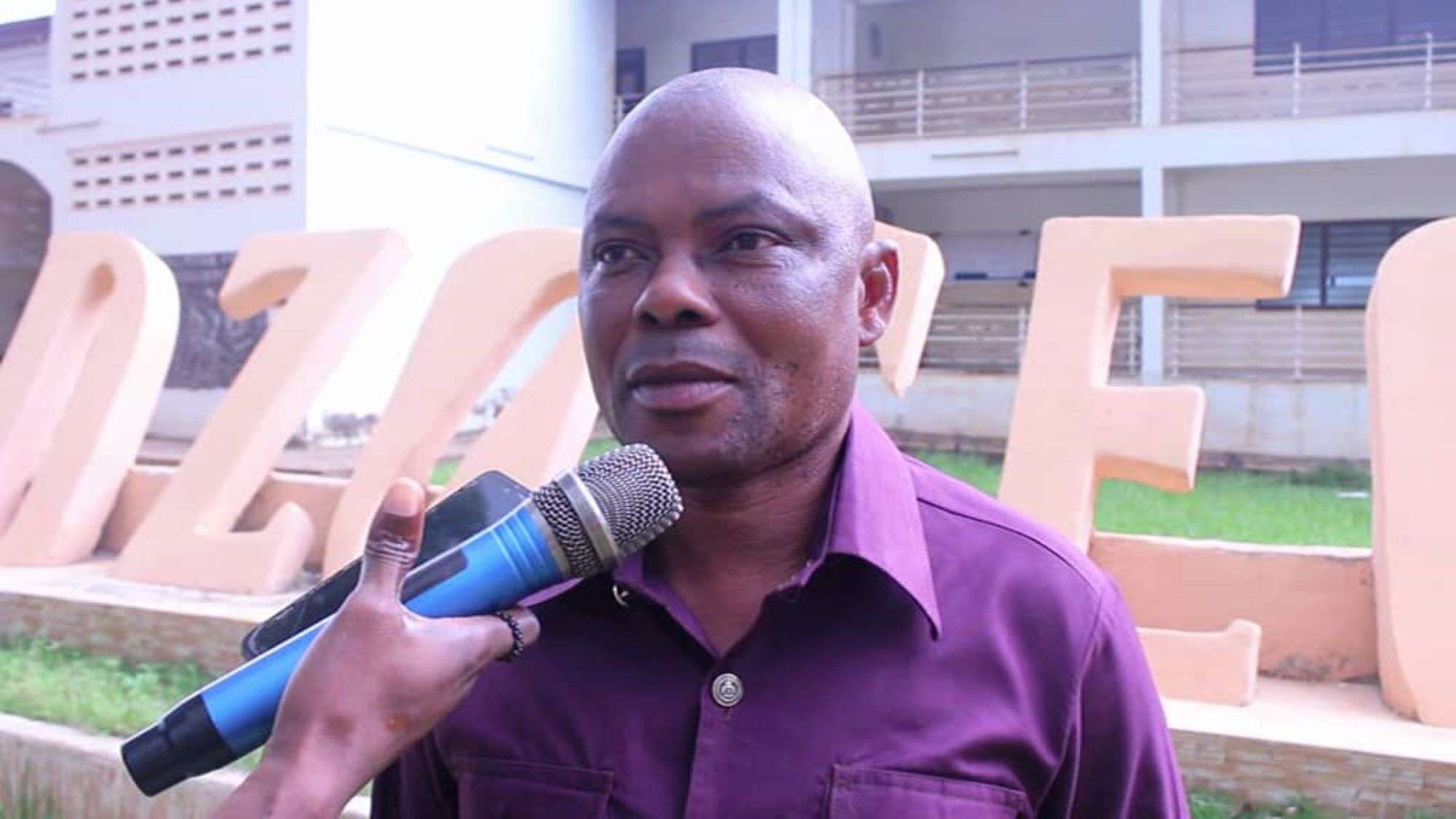
Speaking at the opening of the 14th Annual General and Scientific Meeting (AGSM) of GAR in Accra, the President of the Association, Dr Francis Ofei, described the situation as a growing public health emergency.
“Permit me to underscore the devastating contribution of illegal artisanal mining, popularly known as galamsey, to the rising tide of kidney disease in our country,” he stated.
“The indiscriminate use of mercury and cyanide in artisanal gold mining operations has resulted in catastrophic contamination of our water bodies, and by extension, the water that millions of Ghanaians depend on.
“This situation is not merely an environmental issue. It is a public health catastrophe,” Dr Ofei stressed.
A recent Ghana News Agency report, citing Dr Mensah Amoah, a Physician Specialist and Nephrology Fellow, revealed that approximately 13 per cent of Ghana’s adult population — an estimated four million people — are living with chronic kidney disease. The report further indicated that many of the affected patients fall within the ages of 20 and 50, the country’s most economically productive age bracket.
Dr Ofei noted that the burden of kidney disease was particularly severe in communities exposed to illegal mining activities and identified rivers such as the Pra, Birim, Ankobra and Offin among the heavily polluted water bodies.
He explained that mercury and cyanide enter the human body through contaminated water and food, placing excessive strain on the kidneys, which are responsible for filtering waste products from the bloodstream.
“With repeated exposure, the kidneys give up eventually,” he warned.
The conference, themed “From Kidneys to Urethra: Imaging the Genitourinary System in the Era of Multidisciplinary Care,” brought together radiologists, nephrologists, urologists, clinicians and other healthcare professionals to discuss advances in medical imaging and collaborative healthcare delivery.
Dr Ofei observed that chronic kidney disease often develops silently, making early diagnosis critical. However, he lamented that many patients only seek medical attention after the disease has reached advanced stages.
He attributed the late reporting to low public awareness and limited access to diagnostic services in some parts of the country.
The GAR President advised the public to prioritise regular medical check-ups and not ignore unusual symptoms.
“You do check-ups not because you have issues per se. It becomes routine,” he said.
Dr Ofei also called for increased investment in diagnostic imaging equipment, including ultrasound machines, CT scanners and Magnetic Resonance Imaging (MRI) machines, to improve the early detection and treatment of diseases.
He explained that ultrasound remains the most accessible imaging tool for diagnosing kidney and urinary tract conditions before patients are referred for more advanced scans when necessary.
Dr Ofei further emphasised the importance of collaboration among radiologists, clinicians, nephrologists and urologists in improving healthcare outcomes.
“We have realised that most of the time, healthcare delivery is done in silos. The clinician is doing their own thing, and the radiologist is also doing their own thing. I think that it is time for us to now resort to what we call a multidisciplinary approach when it comes to healthcare,” he said.
“Gone are the days when the radiologist wrote a report and figuratively handed it over a wall. Today, radiologists sit at the table.”