
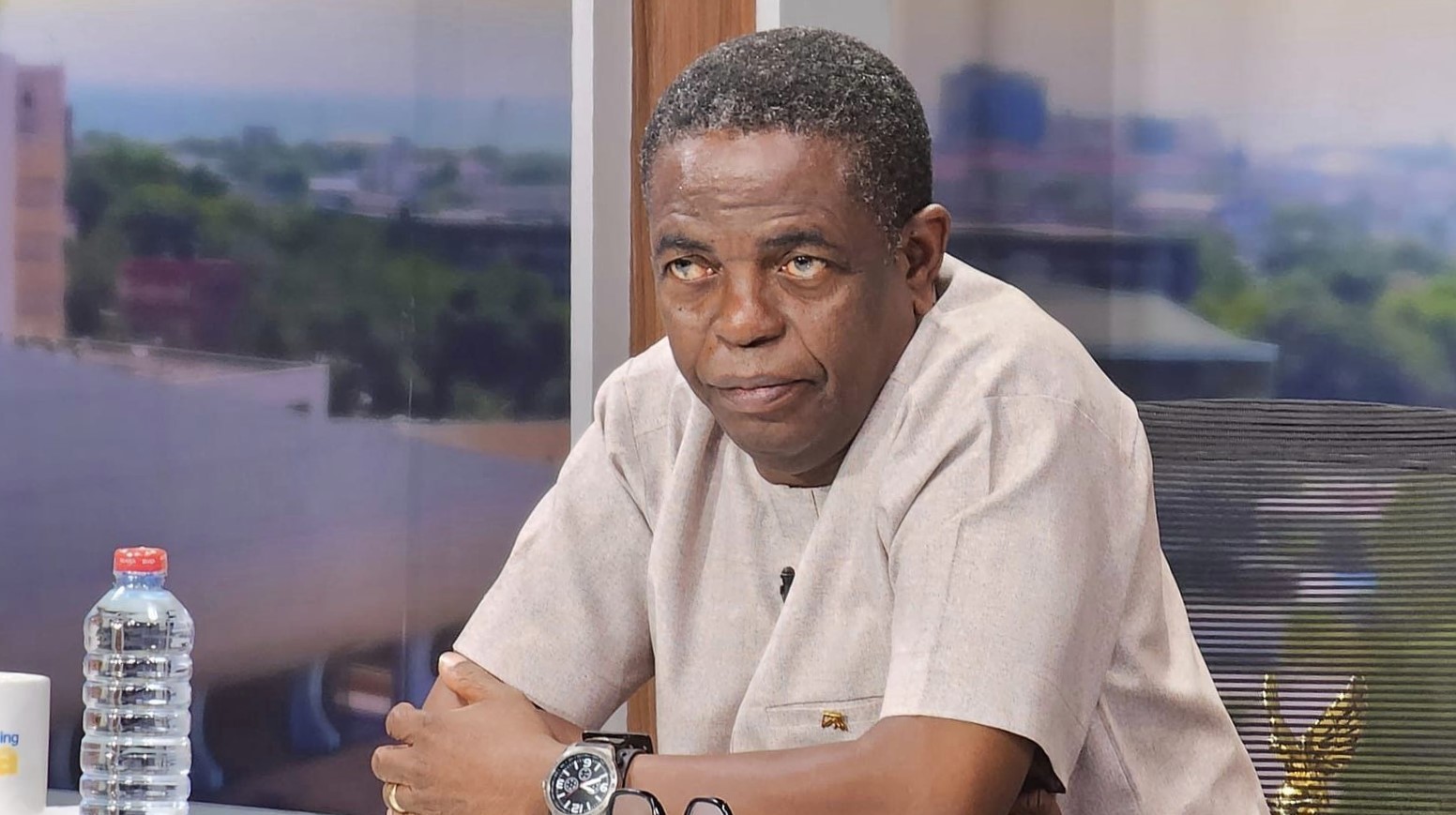
Veteran journalist and political commentator Kwesi Pratt Jnr has raised serious concerns about growing internal tensions within Ghana’s ruling National Democratic Congress (NDC), warning that emerging divisions and succession politics could undermine the governing agenda of President John Dramani Mahama.
According to Pratt, President Mahama assumed office with a clearly defined “reset agenda” aimed at addressing structural challenges in key sectors of the economy, including education, healthcare, and broader economic transformation.
The initiative, he noted, was designed to rebuild systems, improve efficiency in public service delivery, and restore public confidence in governance.
However, Pratt argued that recent developments within the party and government machinery suggest a shift in focus away from these core objectives.
Instead of concentrating on policy execution and national development priorities, he claims that attention is increasingly being diverted toward internal political positioning and future leadership ambitions within the NDC.
He expressed disappointment that some individuals appointed to support the administration appear more focused on advancing their own political careers than on helping to implement the government’s stated agenda.
He said “They don’t care about restructuring the economy. They don’t care about anything. All they care about is replacing him.
“What? Poor Mahama. Poor Mahama. And he’s sitting there being held hostage. You know, and he’s not been able to crack the whip. And they are dancing around him in circles and making nonsense of all the proclamations he has made. It’s unbelievable.”
“To be honest, I feel very sad for President Mahama,” Pratt stated. “The betrayal is monumental. Many of those appointed to help him reset the country are not focused on that mission.”
Pratt suggested that this internal dynamic is creating an environment where governance risks being overshadowed by competition over succession.
He alleged that discussions within both party structures and government circles have become increasingly dominated by speculation about who might succeed President Mahama, rather than how to effectively implement key policy initiatives.
He referenced ongoing flagship proposals such as the 24-hour economy policy, arguing that such programmes require full commitment from all appointees if they are to succeed. Instead, he believes internal political calculations are weakening collective focus and slowing down effective implementation.
Describing the situation as deeply troubling, Pratt said the trend is “sickening” and warned that it could gradually erode the effectiveness of government institutions if not urgently addressed. He further noted that public discourse within sections of the ruling party appears to be increasingly centred on leadership ambitions rather than governance outcomes.
He argued that when political actors begin to prioritise succession battles so early in an administration’s lifecycle, it risks creating mistrust, division, and reduced cooperation among officials who are supposed to be working toward a shared national agenda.
Pratt also cited comments attributed to senior party figures, including remarks associated with Mustapha Foyo Gbande, suggesting that concerns about premature succession politics are not isolated but reflect broader tensions within the NDC.
According to him, such warnings indicate that even within the party, there is growing awareness that internal competition could destabilise governance if left unchecked. He argued that once officials begin positioning themselves for leadership, it often leads to factionalism, with different groups forming around potential successors.
This, he said, can significantly reduce collaboration within government, as officials may become more focused on building personal political capital than on working together to achieve national objectives. In such an environment, policy implementation can suffer, and key government programmes may lose momentum.
“If the government is not delivering on its core agenda, no one positioning themselves to succeed the President can succeed either,” Pratt noted, emphasising that political ambition without performance in governance would ultimately be self-defeating.
He further questioned what he described as weak internal discipline within the administration, suggesting that stronger leadership control could help redirect attention back to governance priorities.
In his view, effective leadership requires ensuring that appointees remain focused on their assigned responsibilities rather than engaging in political manoeuvring.
Pratt stressed that governments operate most effectively when appointees understand that their primary responsibility is delivery, not succession planning. He warned that when political ambition overtakes administrative focus, the result is often inefficiency and public dissatisfaction.
Despite his criticism, Pratt praised some individuals within the administration whom he believes have demonstrated a more disciplined approach.
He specifically commended the Member of Parliament for Tamale South, Haruna Iddrisu, for publicly emphasising the importance of supporting the President to succeed rather than engaging in internal political contests.
According to him, such positions reflect the kind of leadership maturity needed within government if the administration is to achieve its policy objectives.
He suggested that prioritising national success over personal ambition is essential for maintaining unity and delivering results.
Pratt also indicated that the success of the Mahama administration will depend heavily on whether its appointees remain committed to implementing the government’s agenda. He argued that political appointments should be viewed as a mandate to serve, not as a platform for future political campaigns.
He further warned that if internal divisions persist, they could have long-term consequences not only for the administration but also for the NDC’s broader political fortunes. A government perceived as distracted or divided, he said, risks losing public trust and electoral support.
In his concluding remarks, Pratt called for renewed discipline within both the government and the ruling party.
He urged leadership to take firm steps to ensure that all appointees remain focused on delivering on their responsibilities.
He emphasised that governance should take precedence over internal political competition, especially in the early stages of an administration’s mandate.
According to him, time and resources must be directed toward fulfilling campaign promises and improving the living conditions of citizens.
“The priority must be governance, not succession,” Pratt stressed, reiterating his view that internal political rivalries should not be allowed to derail the government’s development agenda.