
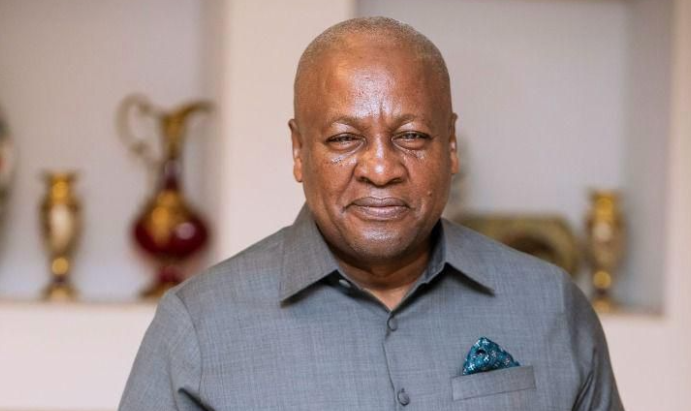
There is simmering tension within the National Democratic Congress (NDC) over attempts by some individuals in the governing party and their allies to ensure President John Dramani Mahama remains in office beyond Ghana’s constitutional two-term limit.
Some NDC senior figures and leading constitutional lawyers, governance experts, politicians are insisting that any attempt to reopen the debate threatens the country’s democratic credentials and constitutional order.
The controversy has intensified following two separate suits currently before the Supreme Court seeking an interpretation of Article 66(2) of the 1992 Constitution on whether a President who has served two non-consecutive terms remains eligible to contest another presidential election.
Even though President Mahama has consistently denied harbouring any intention of seeking a third term, the legal actions have reignited nationwide debate over presidential tenure and the sanctity of the constitutional term limits.
Among the strong voices opposing any perceived third-term agenda are NDC General Secretary, Mr Fifi Fiavi Kwetey and National Chairman Johnson Asiedu Nketiah, who many insiders believe, will be running for flagbearership slot of the governing party.
Mr Kwetey and his national chairman have openly cautioned against entertaining calls for constitutional changes to benefit President Mahama.
Earlier this year, the NDC General Secretary delivered a strong message to party faithful during the 31st December Movement celebrations in Ada, condemning what he described as increasing sycophancy within the governing party.
Without mentioning President Mahama directly, Mr Kwetey warned that excessive praise singing and blind loyalty risk undermining the ideological foundation upon which the NDC was established.
He reminded party supporters that the late former President Jerry John Rawlings, despite his immense influence and popularity, never sought to remain in office beyond the constitutional limits after the advent of the Fourth Republic.
“The NDC was not built on personalities but on principles,” Kwetey declared, stressing that no leader, regardless of popularity or achievements, should be placed above the party, the Constitution or the nation.
His comments were widely interpreted as a response to growing calls from some party supporters and political activists advocating constitutional changes that could allow President Mahama to contest another election after completing his current tenure.
Constitutional lawyers
Again, Professor H. Kwasi Prempeh, Executive Director of the Centre for Democratic Development (CDD-Ghana), and a renowned constitutional lawyer, has maintained that the Constitution is unequivocal on presidential tenure.
According to him, “two terms mean two terms,” stressing that any attempt to use judicial interpretation to create another pathway to the presidency would amount to rewriting the Constitution through the courts rather than through the constitutional amendment process.
Professor Prempeh has warned that any effort to reinterpret Article 66(2) beyond its plain meaning would constitute what he describes as a “constitutional amendment by stealth,” cautioning that such a precedent could erode public confidence in the rule of law and weaken constitutional democracy.
He argued that presidential term limits were deliberately entrenched in the 1992 Constitution to prevent the concentration of executive power and ensure regular democratic transitions.
Sharing a similar constitutional position, Professor Kwaku Asare, popularly known as Kwaku Azar, who has repeatedly argued that Article 66(2) imposes a firm limit on presidential tenure.
The US-based Ghanaian lawyer has consistently maintained that no President should be allowed to serve beyond two terms, describing the constitutional restriction as one of the strongest safeguards protecting democracy against executive excesses.
According to Kwaku Azar, the rejection of attempts to extend presidential tenure strengthens constitutional governance, protects democratic institutions, and reinforces the principle that no individual should become indispensable to the state regardless of political popularity or performance.
Gabby’s take
Prominent lawyer and New Patriotic Party (NPP) stalwart Gabby Asare Otchere-Darko has also publicly rejected suggestions that the Constitution could be interpreted to permit a third presidential bid.
He has criticised discussions surrounding a possible third-term agenda and warned against manipulating constitutional provisions to suit political interests, insisting that the presidential term limits must remain absolute to preserve democratic stability.
Political trap
The debate has further drawn comments from former NPP National Organiser Mr Sammi Awuku, who recently appealed directly to President Mahama to reject what he described as a political trap.
Mr Awuku suggested that those encouraging a third-term agenda were working against the President’s own long-term legacy, urging him instead to retire honourably when his constitutional mandate expires in 2029.
Investigative journalist Manasseh Azure Awuni has similarly cautioned President Mahama against becoming associated with the ongoing constitutional litigation, arguing that regardless of how the Supreme Court ultimately rules, the President should avoid what he described as a “ruinous trap” being laid by those behind the lawsuits.
President Mahama’s remarks
President Mahama himself has consistently dismissed claims that he intends to seek a third presidential term.
On several occasions, he has publicly reaffirmed his commitment to respecting the 1992 Constitution, insisting that he has no hidden agenda to remain in office beyond the constitutionally prescribed limit.
His administration has equally denied allegations of any covert attempt to amend the Constitution, maintaining that the President intends to leave office in accordance with the law while strengthening the democratic institutions through respect for constitutional governance.
The broader constitutional conversation gained momentum after recommendations by the Constitutional Review Committee chaired by Professor Kwasi Prempeh proposed extending the presidential term from four years to five years while maintaining the existing two-term limit.
Although the proposal was intended to improve governance and policy continuity, political observers say it has inadvertently fuelled speculation over future constitutional reforms.
However, as the Supreme Court prepares to determine the pending constitutional suits on Article 66(2), pressure continues to mount from legal scholars, politicians and civil society organisations, urging that the constitutional safeguards remain untouched.
By Kyei Boateng