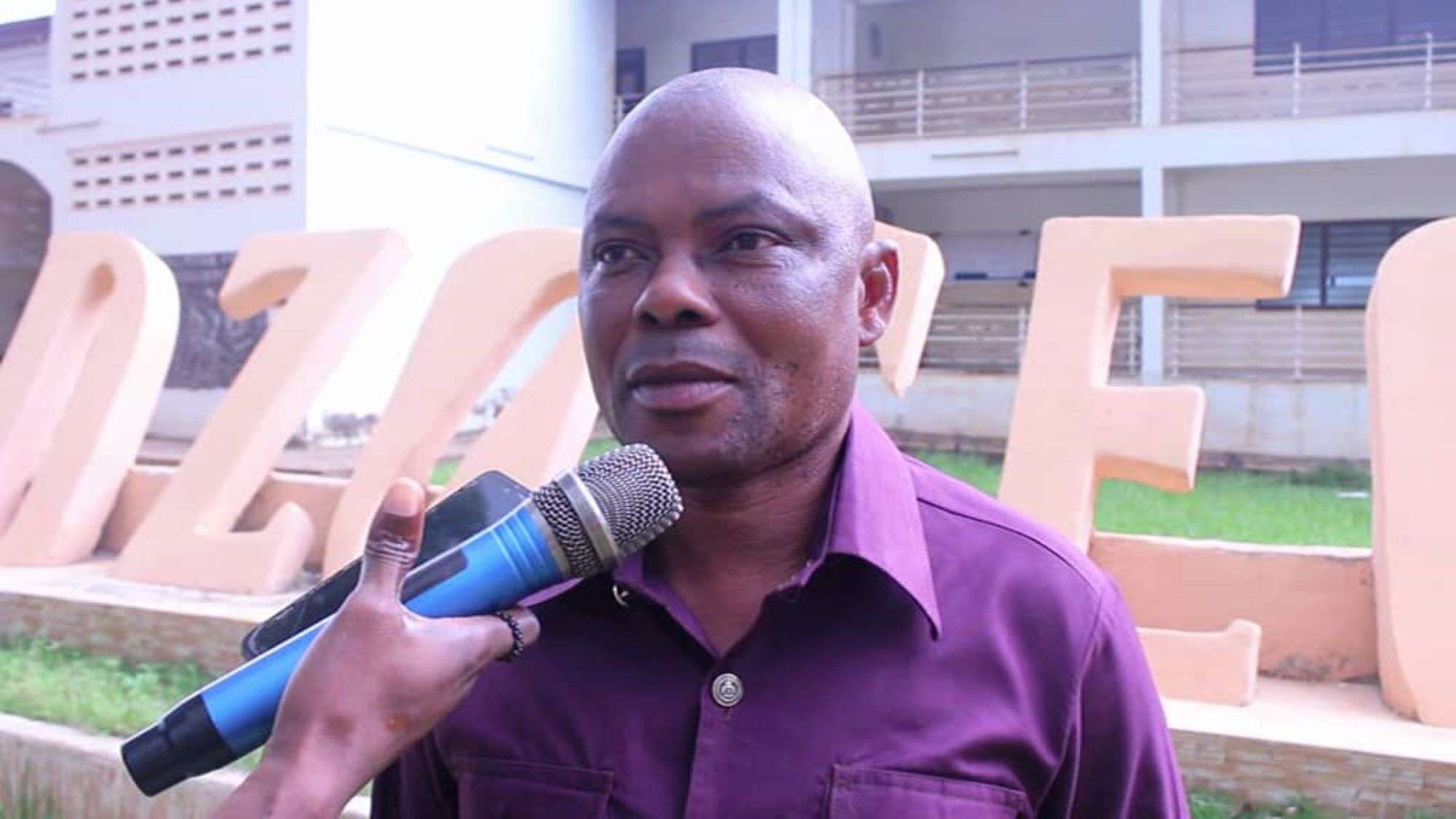

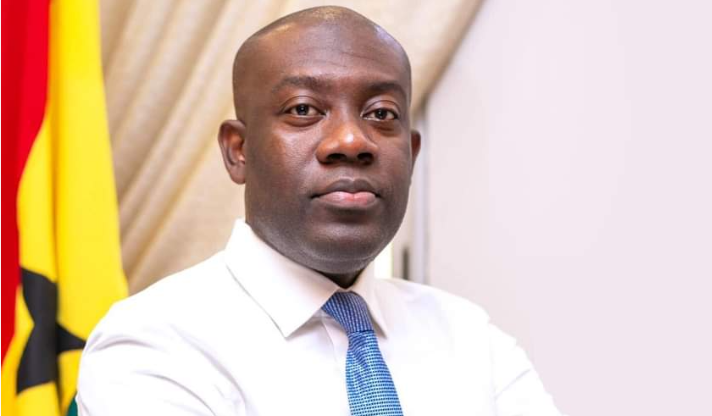
The Member of Parliament (MP) for Ofoase-Ayirebi and the Ranking Member on Parliament’s Economy and Development Committee, Mr Kojo Oppong Nkrumah has expressed concern over the worsening youth unemployment situation in the country.
He argued that flagship employment initiatives of the governing National Democratic Congress (NDC) are yet to make meaningful impact on the growing crisis.
Delivering a statement in Parliament on Thursday, June 11, 2026, the Ofoase-Ayirebi legislator said available data from the Ghana Statistical Service (GSS) shows that youth unemployment remains persistently high despite the introduction of programmes aimed at creating jobs and empowering young people.
The unemployment rate among young people aged 15 to 24, he noted, increased from 32 per cent in December 2024 to 32.5 per cent by the third quarter of 2025, while youth unemployment in the Greater Accra Region reached an alarming 49.3 per cent.
“The unemployment problem in this country is not a general problem with a youth dimension. It is a youth problem, and the burden is getting worse,” Mr. Oppong Nkrumah told Parliament.
He further noted that nearly two million young Ghanaians are currently not in education, employment or training, describing the trend as a major threat to the country’s economic and social stability.
The Minority lawmaker questioned the effectiveness of key government initiatives, including the 24-Hour Economy, the One Million Coders Programme and the Adwumawura Programme, which were introduced to address unemployment and stimulate job creation.
“The government has presented a basket of solutions to the Ghanaian people: the 24-Hour Economy, the One Million Coders Programme, the Adwumawura Programme, and the promise of 250,000 jobs annually,” he said, adding that the critical question is whether these programmes are delivering the expected results.
On the 24-Hour Economy initiative, Mr. Oppong Nkrumah observed that although it was launched in 2025, concerns remain about its implementation and capacity to generate the promised employment opportunities.
He also pointed to the One Million Coders Programme, which attracted more than 90,000 applications within 48 hours of its announcement.
“The One Million Coders Programme received over 90,000 applications in 48 hours, showing the hunger among young people,” he said.
Regarding the Adwumawura Programme, he noted that despite a target of supporting 10,000 businesses annually, grants had been awarded to only 475 entrepreneurs nearly a year after its launch.
Mr. Oppong Nkrumah cited the overwhelming turnout at a Ghana Armed Forces recruitment exercise in November 2025 as further evidence of the severity of the employment crisis.
The MP called for a comprehensive review of the country’s employment strategy and proposed measures including stronger accountability for job creation programmes, increased private sector participation, expansion of apprenticeship opportunities and improved labour market data systems.
“Ghanaian youth do not want slogans. They want feasible programmes that create dignified, productive and well-paid jobs,” he stressed.
He urged government to move beyond promises and adopt practical, measurable interventions capable of reversing the rising unemployment trend and restoring hope among the country’s youth.
By Kwabena Adjei