

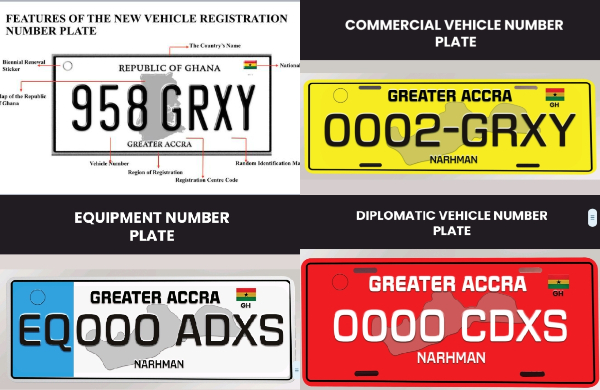
The Driver and Vehicle Licensing Authority (DVLA) is rolling out a major overhaul of vehicle number plates. The new “smart” or digital plates replace the long-standing year-based system with technology-driven designs aimed at cutting fraud, improving vehicle tracking, and modernising registration.
Background and why the change
The current format (in use since January 2009) typically shows a two-letter regional code, a four-digit number, and a two-digit year of registration (for example, GR 4521-25 or AS 2567-12).
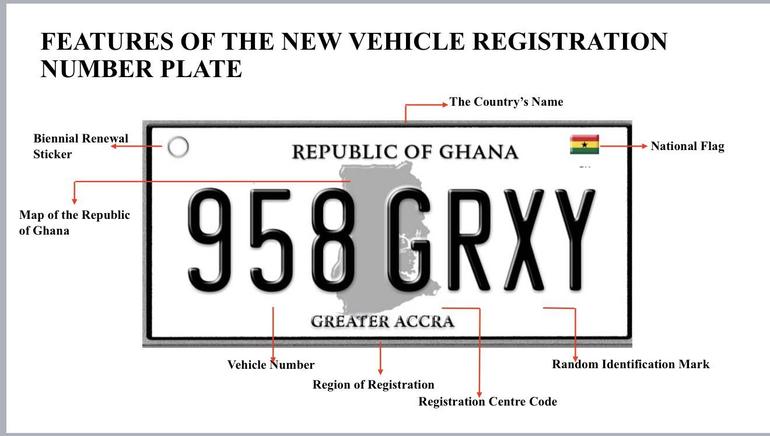
Authorities identified problems including number-plate cloning, illegal embossing, misuse of dealer (DV) plates, difficulty verifying ownership quickly, and limited support for future systems such as electronic tolling or automated enforcement. The new plates address these by embedding technology and linking every plate to a centralised DVLA database, adding that the new digital number plates will provide capacity for more than six million unique registrations at each DVLA centre, eliminating concerns about the repetition of letters and numbers.
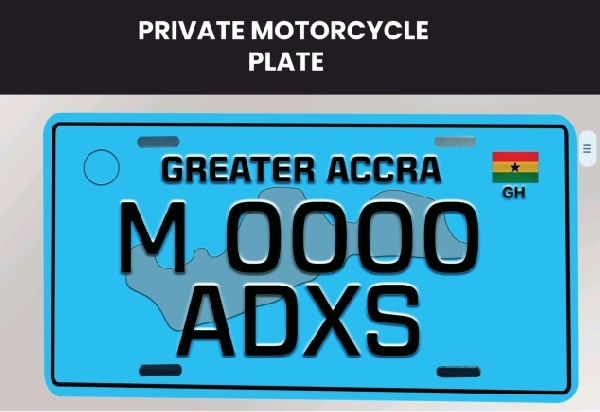
Key features of the new plates
- RFID (and NFC) technology: Every plate carries an embedded Radio Frequency Identification chip (NFC is also mentioned in some briefings). Authorised officials can scan it to instantly retrieve vehicle details, ownership information, and status from the central database. This supports criminal investigations, electronic toll collection, speed cameras, and real-time verification.
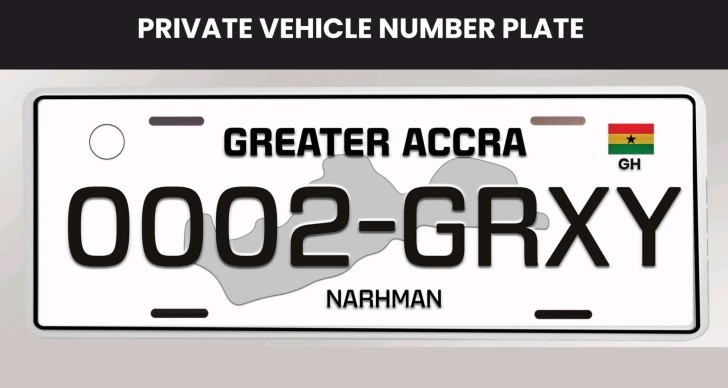
- New numbering format: The year suffix disappears. Plates use a regional identifier, a unique vehicle number, and codes for the registration location/zone or algorithm-generated letters. Example formats cited include something like GR 222 AD (Greater Accra region + number + Adenta centre code). Regional names or maps may appear on the plate, along with the Ghana flag and country identification (“Republic of Ghana” or ISO-style marking).
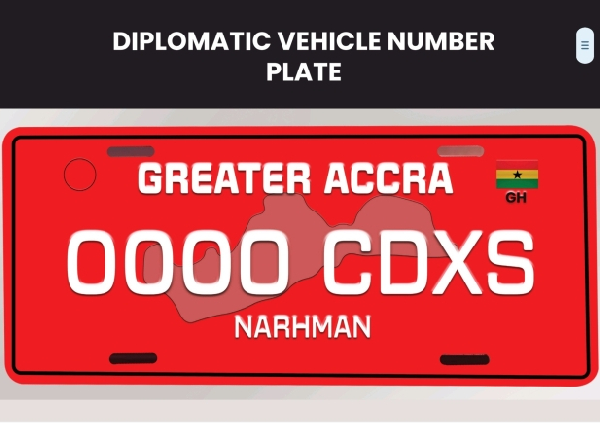
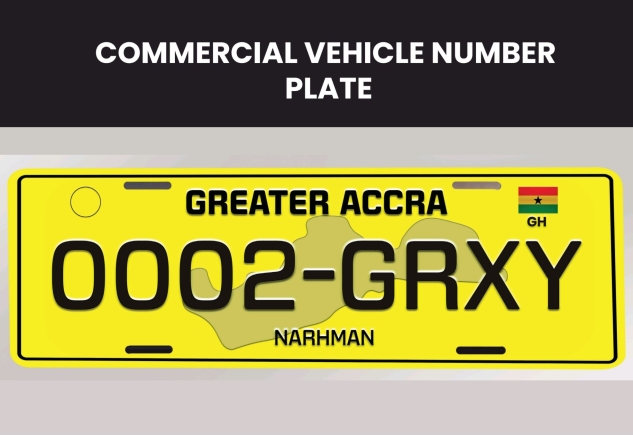
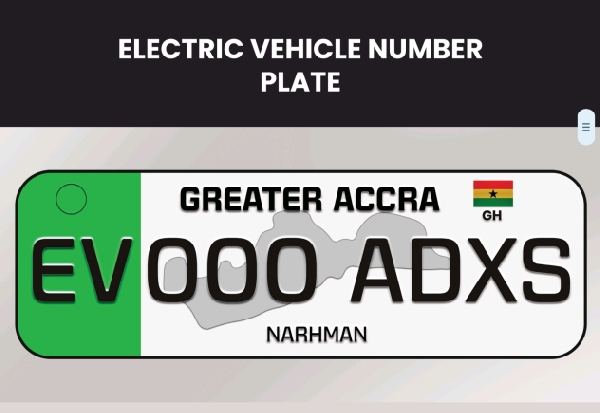
- Visual and security elements: Reflective materials, standardised fonts for better readability, holograms/security seals, watermarks, possible light-reactive features, and space for biennial renewal stickers. Different categories (private, commercial, government, diplomatic, electric vehicles, motorcycles, trailers, etc.) have distinct designs and colour schemes (e.g., white background for private, yellow for commercial).
- Ownership and categories: Reports indicate plates will be more tightly tied to owners. Special attention is being given to dealer (DV) and temporary (TMP) plates, which will feature enhanced controls such as QR codes, expiry dates, and company identifiers to curb long-term misuse.
- Production: DVLA is moving toward centralised, local manufacturing of the blank plates (a new manufacturing centre is under construction), with embossment handled at regional offices under stricter regulation. This reduces reliance on third-party or imported plates and helps prevent counterfeits.
Timeline
Plans were delayed from the original January/April 2026 targets because the necessary legislative updates (Road Traffic Regulations 2026, L.I. 2519, which repealed the older L.I. 2180) needed parliamentary approval.
Current schedule:
- System upgrades targeted for completion around mid-2026.
- Pilot phase: Scheduled to begin around 10 October 2026 (earlier announcements mentioned August). It will run for about three months, starting with selected/government vehicles using temporary numbers that will later be replaced.
- Registration of currently unregistered vehicles: From September 2026 in some plans.
- Nationwide re-registration of existing vehicles: 1 January 2027 to 31 December 2028 (a two-year window for the more than four million vehicles already on the road).
Motorists will have a clear transition period. Existing plates remain valid until the re-registration exercise reaches them.
Benefits expected
- Stronger detection of cloned or fake plates and unregistered vehicles.
- Faster police and security verification (useful for investigations, bail processes, etc.).
- Foundation for electronic road tolls, automated speed enforcement, and better national vehicle statistics (including biennial checks).
- Reduced opportunities for smuggling-related or fraudulent registrations.
- Improved overall road-safety and transport-management systems.
What vehicle owners should know
- Keep documents up to date and ensure any pre-2023 records have been migrated to the digital platform where required.
- Do not emboss, alter colours, italicise lettering, replace the Ghana flag, or otherwise tamper with plates — these remain illegal and are subject to enforcement by DVLA and the Motor Traffic and Transport Department (MTTD).
- Watch for official DVLA announcements on exact fees, required documents for re-registration, and office-specific procedures. Personalised/special-mark plates will continue to be available under controlled rules.
- The new legal framework (Road Traffic Regulations 2026) sets out the categories, features, and requirements.
The reform represents one of the biggest modernisations of Ghana’s vehicle identification system in years. While the full nationwide switch will take until the end of 2028, the pilot and early phases in late 2026 will give the DVLA time to refine processes before the mass rollout.
For the latest official details, check the DVLA website or follow announcements from the Authority, as timelines and design elements may still change slightly.
What do the different number plates mean?
L.I. 2519 creates several identifiable categories:
| Type | What identifies it under L.I. 2519 |
| Private vehicle | A white background, together with the region, Ghana map, Ghana flag, unique alphanumeric identification mark and registration-centre code. |
| Commercial vehicle | A yellow background, with similar security and identification information. |
| Diplomatic vehicle | The Licensing Authority, in collaboration with the Ministry responsible for Foreign Affairs, will determine the form and nature of the plate for vehicles or trailers assigned to diplomatic or international organisations. |
| Government vehicle | A white background and the prefix “GV”. |
| Electric vehicle | Includes a green-coloured band on the left side of the plate. |
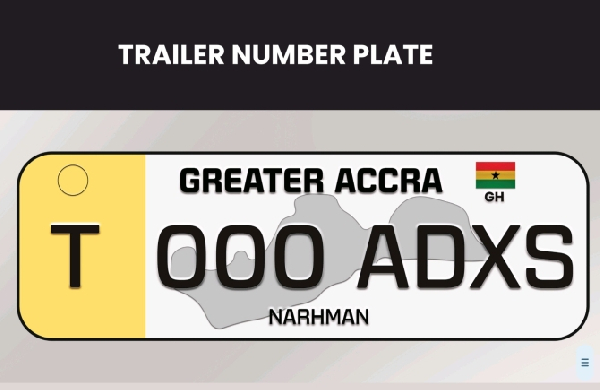
| Trailer | Includes a yellow-coloured band on the left side. |
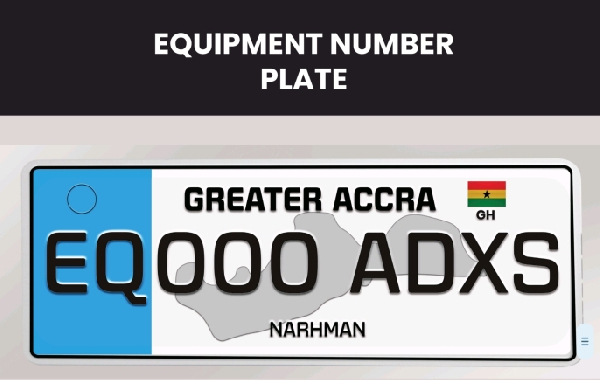
| Equipment | Includes a blue-coloured band on the left side. |
| Private motorcycle | Uses the prefix “M” and a blue background. |
| Commercial motorcycle | Uses the prefix “M” and a yellow background. |
| Temporary vehicle | Uses the prefix “TMP”. |
| Defective vehicle plate | Uses the prefix “DV”, and must carry a unique garage identification, registration number and expiry date. |
| Particular identification mark | Allows an approved personalised inscription or name to serve as the identification mark. |
| Ceremonial plate | Carries an approved personalised ceremonial inscription and is valid for no more than three months. |