
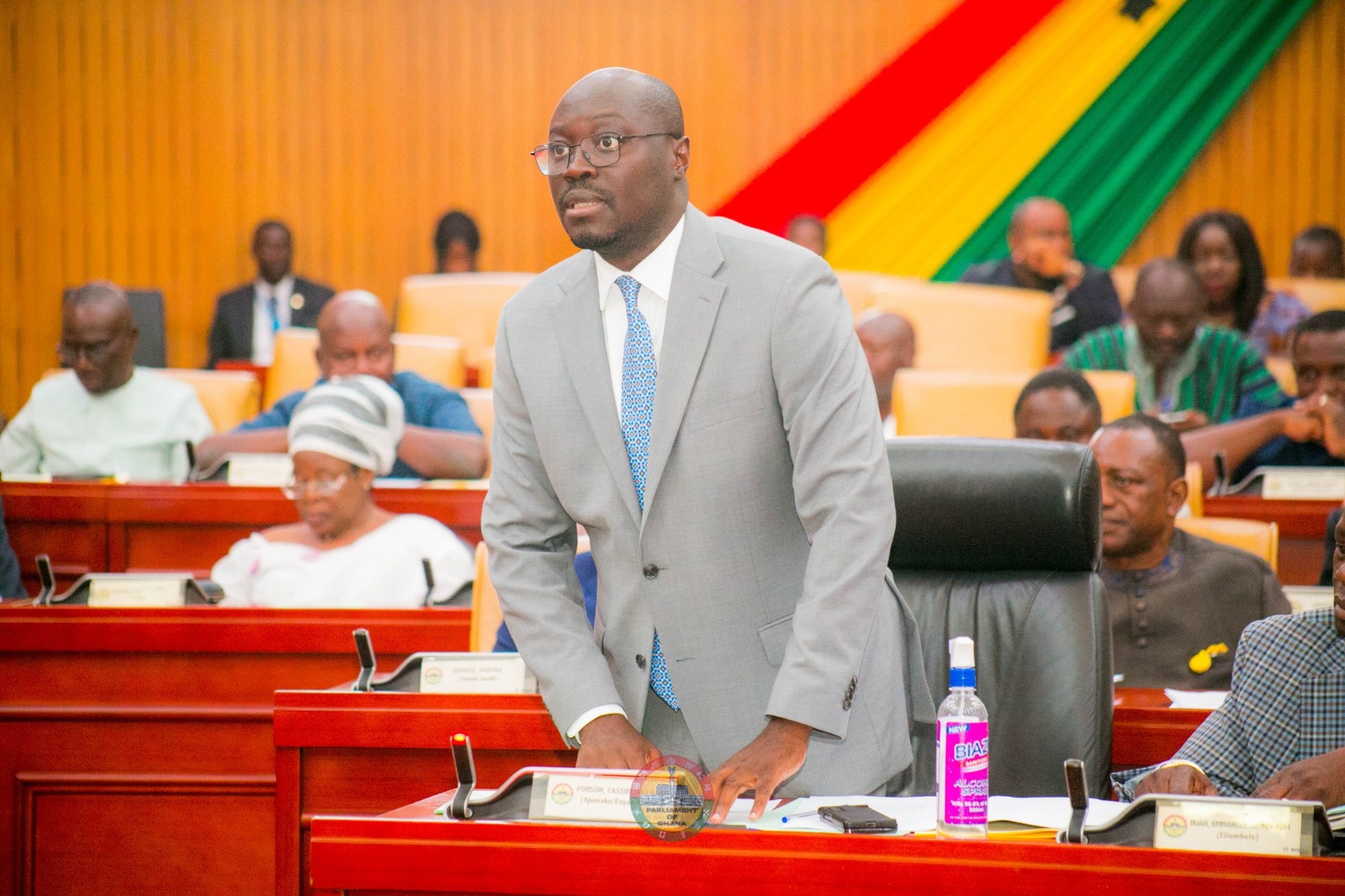
Finance Minister Dr Cassiel Ato Forson has announced that Ghana has achieved a major reduction in the share of national revenue spent on servicing its public debt, marking what he describes as significant progress in the country’s fiscal recovery.
According to the Minister, Ghana previously devoted more than half of its national revenue to debt payments. This heavy burden, he explained, severely constrained the government’s ability to fund critical sectors such as education, healthcare, and infrastructure. Limited fiscal space meant that essential public services and development projects often received far less attention than they required.
Dr Ato Forson said the situation has improved substantially. Ghana now spends less than 20 per cent of its revenue on debt servicing, freeing up resources that can be redirected toward national priorities.
In a Facebook post on Saturday, August 22, 2026, the Finance Minister outlined the turnaround and its implications for the country’s development agenda. He emphasised that the lower debt-service ratio would create more room for the government to invest in infrastructure and public services while maintaining fiscal discipline.
“In the past, Ghana spent over 50 percent of its national revenue on servicing debt. This left less money for schools, hospitals, roads and other essential infrastructure,” he said.
“Today, I am proud to say that we have made significant progress. We now spend less than 20 percent of our revenue on servicing debt!”
The Finance Minister’s statement forms part of ongoing efforts by the government to highlight improvements in Ghana’s fiscal position and the restoration of debt sustainability.
After years of elevated debt levels that crowded out productive spending, the reduced burden is being presented as evidence that recent economic management measures are yielding results.
Officials argue that the decline in the proportion of revenue consumed by debt payments strengthens the country’s capacity to finance priority programmes without resorting to excessive new borrowing. Greater fiscal space is expected to support investments in roads, educational facilities, health infrastructure, and other public goods that directly affect citizens’ daily lives.
The achievement also aligns with broader goals of restoring investor confidence and demonstrating that Ghana can meet its obligations while still advancing development objectives. Maintaining this lower debt-service ratio will require continued discipline in public financial management, careful prioritisation of expenditure, and sustained efforts to grow domestic revenue.
Observers note that reducing the debt burden is only one part of a larger recovery process. Ensuring that the newly available resources are used efficiently and transparently will be critical to translating fiscal gains into tangible improvements in living standards.
The government has repeatedly stressed that fiscal consolidation and debt sustainability remain central pillars of its economic strategy.
Dr Ato Forson’s public update underscores the administration’s desire to communicate progress directly to citizens. By highlighting the shift from over 50 per cent to under 20 per cent of revenue spent on debt servicing, the Minister sought to illustrate a concrete improvement in the country’s financial position.
As Ghana continues to navigate the path toward stronger public finances, the reduced debt-service ratio is expected to provide a foundation for more balanced and development-oriented budgeting in the years ahead.
The challenge now lies in safeguarding these gains and ensuring that the additional fiscal space is channelled into projects that deliver lasting benefits for the population.