
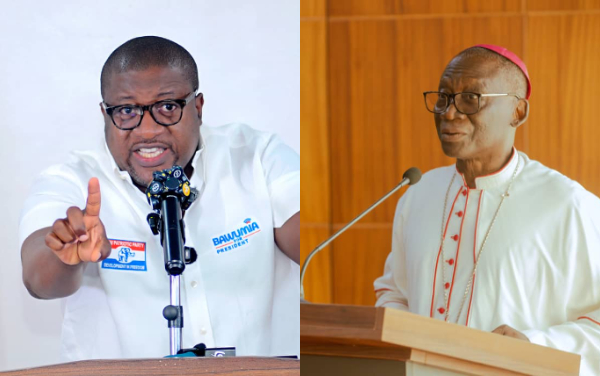
The Ghana Catholic Bishops’ Conference (GCBC) and the New Patriotic Party (NPP) have sent a strong message to the governing National Democratic Congress (NDC) to halt drug barons from using Ghana as illicit drug trafficking hub.
In separate statements, the two bodies bemoaned the growing perception that Ghana has become narcotic drugs trafficking transit point, bringing disgrace to the nation and eroding the country’s hard-won international reputation.
Ghana is currently facing intense international and domestic scrutiny following a series of high-profile, multi-million dollar illegal drug shipments originating from its ports and subsequently seized abroad.
The scale of these international and local seizures of narcotic drugs in Australia, France and South Africa among others with a street value of over $1 billion have fueled rising domestic concern that transnational cartels are increasingly utilizing the country as a major transit hub.
In a strongly-worded statement signed and issued on Monday, September 21, 2026, by Most Rev. Matthew Kwasi Gyamfi, Bishop of Sunyani and President of Ghana Ghana Bishops’ Conference, the Bishops warned that the country’s name is being “dragged through the international press for the wrong reasons,” following the string of drug seizures linked to Ghanaian ports and borders.
“As shepherds of the flock of Christ, we cannot remain silent while illicit drug trafficking and abuse threaten the moral fabric, security and future of our nation. The drug menace is no longer a distant threat. It is a serious national concern and a profound moral crisis that cannot be treated merely as a routine criminal matter,” the Bishops stated.
Parliamentary recall
In a memorandum dated 18 September 2026, more than forty Members of Parliament (MPs), invoking Article 112(3) of the 1992 Constitution and Order 53 of the Standing Orders, petitioned the Speaker to recall Parliament from recess.
The memorandum placed the Dunkirk seizure within a pattern of incidents dating from March 2025 including a 3.3-tonne cocaine haul hidden under sand in a tipper truck at Pedu Junction, Cape Coast; another cocaine consignment intercepted on the Takoradi–Cape Coast highway; hundreds of parcels of suspected cocaine found in sacks of gari at a Tema Harbour warehouse; an unresolved case involving a flight from Gran Canaria alleged to have carried narcotics and undeclared currency; a vessel released after payment of a partial fine and later arrested abroad with narcotics; and methamphetamine concealed in a charcoal shipment, intercepted by Australian customs.
The signatories estimated that high-profile seizures linked to Ghana over the past two years exceeded US$1 billion in value.
The immediate trigger was the 10th September, 2026 interception by French customs of 3.9 tonnes of cocaine worth £225 million, concealed in a container of plastic waste shipped from Ghana.
Direct message to government
The Bishops said commendations for NACOC’s 217 arrests, 165 prosecutions and seizure of 8.5 tonnes of drugs and 45.4 million tramadol tablets are not enough, adding that they want the government to treat it as an existential threat.
Consequently, the Bishops are demanding that:
- Treat every seizure as a national security failure – audit scanning and surveillance at Tema, Takoradi and Kotoka.
- Investigate and prosecute without fear or favour – including public officials, no matter their rank or party.
- Follow the money – freeze assets and dismantle networks, not just arrest couriers.
- Stop the delay tactics – timely, transparent prosecution that restores public confidence.
They also threw their weight behind the MPs’ call to recall Parliament under Article 112(3) to summon the Ministers for Interior, Transport and National Security, plus NACOC, GPHA, GRA, GIS and NIB, to publicly account for how drugs are slipping through.
“The drug trade is not just a crime, it is a moral evil that steals the soul of our nation,” the Bishops reiterated.
Commendation
The Bishops commended the Narcotics Control Commission (NACOC) and other agencies involved in the investigations and urged continued cooperation with French authorities to uncover the full extent of the alleged trafficking network.
They also welcomed the formation of an inter-agency task force by President John Dramani Mahama to tackle the trafficking of narcotic drugs through Ghana’s ports, airports and borders.
Four Ghanaians have been arraigned before the Accra High Court on September 16, 2026, with Dutch fugitive Jos Leijdekkers, alias Bolle Jos still at large.
They are Desmond Koranteng Curiel, alias “Paul Kweku Yeboah” or “Biggs”; Musah Attah, alias “Kromo”; Kweku Otchere; and Jessica Hartog.
The Bishops said while they respect that the accused are presumed innocent, the sheer scale “places Ghana in the global spotlight for the wrong reason and causes profound national embarrassment.”
“How did such quantities evade detection at our ports and borders? Who financed these operations? Why do prosecutions stall?” the Bishops asked.
NPP demands bipartisan inquiry
The NPP has called for the immediate recall of Parliament and a bipartisan parliamentary committee to probe into the major narcotics seizures linked to Ghana.
At news conference in Accra on Tuesday, September 22, 2026, Henry Nana Boakye, NPP National Organiser said the growing number of drug interceptions amounted to a major national security concern requiring urgent action from the government.
The NPP said the committee should conduct its proceedings publicly to allow Ghanaians to follow the investigation and obtain answers to questions surrounding the seizures.
The party also called for investigations to go beyond the arrest of couriers and alleged low-level operatives to identify the financiers and organisers behind the shipments.
The NPP said it would continue pressing for accountability until the circumstances surrounding the Ghana-linked drug shipments are fully investigated.
Mr Boakye accused the government of President John Dramani Mahama of failing to adequately secure Ghana’s ports, airports and borders.
The NPP described the incidents as evidence of a broader pattern rather than isolated cases.
“We cannot ignore the disturbing questions raised by the arrest of one Musah Atta,” Mr Boakye said, referring to reports that the accused person had previously been associated with presidential security.
However, NACOC Deputy Director-General Alexander Twum-Barimah has disputed the claim, saying the preliminary background checks on the suspects in custody had not established that any of them was a presidential escort.
The NPP nevertheless called for a full investigation into any possible links between individuals with access to state institutions and the narcotics trade.
It called on the government to explain what measures had been introduced following previous drug seizures and whether investigations had resulted in completed prosecutions and custodial sentences.
Demand for dismissal of institutional heads
The party further called for the immediate removal of institutional heads, and the ministers they report to, including the Chief Executive of the Ghana Ports and Harbours Authority, the Director-General of the Ghana Maritime Authority, the Chief Executive of the Ghana Shippers’ Authority, and the Executive Secretary of the Narcotics Control Commission.
The rest are the National Security Coordinator, the Director-General of the National Intelligence Bureau, the Managing Director of the Ghana Airports Company Limited, the Commissioner-General of Customs and the Inspector-General of Police.
The NPP argued that the heads of these institutions should be removed because the scale of the reported seizures demonstrated failures within Ghana’s security architecture.