
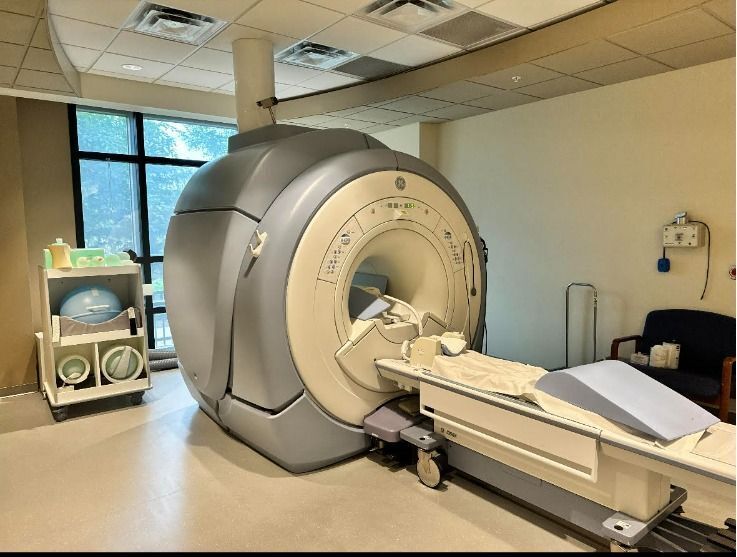
Ghana’s public healthcare system currently operates with only two functional Magnetic Resonance Imaging (MRI) machines across all government health facilities, according to a nationwide assessment conducted by the Ghana Medical Trust Fund (GMTF), popularly known as MahamaCares.
The findings, released by the fund’s administrators, reveal significant gaps in the country’s healthcare infrastructure and specialist workforce, particularly in the diagnosis and treatment of chronic non-communicable diseases.
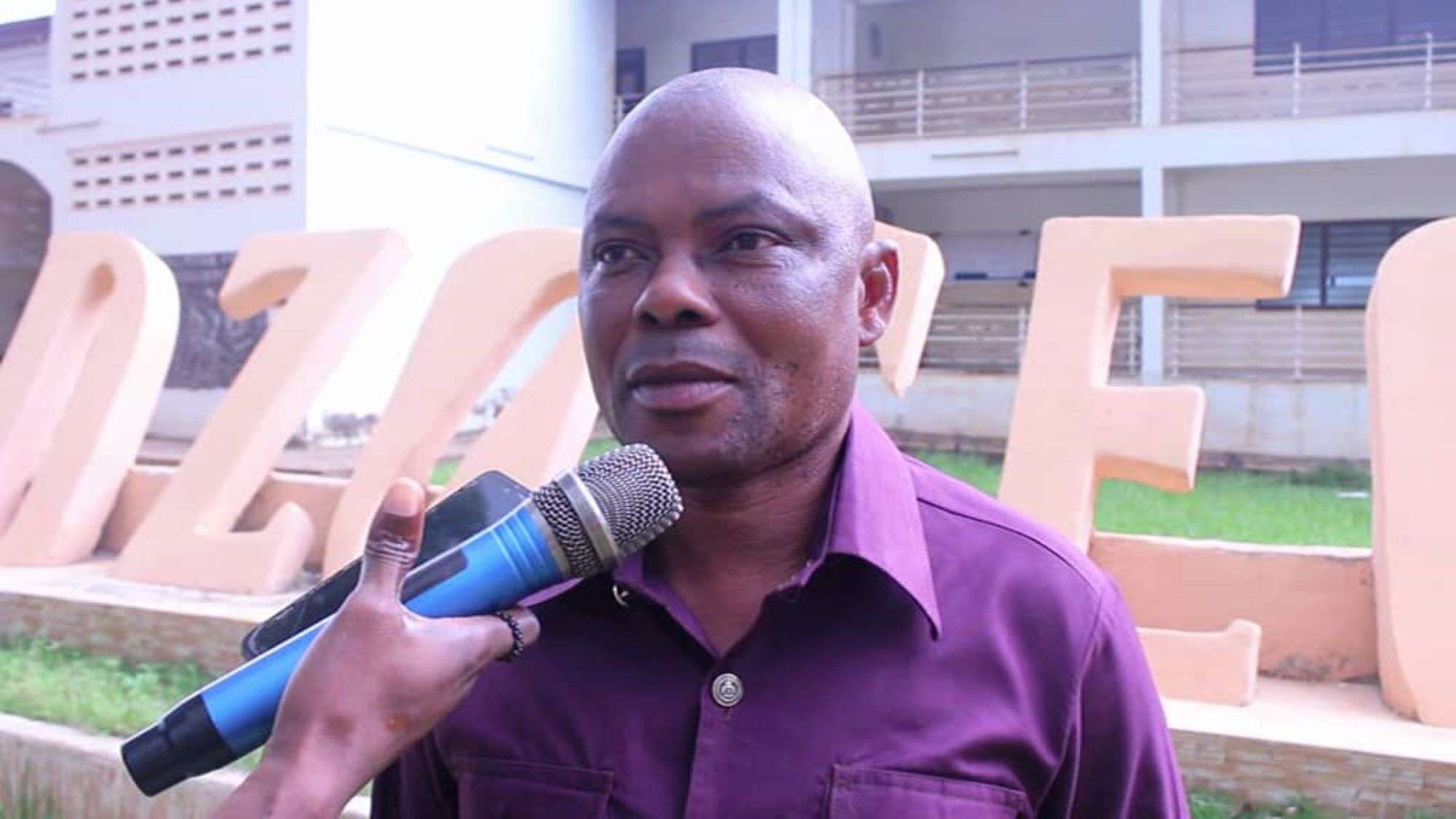
Speaking at a ceremony held at the Office of the President in Accra on Monday, June 15, 2026, the Administrator of the Ghana Medical Trust Fund, Adjoa Obuobia Darko-Opoku, said the assessment uncovered serious shortages in critical medical equipment nationwide.
Beyond the limited number of MRI scanners, the assessment found that public health facilities across Ghana have only five mammogram machines and two radiotherapy machines. The report also highlighted a severe shortage of specialist healthcare professionals, noting that the entire northern sector of the country is served by only two cardiologists.
Ms Darko-Opoku said the findings have informed the priorities of the MahamaCares initiative, with the procurement of additional MRI scanners identified as one of the fund’s immediate interventions.
According to her, the needs assessment was conducted shortly after the establishment of the fund and exposed critical weaknesses in the country’s ability to provide timely diagnosis and treatment for chronic illnesses.
“The needs assessment guided our four strategic pillars: patient support, infrastructure and equipment, workforce development, and medical research,” she stated.
She explained that the fund’s interventions are designed to bridge existing healthcare gaps and ensure that access to specialised medical services is not determined by a person’s location or economic status.
“Access to specialised healthcare should not depend on where you are coming from, your need or your income,” she said.
As part of efforts to improve specialist care, Ms Darko-Opoku announced that work has commenced on three cardiology centres at the Korle Bu Teaching Hospital, the Komfo Anokye Teaching Hospital, and the Tamale Teaching Hospital.
She added that the fund is also facilitating the distribution of dialysis machines and intensive care unit (ICU) equipment to health facilities throughout the country.
The long-term goal, she said, is to increase the number of specialists in chronic disease management across all regions.
“Our vision is that within a few years, every region in Ghana will have at least 10 specialists to provide advanced care for people living with chronic diseases,” she noted.
Ms Darko-Opoku further disclosed that a pilot phase of the programme has already supported 50 patients with surgeries and chemotherapy treatment ahead of a nationwide rollout of patient support services in 29 hospitals later this month.
“These are not just medical successes; they are stories of restored hope,” she said.
The remarks were made during a ceremony at which a cheque for GH¢6.1 million was presented to the Ghana Medical Trust Fund.
The donation consists of President John Dramani Mahama’s six-month salary contribution, one-month salary donations from presidential appointees and staff, and deductions from officials who failed to comply with asset declaration requirements within the stipulated period.
Deputy Chief of Staff in charge of Administration, Nana Oye Bampoe Addo, said additional contributions are expected from appointees who are yet to fulfil their asset declaration obligations.
She stressed that chronic diseases continue to place increasing pressure on the healthcare system, citing a facility that recorded 5,000 new diabetes referrals during the first half of 2025.
“These are not just statistics; they are our people, our family, our relatives,” she said.
According to Nana Oye Bampoe Addo, the trust fund is expected to require approximately GH¢3 billion annually during its first three years of operation. Parliament approved GH¢2.9 billion for the fund in 2025 under the Ghana Medical Trust Fund Act, 2025 (Act 1144).
She appealed to individuals, businesses and philanthropic organisations to support the initiative through donations.
Ms Darko-Opoku echoed the appeal, urging Ghanaians to join the effort to combat chronic non-communicable diseases. Citizens who wish to contribute to the fund can do so by dialling *255# on any mobile network.