

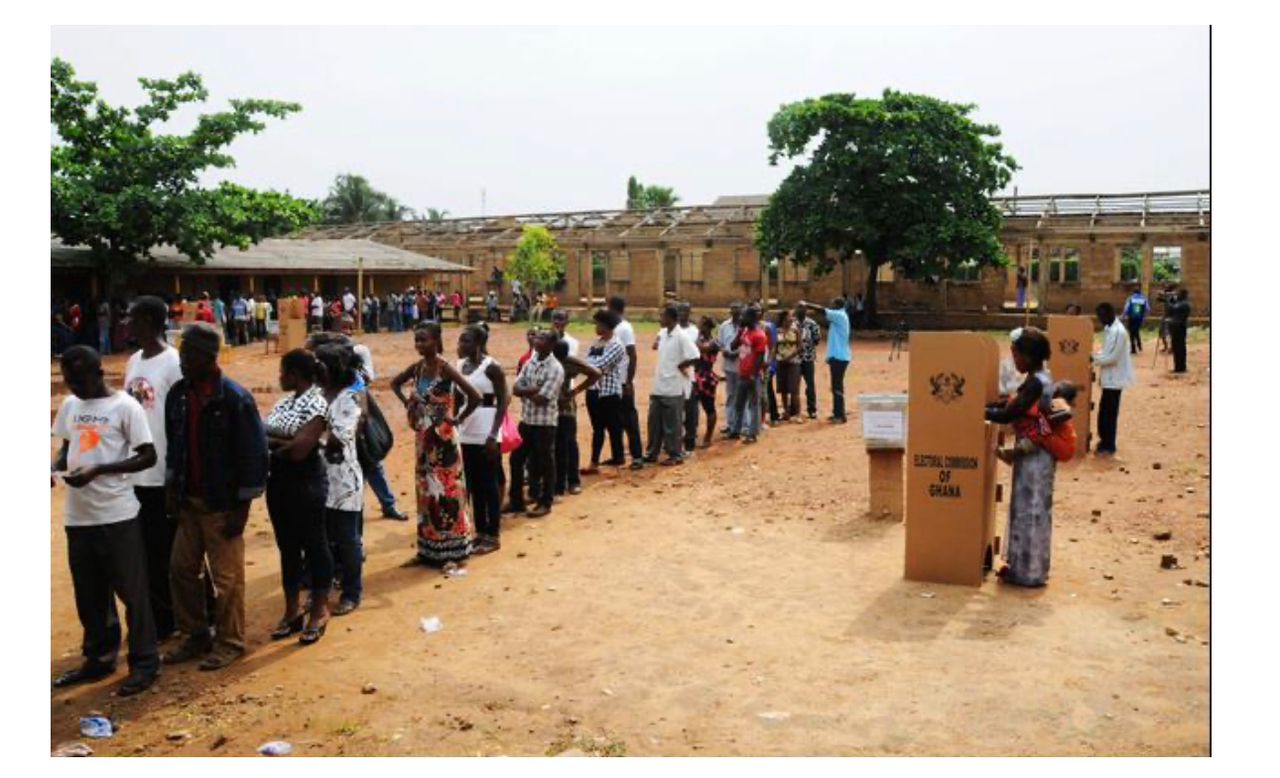
For over three decades, Ghana has been celebrated as a resilient bastion of democracy in West Africa. Since the ushering in of the Fourth Republic in 1993, the country has navigated multiple peaceful transitions of power, earning international acclaim. Yet beneath this tranquil surface lies a structural decay that threatens to hollow out the core of our democratic experiment.
The political duopoly exercised by the National Democratic Congress (NDC) and the New Patriotic Party (NPP) has increasingly transformed Ghana’s democratic process into a capital-intensive commercial enterprise.
To safeguard the future of the nation, we must critically examine how monetisation has hijacked our politics, how political parties have devolved into patronage-dispensing syndicates, and what urgent interventions are required to recover our parliamentary processes and the wider state.
The Monetisation of the Mandate
At the heart of Ghana’s democratic regression is the sheer financial barrier to political entry. What was once a contest of ideas and developmental visions has deteriorated into an auction where political power is sold to the highest bidder.
According to studies by the Westminster Foundation for Democracy (WFD) and CDD-Ghana, the cost of running for a seat in Parliament has soared exponentially. This commercialisation begins long before general elections. During internal party primaries, candidates must mobilise staggering sums of money to secure the loyalty of delegates. When party primaries and national campaigns are dictated by financial patronage rather than rigorous policy debates, the democratic franchise is effectively privatised.
The consequences of this transactional politics are immediate and severe:
- State Capture: Candidates who rely on wealthy, unaccountable financiers to fund their campaigns find themselves beholden to these private interest groups once in office. The state’s decision-making apparatus is inevitably captured, with public procurement and policy directions tailored to reward political investors.
- Marginalisation of Technocrats: Competent, highly qualified technocrats and public servants who lack deep pockets or the willingness to engage in corrupt patronage networks are systematically locked out of governance.
- Systemic Corruption: The massive capital outlay required to win an election creates immediate pressure on elected officials to recoup their investments once in power, fueling a vicious cycle of public embezzlement and rent-seeking.
From Public Servants to Patronage Syndicates
This systemic commercialisation explains the structural transformation of Ghanaian political parties. Originally envisioned as public interest organisations meant to aggregate citizens’ views and articulate national developmental agendas, the NDC and NPP have increasingly transitioned into patronage-dispensing syndicates.
Within these syndicates, loyalty to the party hierarchy and financial contribution take precedence over competence and public service. This system is directly responsible for two major menaces
- The Erosion of Internal Democracy: True grassroots participation is stifled. Party structures are weaponised to protect incumbents or pre-approved candidates who have the financial backing of the party leadership.
- The Stagnation of State Enterprises: State-owned enterprises (SOEs) and key regulatory institutions, which should be run by independent, merit-appointed experts, are instead treated as spoils of war. Following every change of government, these crucial institutions are staffed with party loyalists as a reward for their electoral efforts. The result is institutional paralysis, mismanagement, and chronic underperformance.

Dismantling the Parliamentary Auction: Reforms for Entry
If we are to save Parliament from becoming the exclusive playground of the ultra-wealthy financiers, we must implement institutional reforms designed to dismantle this electoral marketplace. Demonetising the path to parliament requires addressing both the demand and supply sides of political finance through five critical interventions:
- Abolishing the Restrictive Delegate System for Primaries: Under the current primary structure, a highly concentrated and exclusive group of party delegates holds the franchise. This creates a supply bottleneck, artificially driving up the market price of a vote per delegate and facilitating hyper-targeted vote-buying. Political parties must transition to a One-Member, One-Vote universal franchise where all registered, card-bearing party members in a constituency vote in primaries. Broadening the voter base to thousands of members makes retail bribery logistically and financially impossible.
- Establishing an Independent Campaign Finance Regulator: While the Political Parties Act, 2000 (Act 574) mandates that parties disclose their funding, enforcement is non-existent. We need an independent regulatory body, such as a dedicated Multiparty Campaign Finance Commission, empowered to track candidate spending, audit campaign books in real-time, enforce strict spending caps on both primaries and general elections, and prosecute violations.
- Mandatory Real-Time Disclosure of Political Donations: To block dirty money from illicit mining, smuggling, or corrupt public procurement from buying legislative seats, the law must mandate that all donations above a set threshold be declared publicly. Candidates should be required to publish their donor registries and campaign account statements before they are cleared to contest.
- Subsidising Campaign Infrastructure to Level the Playing Field: The state can reduce the structural cost of campaigning by providing non-monetary public subsidies. This includes mandating that state-owned media, such as GBC, provide equal, free, and structured airtime to all certified candidates, and facilitating community-based candidate debates hosted by civil society and the National Commission for Civic Education (NCCE).
- Demand-Side Civic Reorientation: Voters frequently demand direct financial handouts for funerals, hospital bills, school fees, and private requests from parliamentary candidates because they have lost faith in collective public goods. The NCCE must run sustained national campaigns to realign voter expectations, emphasising that an MP’s constitutional mandate is legislative oversight and national policy-making, not personal philanthropy.
Reclaiming the State: The Constitutional Imperative
To arrest this systemic decay, characterised by the hollowing out of meritocracy, the erosion of public trust, and the conversion of key state institutions into partisan spoils, Ghana cannot rely on mere moral appeals to the political class. We must pursue deep, structural constitutional interventions to recover parliament and the wider state apparatus from partisan capture.
The primary target for reform must be the 1992 Constitution. While it has served us well in maintaining stability, it contains structural design flaws, most notably, the hyper-centralisation of executive power. Under the current framework, the President has the authority to appoint thousands of public officers, ranging from heads of state enterprises to members of independent commissions and local government authorities.
To break this cycle of patronage, we must:
- Decouple Public Appointments from Presidential Patronage: We must amend the Constitution to establish a robust, merit-based recruitment system that strips the executive of unilateral appointment powers. Rather than serving at the pleasure of the President, heads of the civil service, state-owned enterprises, the police service, and regulatory bodies should be appointed through a tripartite reform model:
- Independent Commission-Led Recruitment: Vacancies must be publicly advertised, with candidates vetted and shortlisted by independent, non-partisan bodies, such as a reformed Public Services Commission, through competitive, transparent, and merit-based evaluations.
- Parliamentary Approval: Shortlisted candidates must undergo rigorous vetting by Parliament, requiring a two-thirds supermajority vote for approval. This ensures that appointees command broad national consensus and trust, rather than mere partisan loyalty.
- Security of Tenure and Overlapping Terms: Appointees should serve fixed terms that do not align with the four-year presidential electoral cycle (e.g., five- or six-year terms). Their removal must be strictly insulated from executive whim, allowed only through a judicial-style tribunal for proven misbehaviour or incapacity.
- Strengthen Parliamentary Independence: Parliament must be empowered to act as a genuine check on the executive, rather than serving as a rubber stamp for the ruling party’s agenda. This requires reforming parliament’s internal rules and ensuring that the legislature is not subservient to the executive’s financial and political leverage.
The Latent Threat to Stability
The progressive alienation of the Ghanaian citizenry, particularly a growing population of disillusioned youth, is not a minor inconvenience; it is a profound national security threat. As public trust in key democratic institutions, such as the judiciary, parliament, and the electoral commission, continues to erode, the legitimacy of the entire democratic framework is compromised.
We need only look across the West African sub-region to see the consequences of democratic decay and citizen disillusionment. If Ghanaians begin to perceive democracy as an elite-driven cartel that yields no tangible developmental dividends, the long-term stability and resilience of our country will face existential risks.
Recovering our state is no longer an intellectual luxury; it is an urgent survival strategy. We must reform our constitutional architecture and de-commercialise our politics before the silent frustration of the populace transforms into active rejection of the democratic system itself.