
Veteran journalist and political commentator Kwesi Pratt Jnr., has questioned the conduct and credentials of individuals positioning themselves to be the flagbearer of the governing National Democratic Congress (NDC) for the 2028 general election, asking whether their actions reflect the qualities expected of the topmost leadership role.
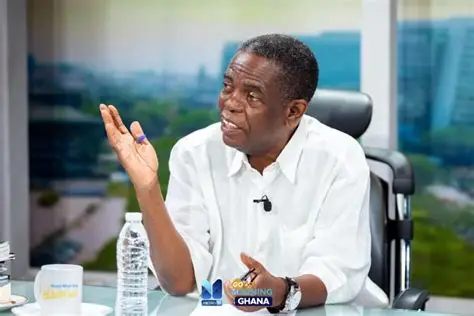
Speaking on the current affairs programme, ‘Alhaji & Alhaji’ on Pan African TV last Saturday, Mr Pratt expressed concern over what he described as unnecessary political manoeuvring by some party members seeking to project themselves as future presidential contenders.
“These individuals who are jumping over themselves and doing all kinds of funny things and so on, look at them. My brother, look at them. What is presidential about them? I’m serious?
“What is presidential about them? Tell me. What is presidential about these individuals jumping around and playing the fool? What is presidential about them?” he asked again, amid alleged internal sabotage by some ministers of state.
Even though no individual within the NDC has publicly announced their intention to contest for the party’s flagbearership slot, party insiders and political watchers are seeing subterranean movements by some party apparatchiks and their assigns towards the top position.
Polls by Global Info Analytics involving the NDC national chairman, Johnson Asiedu Nketiah; Vice President Naana Jane Opoku-Agyemang, Chief of Staff Julius Debrah, Finance Minister Dr Cassiel Ato Forson, Education Minister Haruna Iddrisu; Food and Agriculture Minister Eric Opoku among others, have given some credence to the battle for the governing party’s leadership position.
According to Musa Dankwah, the Executive Director of Global Info Analytics, none of these individuals captured in the polls has called him to say they are not interested.
However, Mr Pratt challenged supporters and observers to identify qualities that make such individuals suitable for the highest office of the land.
According to him, many of the personalities currently attracting attention within the party owe their relevance largely to their association with the NDC rather than any outstanding personal achievements that set them apart.
“These individuals have become relevant or have gained some relevance because of their participation and association with the National Democratic Congress. Finish! Take any one of them and take the NDC out and see who they are,” Mr Pratt remarked.
He urged those engaged in early succession politics to focus on serving the party and the nation rather than engaging in activities that he believes distract from the NDC’s broader objectives.
“They should stop wasting our years. They should stop wasting our time,” he stressed.
Mr Pratt further pointed to the constitutional qualifications required for a person to become President of Ghana, suggesting that meeting the legal requirements alone does not automatically make one presidential material.
His comments come amid growing speculation and discussions about the future leadership of the NDC and who may eventually emerge as the party’s flagbearer after President John Dramani Mahama’s tenure.
Mr. Pratt’s remarks have already fueled debate within political circles, especially among the governing NDC supporters and potential aspirants who have either openly declared their ambitions or are being tipped to takeover leadership position from President Mahama.
As conversations about succession continue to gain momentum, Mr Pratt’s intervention serves as a reminder of the expectations many Ghanaians place on individuals seeking the nation’s highest office.
President Mahama is barred from seeking a third term in office by the 1992 Constitution of Ghana, which strictly limits presidents to two terms.
Both Mr Mahama and his party, the NDC, have confirmed he will not run in the 2028 elections, honoring this constitutional limit.
While some political activists including allies of President Mahama, have sparked debate by calling for constitutional amendments or testing the limits at the Supreme Court, these appeals may face major legal obstacles.