
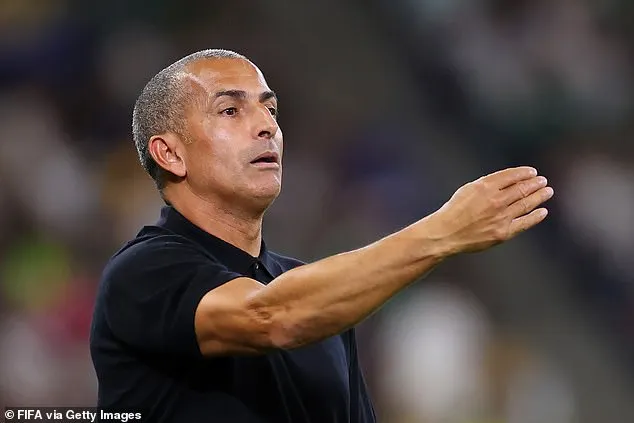
Tunisia’s national team coach has been dismissed only days after the opening fixtures of the FIFA World Cup, marking one of the earliest managerial changes of the tournament.
Although the competition only kicked off on June 11, one football federation has already taken decisive action following a heavy opening defeat.
The move comes just hours after Tunisia suffered a 5–1 loss in their Group F encounter against Sweden, a result that appears to have triggered immediate consequences behind the scenes.
Spanish-based journalist Romain Molina confirmed the development on X (formerly Twitter), stating: “It’s the end for Sabri Lamouchi at the helm of the Tunisian national team.” His post quickly circulated across football media, signalling the abrupt end of Lamouchi’s short-lived World Cup campaign.
The dismissal follows a difficult opening match for Tunisia, where Sweden delivered a dominant attacking performance.
Alexander Isak and Viktor Gyökeres were central figures throughout the contest, combining effectively to control the game’s rhythm and constantly stretch the Tunisian defence.
Brighton midfielder Yasin Ayari was also a standout performer, scoring two spectacular long-range goals in the sixth and 96th minutes.
His early strike set the tone for Sweden’s aggressive start, while his stoppage-time effort rounded off an emphatic team display. Despite his Tunisian heritage connection, Ayari maintained a subdued celebration after his opening goal in a gesture of respect toward the opposition.
Sweden’s fast start immediately put Tunisia under pressure. Ayari opened the scoring in the sixth minute with a stunning effort from distance, catching the goalkeeper off guard and giving Sweden early control of the match.
The early goal forced Tunisia to push higher up the pitch, but it also left space for Sweden’s attackers to exploit.
The Swedes doubled their advantage in the 40th minute through Alexander Isak. The move began with Viktor Gyökeres dropping deep toward midfield to collect possession and link play.
After drawing defenders toward him, Gyökeres released a perfectly weighted pass into Isak’s path. The forward drove forward with confidence, cut onto his right foot, and calmly finished into the bottom-right corner, showcasing both composure and precision.
Tunisia managed to respond just before the break, briefly reigniting their hopes. In the 43rd minute, Omar Rekik found the net with a well-timed glancing header. The goal came at a crucial moment, offering Tunisia a lifeline as they went into half-time trailing by just one goal and still within touching distance of Sweden.
However, Sweden reasserted their dominance in the second half with renewed intensity. Their third goal arrived in the 59th minute, again involving the tournament’s most influential attacking duo. This time, Isak turned provider, setting up Gyökeres inside the penalty area. The striker showed excellent movement to find space before finishing clinically, restoring Sweden’s two-goal cushion and dampening any hopes of a Tunisian comeback.
As the match progressed, Tunisia struggled to regain control or mount sustained pressure. Sweden’s midfield maintained structure, while their forwards continued to exploit gaps between the lines. The introduction of substitutes only strengthened their momentum.
One of those substitutes, Mattias Svanberg, made an immediate impact. Just 18 seconds after entering the pitch in the 84th minute, he found the back of the net to extend Sweden’s lead to 4–1. The assistant referee initially raised the offside flag, but VAR intervention overturned the decision after replays showed a slight touch from Isak that played him onside, confirming the goal.
To complete a dominant performance, Ayari struck again in stoppage time. His second goal of the night was another powerful long-range effort, capping off a memorable individual display and sealing Sweden’s emphatic 5–1 victory. It was a fitting conclusion to a match in which Sweden controlled nearly every phase of play, from build-up to final execution.
The result leaves Tunisia with an immediate setback in their World Cup campaign, compounded by the shock managerial dismissal that followed shortly after the final whistle. For Sweden, the performance sends a strong message to the rest of Group F, highlighting their attacking depth and cohesion under pressure as they begin their tournament journey in convincing fashion.