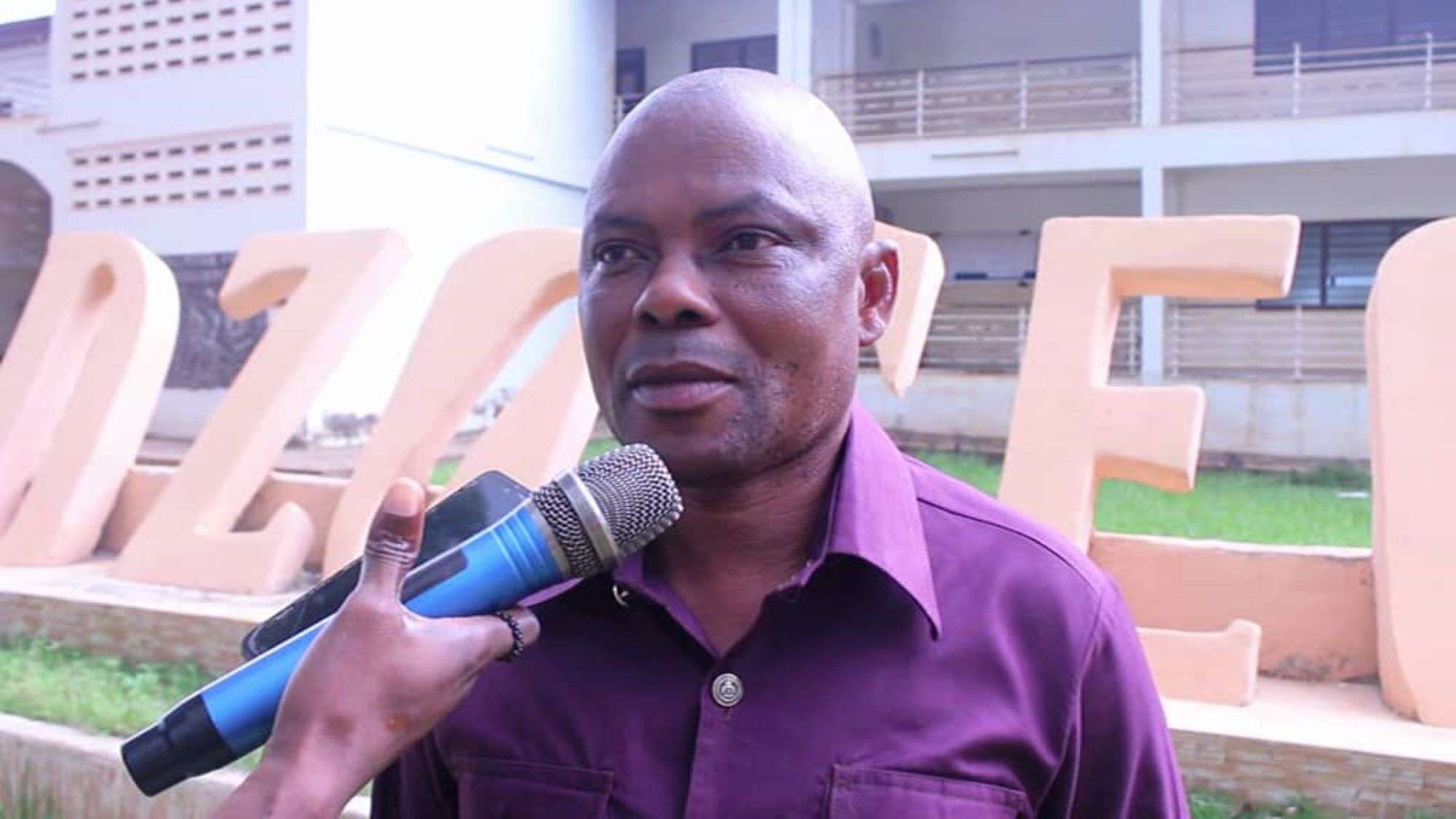

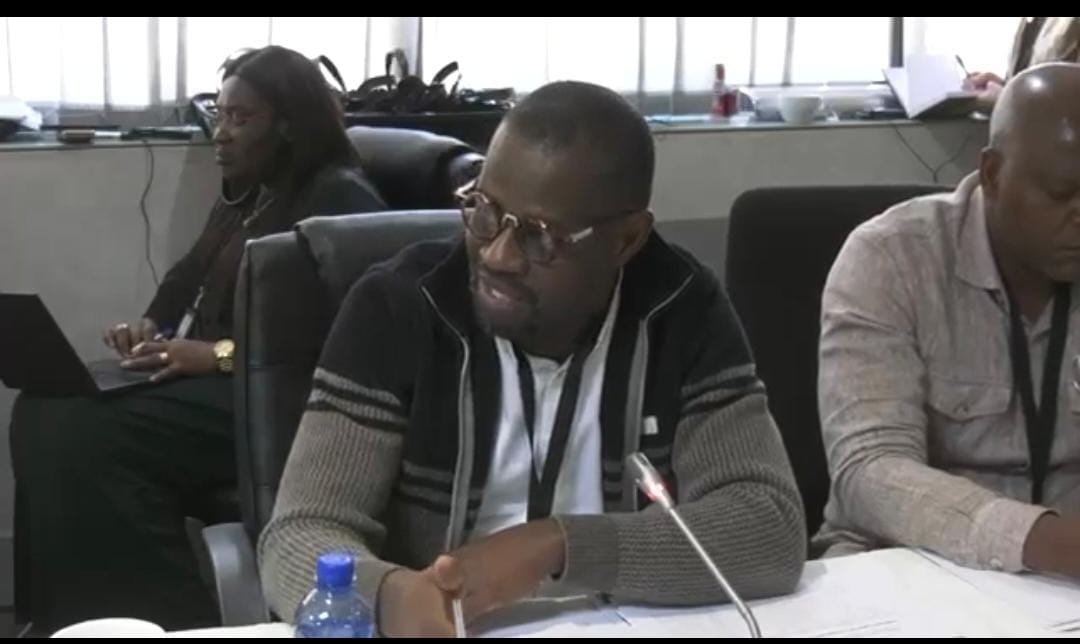
The Member of Parliament for Nsawam-Adoagyiri, Mr Frank Annoh-Dompreh, has challenged the Pan-African Parliament (PAP) to move beyond speeches and symbolic resolutions, urging African legislators to deliver measurable outcomes that will restore confidence in the continental legislative body.
Speaking during the First Ordinary Session of the Seventh Pan-African Parliament in Midrand, South Africa, Mr Annoh-Dompreh who is also the Minority Chief Whip in Ghana’s Parliament, called on the leadership of the continental legislature to focus on practical reforms, stronger institutional discipline and tangible achievements rather than rhetoric.
His remarks came as Members debated the future direction of the Parliament, its funding, committee work and efforts to strengthen continental integration.
The Ghanaian legislator began by expressing concern over recurring developments in South Africa, describing it as ironic that delegates continue to meet in the country while issues that contradict the principles and values of the African Union continue to occur. While acknowledging South Africa’s sovereignty and the need to respect domestic affairs, he stressed that the African Union’s conventions and international norms require member states to uphold the rights and values that bind the continent together.
According to Mr. Annoh-Dompreh, the Pan-African Parliament must not limit itself to issuing routine statements whenever continental challenges arise. Instead, he argued that the institution must demonstrate leadership by taking meaningful action that reflects the aspirations of African citizens.
Turning to the issue of funding, the Minority Chief Whip acknowledged the growing calls for increased financial support for the Pan-African Parliament, describing funding as the “oxygen” required for the institution to carry out its work.
However, he cautioned that requests for additional resources must be matched by visible results and accountability.
“We cannot consistently demand more funding while failing to justify why those resources should continue to be provided,” he argued, insisting that the Parliament must demonstrate value for money through effective committee work and meaningful policy outcomes.
Mr. Annoh-Dompreh observed that parliamentary committees remain the engine room of every legislature, noting that much of Parliament’s real work takes place outside plenary sessions.
He therefore urged committee chairpersons and leadership to ensure that committee recommendations are implemented and followed through to their logical conclusions.
He pledged the commitment of committee leaders to work diligently but maintained that success would ultimately depend on decisive leadership from the President of the Pan-African Parliament and his deputies.
The Ghanaian lawmaker also turned attention to the implementation of model laws adopted by the Pan-African Parliament.
He explained that while the Parliament lacks the authority to enact binding legislation for member states, it can develop model laws intended to guide national parliaments.
However, he questioned the effectiveness of passing model laws without ensuring that they are subsequently adopted by individual African countries.
According to him, there is little value in producing model legislation if Speakers of national parliaments are not actively engaged to domesticate those laws within their respective legal systems.
He cited previous model legislation on food security and agriculture as examples of important initiatives that should be translated into domestic laws capable of addressing Africa’s development challenges.
Mr. Annoh-Dompreh further encouraged the leadership of the Pan-African Parliament to focus on a limited number of strategic priorities rather than attempting to tackle too many issues simultaneously.
He argued that delivering meaningful results in three or four major thematic areas would leave a stronger legacy than pursuing an overly ambitious agenda with little measurable impact.
The Minority Chief Whip also called for greater discipline during parliamentary proceedings, observing that debates within the Pan-African Parliament often consume excessive time because Members exceed their allocated speaking time.
He proposed stricter enforcement of the Rules of Procedure to ensure orderly debates and efficient use of parliamentary time, arguing that disciplined proceedings would enhance productivity and strengthen the institution’s credibility.
Reflecting on the image of the Pan-African Parliament across the continent, Mr Annoh-Dompreh said many Africans continue to question the institution’s relevance because they see little evidence of concrete achievements.
He remarked that Members should be able to return to their respective countries with clear examples of policies, reforms and initiatives that improve the lives of African citizens rather than simply reporting that they attended meetings and held discussions.
He noted that although the Pan-African Parliament has made progress by reforming its Rules of Procedure and reducing internal disputes that once dominated its proceedings, the institution must now shift its attention toward delivering practical results that justify its existence.
Mr Annoh-Dompreh concluded by expressing confidence in the current leadership of the Pan-African Parliament, assuring them of his full support while urging all Members to work with purpose, discipline and accountability.
He stressed that history would judge the institution not by the number of speeches delivered but by the lasting impact of its decisions on the lives of Africans.