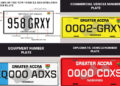

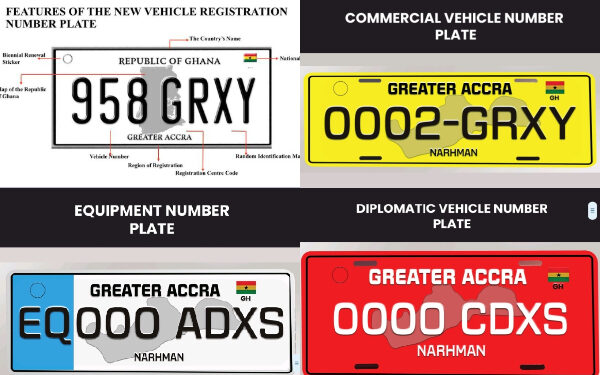
The Driver and Vehicle Licensing Authority (DVLA) has begun piloting new vehicle number plates equipped with Radio-Frequency Identification (RFID) technology ahead of a nationwide rollout scheduled for 2027.
DVLA Chief Executive Officer Julius Neequaye Kotey said the new plates are expected to modernise vehicle registration, improve access to vehicle information and strengthen law enforcement through technology capable of providing real-time data.
Speaking at the Government Accountability Series on Monday, October 12, 2026, Kotey disclosed that the authority had completed the concepts and designs for the plates, which are currently undergoing pilot testing before their planned nationwide introduction next year.
“We have completed the concepts and designs of the new radio frequency identification-enabled number plates. Currently, the new number plate is being piloted ahead of nationwide rollout in 2027,” he said.
Kotey noted that the designs were developed entirely by DVLA staff, without the involvement of external consultants. He said the authority had incurred no consultancy fees in the process.
“The designs of these new number plates were carried out by the staff of DVLA. There was no consultancy fee and no external influence over the designs. It was led and completed by an in-house team,” he stated.
According to the DVLA CEO, the RFID technology will enable the plates to carry information that could assist law enforcement agencies in investigating and responding to crime.
“The RFID technology provides the opportunity for vehicle number plates to carry information that would be useful for law enforcement in the event of crime,” he said.
He added that the system could be integrated with electronic road tolling and traffic enforcement technologies being deployed by the Motor Traffic and Transport Department (MTTD) of the Ghana Police Service, potentially improving vehicle monitoring and traffic management.