
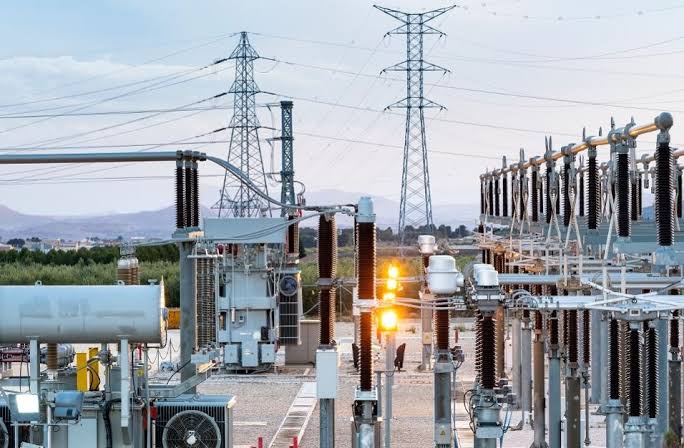
Ghana’s energy sector recovery efforts have suffered a major setback after the World Bank downgraded the country’s flagship Energy Sector Recovery Programme from “Moderately Satisfactory” to “Unsatisfactory,” blaming persistent funding delays, weak government coordination and administrative bottlenecks—particularly the Ministry of Finance’s failure to release funds for critical reforms.
The downgrade, contained in the World Bank’s Implementation Status and Results Report dated June 30, 2026, comes as the combined financial losses of the Electricity Company of Ghana (ECG) and the Northern Electricity Distribution Company (NEDCo) have surged to approximately US$1.5 billion, almost three times the programme’s target of reducing losses to US$525 million by the end of 2027.
According to the World Bank, repeated delays by the Ministry of Finance in issuing Commitment Authorizations, alongside new procurement directives and strict disbursement caps, have paralysed several strategic interventions designed to restore the financial sustainability of Ghana’s power sector.
The report identifies the funding bottlenecks as the principal reason why multiple programme targets have either stalled completely or fallen significantly behind schedule.
Finance Ministry blamed for stalled reforms
The World Bank paints a picture of an energy recovery programme repeatedly frustrated by delayed financial approvals from the Ministry of Finance.
It noted that several major reforms could not proceed because implementing agencies failed to receive the required funding authorisations.
Among the most significant casualties is the nationwide rollout of more than one million smart electricity meters intended for households, Ministries, Departments and Agencies (MDAs) and other strategic public institutions.
The installation programme has stalled because the Ministry of Finance repeatedly failed to issue the necessary Commitment Authorizations required to finance the exercise.
Similarly, the distribution of clean cooking solutions—including LPG stove packages for households, schools and caterers—has also ground to a halt due to delayed disbursements.
The report describes these funding constraints as systemic administrative barriers that continue to undermine implementation across the sector.
Financial losses spiral instead of declining
One of the most alarming findings in the report is the deterioration in the financial position of Ghana’s two largest electricity distribution companies.
Instead of steadily reducing losses under the recovery programme, the combined financial deficits of ECG and NEDCo have climbed to approximately US$1.5 billion.
This represents a dramatic departure from the programme’s original objective of reducing combined losses to US$525 million by the end of 2027.
The World Bank warned that unless implementation accelerates significantly, achieving the programme’s financial targets will become increasingly difficult.
ECG performance deteriorates
The report also reveals worsening operational performance at ECG.
Collection efficiency has declined to 85 per cent, slipping below the programme baseline of 86 per cent and moving further away from the targeted 93 per cent collection efficiency expected by the end of 2027.
The utility has also been unable to implement an electronic Independent Power Producer (IPP) invoicing system after the Ministry of Finance failed to authorise funding for the project.
The electronic invoicing platform is expected to improve transparency, billing accuracy and financial management between ECG and independent power producers.
Another casualty of the funding delays is ECG’s planned customer satisfaction survey, which remains incomplete because the required resources have not been released.
Although ECG successfully published its audited 2025 financial statements in May 2026—meeting one of the programme’s transparency benchmarks—the World Bank noted that the audited accounts are still not publicly accessible on the company’s website.
Operational reforms have also progressed slowly.
Only 20 per cent of ECG’s operational districts have implemented the new energy accounting system intended to improve revenue monitoring and operational efficiency.
GRIDCo unable to implement cost-saving reforms
The report further highlights delays affecting the Ghana Grid Company (GRIDCo).
According to the World Bank, GRIDCo has been unable to procure consultants to develop its planned Security Constrained Economic Dispatch (SCED) methodology because funding approvals were never granted.
The SCED framework is regarded as a major cost-saving reform because it enables electricity to be generated first from lower-cost power plants before more expensive generating facilities are dispatched.
The Bank warned that failure to implement the system means Ghana continues to incur avoidable electricity generation costs.
Clean cooking programme falls behind
Government’s clean cooking initiative has also suffered significant setbacks.
While approximately 38,000 people have received clean cooking solutions under the programme, implementation remains far below the final target of 457,000 beneficiaries.
The World Bank attributed the slowdown directly to delayed disbursements from the Ministry of Finance, which halted the rollout of LPG stove packages to households, schools and institutional caterers.
Election disruptions compounded delays
Beyond financing constraints, the World Bank said implementation was further disrupted by election-related activities and the transition to a new administration in early 2025.
However, it stressed that the more persistent obstacle remains administrative delays in approving expenditure and releasing funds for ongoing projects.
New procurement directives and strict expenditure controls introduced by the Ministry of Finance have further slowed project execution across the sector.
Govt spending remains high
Ironically, the report notes that despite delays in funding reform programmes, government continues to shoulder a substantial financial burden to keep the energy sector operational.
Even after introducing the additional GH¢1 levy on petroleum products in 2025, government still transferred GH¢12.9 billion from the national budget to support energy sector payments during the year.
The World Bank suggested that accelerating reform implementation would reduce the need for such costly fiscal interventions over time.
Investor confidence at risk
The Bank warned that Ghana’s implementation challenges send worrying signals to investors and development partners.
As many African countries modernise their electricity sectors and seek private investment, delays caused by inconsistent government approvals risk undermining confidence in Ghana’s ability to deliver large infrastructure programmes.
According to the report, regulatory consistency and timely project execution are becoming increasingly important considerations for international investors.
World Bank urges faster coordination
Despite the downgrade, the World Bank believes the programme can still recover if government strengthens coordination between the Ministry of Finance and implementing agencies.
It maintained that faster approval processes, timely release of funds and improved institutional collaboration remain essential to restoring momentum.
The report concludes that while Ghana’s Energy Sector Recovery Programme remains central to reducing the long-term fiscal burden of the power sector, its success now depends largely on whether government can remove the administrative and financing bottlenecks that have stalled implementation and pushed the country’s electricity recovery efforts significantly off course.