
Stakeholders in child welfare and development have renewed calls for increased and better-targeted investments in children, stressing that ensuring equitable access to water, sanitation and hygiene (WASH), education, health and social protection services is indispensable to Ghana’s long-term development.
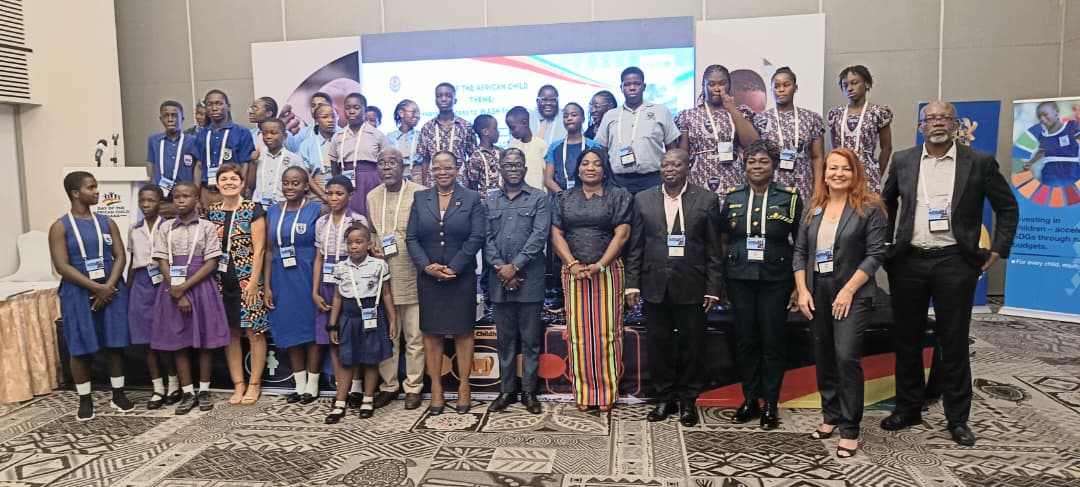
The call was made yesterday at the commemoration of the 2026 Day of the African Child on the theme, “Universal Access to WASH for Every Child,” which coincided with the launch of the Situation Analysis of Children and Adolescents in Ghana (SitAn) report and the Assessing Public Spending by Age in Ghana study.
Delivering welcome remarks on behalf of the Minister for Gender, Children and Social Protection, the Acting Chief Director of the ministry, Mr Ebenezer Charway, said the Day of the African Child served as an opportunity not only to honour the sacrifice of the Soweto children who fought for equal access to quality education, but also to renew commitments towards addressing challenges confronting children across the continent.
He described access to safe water, sanitation and hygiene as a fundamental right that underpins children’s health, dignity, education and overall well-being.
“It is difficult for a child to learn effectively without clean drinking water. It is difficult for children to remain healthy where sanitation facilities are inadequate, and girls in particular face barriers to fully participating in education when hygiene facilities do not meet their needs,” he said.
Mr Charway noted that although Ghana had made appreciable progress in expanding access to water and sanitation services, inequalities persisted, especially among children in rural, underserved and vulnerable communities.
He said the SitAn report provided a comprehensive assessment of the state of children and adolescents in Ghana, documenting gains in education, nutrition, health, social protection and child protection while drawing attention to persistent inequalities and emerging threats, including climate change, economic hardships, public health risks and the growing influence of digital environments.
He stressed that children represented nearly half of Ghana’s population, making investment in their well-being a national development imperative rather than a social expenditure.
“The question before us is not whether we can afford to invest in children, but whether we can afford not to,” he stated.
The Acting Representative of UNICEF Ghana, Ms Paulina Sarvilahti, said the reports were the product of an extensive consultative process led by the Ministry of Gender, Children and Social Protection, the National Development Planning Commission (NDPC) and the Ghana Statistical Service, with support from development partners and technical teams across sectors.
She explained that the adopted a life-cycle approach to understanding children’s needs, emphasizing that investing in only one aspect of a child’s development was insufficient to ensure the realization of their rights and aspirations.
She said the public spending analysis would help policymakers make informed decisions by identifying when and where investments in children would have the greatest impact.
“We know that fiscal space is limited in every country, but if we plan in an integrated manner and invest at the right time and in the right places, we can change the narrative for children,” she said.
On her part, the Deputy Minister for Local Government, Chieftaincy and Religious Affairs, Rita Naa Odoley Sowah, highlighted government’s efforts to improve financing for local development.
She said 88 per cent of allocations from the District Assemblies Common Fund now went directly to Metropolitan, Municipal and District Assemblies (MMDAs), adding that disbursements for 2025 had been completed.
She noted that the Common Fund guidelines earmarked resources for educational infrastructure, sanitation, health and other child-related interventions, while the ministry had commenced monitoring exercises to ensure judicious use of the funds.
The Director-General of the NDPC, Dr Audrey Smock Amoah, underscored the need for stronger intersectoral collaboration, explaining that child development extended beyond education and health to include nutrition, water and sanitation, social protection and other essential services.
She said decisions affecting children must remain paramount, describing investments in children as “the best investment any country can make.”
Dr Amoah indicated that child-focused interventions had been integrated into the Coordinated Programme of Economic and Social Development Policies (2025-2029) and the national medium-term development policy framework aligned with the Resetting Ghana Agenda, the Sustainable Development Goals and the African Union’s Agenda 2063.
Participants at the event agreed that sustained financing, stronger accountability mechanisms and coordinated action among government institutions, development partners, civil society and communities would be critical to ensuring that every child in Ghana survives, learns, grows and thrives.
By Kingsley Asiedu