
The Centre for Democratic Movement (CDM) and the Christian Council of Ghana (CCG) have called for intensified efforts to dismantle the financial networks behind narcotics trafficking, stressing that the fight against illegal drugs must go beyond the arrest and prosecution of couriers.
They argued that there must be accountability following a series of major narcotics seizures linked to Ghana, emphasising that the country’s security and port-control systems require urgent parliamentary scrutiny after the recent seizure of nearly 3.9 tonnes of cocaine in France.
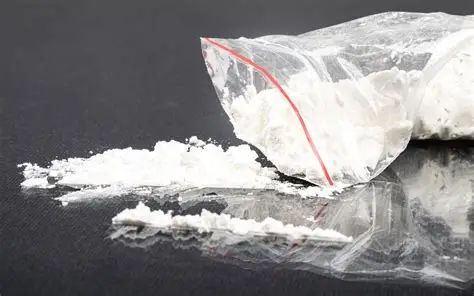
The latest incident occurred at the French port of Dunkirk, where French customs seized nearly 3.9 tonnes of cocaine concealed in a container carrying plastic waste that had arrived from Ghana.
French authorities estimated the shipment’s street value at about €225 million, equivalent to approximately US$261 million, and opened an investigation into the alleged trafficking network.
The Dunkirk seizure has intensified scrutiny because it came after several other significant international and domestic narcotics cases.
In March 2025, the National Intelligence Bureau intercepted more than 3.3 tonnes of cocaine at Pedu Junction in Cape Coast with a strict value of $350 million.
The substance was concealed beneath sand in a tipper truck travelling towards Accra. Subsequent investigations brought the total confirmed weight to about 3,319.68 kilogrammes, with laboratory testing by NACOC and the Ghana Standards Authority confirming the substance as cocaine.
Again in April this year, Australian authorities intercepted approximately 320 kilograms of methamphetamine hidden in charcoal shipments originating from Ghana, valued at an estimated A$296 million (US$208 million).
The narcotic drugs seized abroad and in Ghana amounted to over $1 billion in value, embarrassingly putting Ghana under the spotlight as possible drug trafficking hub.
The CDM demand
The CDM, in a statement issued on September 20, 2026, said Ghana’s international reputation had come under serious pressure following the succession of drug seizures connected to consignments originating from or passing through Ghana.
It called on Parliament to sit during the recall on September 29, 2026, to allow officials responsible for national security, narcotics control, customs, ports and aviation to account publicly for the measures in place to prevent Ghanaian territory and commercial channels from being exploited by international trafficking networks.
Christian Council’s concerns
The Christian Council said the recent high-profile interceptions of suspected narcotics shipments have raised serious concerns about national security, the welfare of young people, families and the country’s broader social and spiritual wellbeing.
It specifically cited the seizure of 3.3 tonnes of cocaine at Pedu Junction in Cape Coast, the interception of consignments along the Takoradi-Cape Coast highway, and the seizure of 866 parcels of cocaine in gari sacks at Tema Harbour.
The Council also referred to unresolved questions surrounding aviation and maritime-related incidents, saying the developments required a comprehensive national response.
The Council made the call in a statement delivered by its Chairman, Rev. Enoch Nii Narh Thompson, following a visit by the New Patriotic Party (NPP) Policy Committee on Defence, Intelligence and Security and the Committee on Religious Affairs on Thursday, September 24, 2026.
The delegation presented an aide-mémoire to the Christian Council, seeking what it described as a non-partisan moral, pastoral and spiritual intervention in response to the growing incidence of narcotics trafficking and related crimes in Ghana.
Council invokes constitutional responsibility
The Christian Council said its intervention was grounded not in partisan politics but in its constitutional responsibility as a religious institution and civic actor.
Rev. Thompson said the Christian Council would take the concerns raised by the NPP delegation under advisement and forward the issues through its Standing Committee and Executive Council.
He stressed that the Church would not remain silent if the future of Ghanaian youth was threatened by illicit wealth and narcotics trafficking.
The Council referenced Article 41 of the 1992 Constitution, particularly Article 41(i), which places a duty on citizens to cooperate with lawful agencies in maintaining law and order.
It also pointed to the Narcotics Control Commission Act, 2020 (Act 1019), which provides the legal framework for dealing with narcotics-related offences, as well as the Anti-Money Laundering Act, 2020 (Act 1044), which gives state institutions powers to trace, freeze and confiscate assets linked to criminal conduct.
The Council further highlighted the Whistleblower Act, 2006 (Act 720) as an important mechanism for encouraging individuals to expose suspected illegal activities without fear of victimisation.
It said these legal provisions demonstrated that the fight against narcotics trafficking should include efforts to identify and dismantle the networks and financial structures that sustain the trade.
Church maintains non-partisan position
The Christian Council was emphatic that its engagement with the NPP delegation should not be interpreted as political endorsement.
It stated that it remains completely non-partisan, citing its 2023 Constitution, which provides that the Council is not aligned with any political party and derives its principles from the Bible.
The Council said its response to the NPP delegation was therefore a moral and civic position rather than an endorsement of the party’s campaign platform or a criticism of another political party.
“Crime has no political colour,” the Council said in its statement, adding that drug addiction affects people regardless of their political affiliation.
It maintained that threats to the national security should be addressed as matters affecting all citizens.
By Kyei Boateng